

Ready & Packaged Foods
All →Vegetables & Legumes
All →Desserts & Confectionery
All →Meat & Protein
All →Grains & Bakery
All →Beverages
All →Milk & Dairy
All →

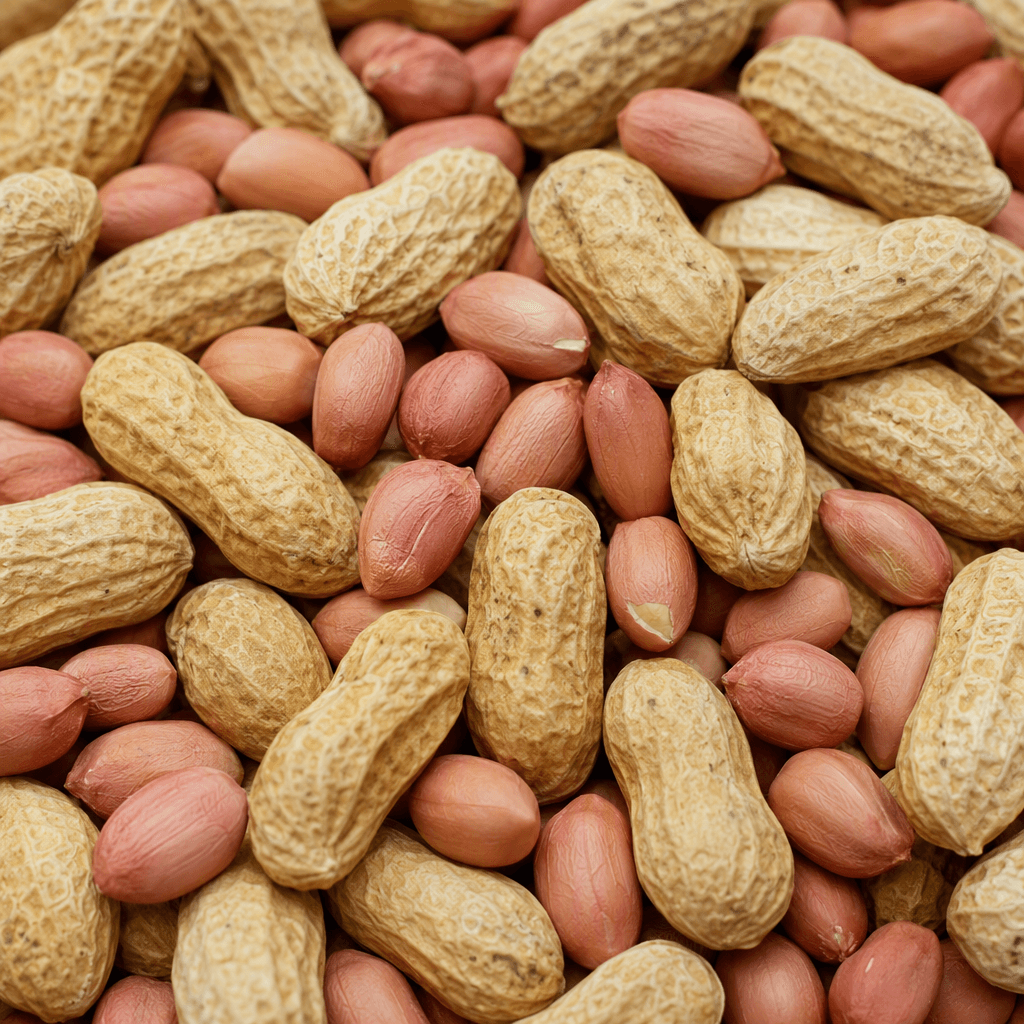
Peanuts Calories
Rich in protein and healthy fats, source of magnesium and vitamin E
In season: Autumn · Winter
CALORIES
GI
POTASSIUM
FIBER
Quick answer
1 ounce (medium) of Peanuts (28 g) has 159 calories. That works out to 567 calories per 100 g. It contains 4.5 g of carbs, 7.2 g of protein, 13.8 g of fat and 2.4 g of fiber. Its 0.3 mg of Copper covers 35% of the Daily Value. Its glycemic index is 14 (low), so it raises blood sugar slowly.
What is Peanuts?
Peanuts are the edible seeds of a legume plant, developing in shells beneath the soil. Though often grouped with nuts in shops and kitchens, they are also pressed for oil and ground into peanut butter. You’ll find them raw, roasted, salted or coated, as well as in many cuisines’ sauces and sweets.
Roasting brings out their savoury, slightly sweet flavour and crisp texture. They’re commonly eaten by the handful as a snack, stirred into dishes, or spread on toast; in the US, peanut butter is a familiar pantry staple. Peanuts are rich in protein and fats, with 25.8g of protein per 100g. For an easy snack with less added salt, choose unsalted roasted peanuts and pair them with fresh fruit.
Peanuts Nutrition Facts
Selected: 100 g
567
KCAL / 100G
Carbs
16.1g
· 6% DV
Protein
25.8g
· 52% DV
Fat
49.2g
· 63% DV
Fiber
8.5g
· 30% DV
DV is the share of the daily value covered, on a 2,000 kcal reference diet.
Calories come from: Carbs 11% · Protein 17% · Fat 72%
Peanuts Vitamins & Minerals
Vitamins
B3
12.07mg · 75% DV
Folate
240µg · 60% DV
Biotin
17µg · 57% DV
Vitamin E
8.33mg · 56% DV
Minerals
Copper
1mg · 111% DV
Manganese
2mg · 87% DV
Phosphorus
376mg · 54% DV
Magnesium
168mg · 40% DV
How Nutritious Is Peanuts?
Nutrient density
High
How many vitamins, minerals and how much fiber this food carries per calorie. A high score means a lot of nutrition for few calories.
Satiety score
High
An EatBetter score computed from fiber, protein and calorie density. A high score means staying full longer on the same calories.
Both scores are calculated per 100 g and do not change with the selected portion. The satiety score is EatBetter's own calculation, not a clinical measure.
Peanuts Glycemic Index
GLYCEMIC INDEX
GLYCEMIC LOAD
Accounts for portion size — a more realistic measure than GI alone.
How to Burn Off Peanuts
To burn the 567 calories in 100 g:
🚶
Walking (5 km/h)
🏃
Running (8 km/h)
🚴
Cycling
🏊
Swimming
Times are calculated with the MET equation for a 70 kg adult. Actual burn varies with your weight, age and pace.
Is Peanuts Processed?
NOVA 1
Unprocessed
1. Unprocessed
2. Minimally Processed
3. Processed
4. Ultra-Processed
NOVA classifies foods into 4 groups by industrial processing. NOVA 1 (unprocessed) is the healthiest.
Does Peanuts Contain Allergens?
Contains these allergens:
Which Diets Is Peanuts Good For?
Vegan
✓ Suitable
Vegetarian
✓ Suitable
Gluten-Free
✓ Suitable
Dairy-Free
— Not suitable
Mediterranean
✓ Suitable
Paleo
✓ Suitable
Whole30
— Not suitable
DASH
— Not suitable
Keto
✓ Suitable
Low FODMAP
— Not suitable
Peanuts Fat Profile
SATURATED
6.83g
MONOUNSATURATED
24.43g
POLYUNSATURATED
15.56g
Omega 6:3 ratio 1556:1
Above the ideal 4:1 (1556:1).
Compare Peanuts
Foods Similar to Peanuts
Frequently Asked Questions About Peanuts
Are peanuts healthy?
Yes, peanuts provide protein, mostly unsaturated fats, fiber, and several micronutrients. Plain peanuts are a more nourishing snack choice than heavily salted or sugar-coated versions, though their concentrated energy makes portion size worth keeping in mind.
Are peanuts nuts or legumes?
Peanuts are legumes, not tree nuts. They grow in pods underground and belong to the same broad plant family as beans and lentils, even though their taste and common uses are similar to those of nuts.
Can peanuts help with weight loss?
Peanuts can fit into a weight-loss eating pattern because their protein, fat, and fiber can make a snack satisfying. They are energy-dense, so eating them straight from a large bag can make portions add up quickly.
Are raw peanuts safe to eat?
Food-grade raw peanuts can be eaten, but roasting or cooking gives them a different flavor and texture. Avoid raw peanuts that are damp, moldy, or smell musty, since peanuts can be contaminated by molds that produce harmful toxins.
How do you roast peanuts at home?
Spread shelled peanuts in a single layer on a baking tray and roast them, stirring once so they brown evenly. Take them out when fragrant and lightly browned; they continue to firm up as they cool.
Do peanuts go bad?
Yes, peanuts can go rancid because their oils break down over time. A stale, bitter, or paint-like smell is a warning sign; discard peanuts that smell off or show mold rather than tasting or sorting them.
Can you eat peanut shells?
Peanut shells are technically edible, but they are tough, fibrous, and not usually eaten. They can be unpleasant to chew and may cause digestive discomfort, so remove the shells and eat the kernels instead.
Can babies eat peanuts?
Yes, babies can be introduced to peanut in a safe texture once they are ready for solid foods, but never give them whole peanuts because of choking risk. Mix smooth peanut butter into a soft food; ask a clinician about introduction if the baby has severe eczema or an egg allergy.
Can dogs eat peanuts?
Dogs can have a few plain, unsalted, shelled peanuts as an occasional treat, but peanuts are high in fat and should not replace their regular food. Avoid flavored peanuts and peanut butter containing xylitol, which is dangerous to dogs.
What is the difference between raw and roasted peanuts?
Raw peanuts have a milder taste and softer texture, while roasting brings out a deeper, nuttier flavor and makes them crunchier. Roasted peanuts may also be sold with added salt or oil, so plain versions keep the preparation simple.
Have another question about Peanuts?
Ask the AI nutrition coach — calories, portions, alternatives and more, answered in seconds in the app.

Scan calories with your camera
Instant AI nutrition analysis

Nutrition data compiled from USDA FoodData Central and scientific sources.