

Ready & Packaged Foods
All →Vegetables & Legumes
All →Desserts & Confectionery
All →Meat & Protein
All →Grains & Bakery
All →Beverages
All →Milk & Dairy
All →

Tuna in oil Calories
High-protein omega-3 fish
CALORIES
GI
POTASSIUM
FIBER
Quick answer
1 can (medium) of Tuna in oil (112 g) has 222 calories. That works out to 198 calories per 100 g. It contains 0 g of carbs, 32.6 g of protein, 9.2 g of fat and 0 g of fiber. Its 72.8 µg of Selenium covers 132% of the Daily Value. Its glycemic index is 0 (low), so it raises blood sugar slowly.
What is Tuna in oil?
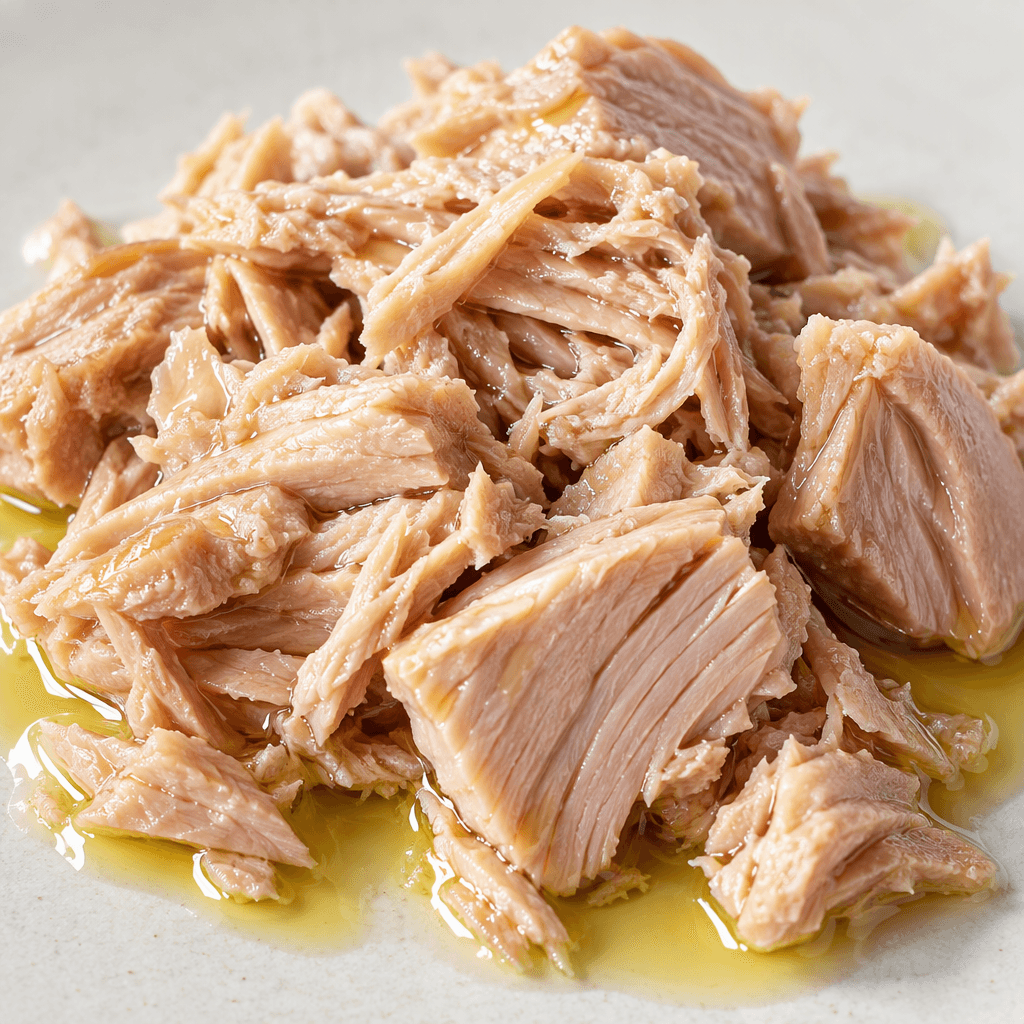
Tuna in oil is tuna packed and preserved in oil, usually sold in a can for convenient meals. The flakes and small chunks have a pale pink-beige colour, and the oil gives them a softer, richer texture than tuna packed in water.
It is commonly stirred into salads and pasta, piled into sandwiches, or served with bread and vegetables. In Turkey, it also makes an easy addition to a quick lunch or a simple salad. Tuna in oil is high in protein and contains no carbohydrates; each 100 g provides 29.1 g of protein. Drain it for a lighter dish, or keep some of the oil to bring extra richness to a dressing or pasta.
Tuna in oil Nutrition Facts
Selected: 100 g
198
KCAL / 100G
Carbs
0g
· 0% DV
Protein
29.1g
· 58% DV
Fat
8.2g
· 11% DV
Fiber
0g
· 0% DV
DV is the share of the daily value covered, on a 2,000 kcal reference diet.
Calories come from: Carbs 0% · Protein 61% · Fat 39%
Tuna in oil Vitamins & Minerals
Vitamins
B12
2.5µg · 104% DV
B3
13.3mg · 83% DV
B6
0.46mg · 27% DV
B2
0.12mg · 9% DV
Minerals
Selenium
65µg · 118% DV
Phosphorus
260mg · 37% DV
Sodium
330mg · 14% DV
Iodine
16µg · 11% DV
How Nutritious Is Tuna in oil?
Nutrient density
High
How many vitamins, minerals and how much fiber this food carries per calorie. A high score means a lot of nutrition for few calories.
Satiety score
Medium
An EatBetter score computed from fiber, protein and calorie density. A high score means staying full longer on the same calories.
Both scores are calculated per 100 g and do not change with the selected portion. The satiety score is EatBetter's own calculation, not a clinical measure.
Tuna in oil Glycemic Index
GLYCEMIC INDEX
GLYCEMIC LOAD
Accounts for portion size — a more realistic measure than GI alone.
How to Burn Off Tuna in oil
To burn the 198 calories in 100 g:
🚶
Walking (5 km/h)
🏃
Running (8 km/h)
🚴
Cycling
🏊
Swimming
Times are calculated with the MET equation for a 70 kg adult. Actual burn varies with your weight, age and pace.
Is Tuna in oil Processed?
NOVA 3
Processed
1. Unprocessed
2. Minimally Processed
3. Processed
4. Ultra-Processed
NOVA classifies foods into 4 groups by industrial processing. NOVA 1 (unprocessed) is the healthiest.
Does Tuna in oil Contain Allergens?
Contains these allergens:
Which Diets Is Tuna in oil Good For?
Vegan
— Not suitable
Vegetarian
— Not suitable
Gluten-Free
✓ Suitable
Dairy-Free
— Not suitable
Mediterranean
✓ Suitable
Paleo
— Not suitable
Whole30
— Not suitable
DASH
— Not suitable
Keto
✓ Suitable
Low FODMAP
— Not suitable
Tuna in oil Fat Profile
SATURATED
1.35g
MONOUNSATURATED
3.45g
POLYUNSATURATED
2.7g
Omega 6:3 ratio 9.4:1
Above the ideal 4:1 (9.4:1).
Compare Tuna in oil
Foods Similar to Tuna in oil
Frequently Asked Questions About Tuna in oil
Is tuna in oil healthy?
Yes, tuna in oil provides protein and omega-3 fats in a convenient, ready-to-eat form. Some canned versions are salty, so pair it with vegetables or other minimally salted ingredients rather than adding extra salt automatically.
Is tuna in oil or tuna in water better?
Neither is universally better: tuna in oil tends to taste richer and feel more moist, while tuna in water is milder. Choose based on the dish and how rich you want its flavor and texture to be.
Should you drain tuna in oil?
You can drain it, but you do not have to. Draining gives a less oily result; keeping a little of the oil adds moisture and flavor to a salad, sandwich, or pasta.
Is tuna in oil already cooked?
Yes, tuna in oil is cooked during the canning process and is ready to eat straight from the can. For a hot dish, stir it in near the end so the flakes do not become dry and tough.
How often can you eat tuna in oil?
You can include it regularly, but vary the fish you eat because tuna can contain mercury. Recommended amounts depend on the tuna species and local guidance, so avoid making tuna your only frequent fish choice.
Can you eat tuna in oil while pregnant?
Yes, some types of canned tuna can fit into pregnancy diets in limited amounts, but mercury levels vary by species. Follow current local advice on tuna and ask your healthcare professional what is appropriate for your pregnancy.
How long does tuna in oil last after opening?
Transfer leftover tuna in oil from the can to a covered container and refrigerate it promptly. Use it within a short period, and discard it if it has been left at room temperature for too long.
Can you eat tuna in oil straight from the can?
Yes, tuna in oil is ready to eat without further cooking. Drain it first if you prefer a less oily bite, or add a little of the oil to keep a sandwich filling or salad moist.
Can you use the oil from tuna in oil?
Yes, if it smells and looks normal, you can use some of the oil for flavor. Stir it into pasta or a dressing; drain the can instead if you want a less oily dish.
What can you make with tuna in oil?
Tuna in oil works well in tuna salad, sandwiches, pasta, and baked dishes. For a warm recipe, fold it in near the end of cooking to keep the flakes moist and prevent them from breaking down too much.
Have another question about Tuna in oil?
Ask the AI nutrition coach — calories, portions, alternatives and more, answered in seconds in the app.

Scan calories with your camera
Instant AI nutrition analysis

Nutrition data compiled from USDA FoodData Central and scientific sources.