

Ready & Packaged Foods
All →Vegetables & Legumes
All →Desserts & Confectionery
All →Meat & Protein
All →Grains & Bakery
All →Beverages
All →Milk & Dairy
All →

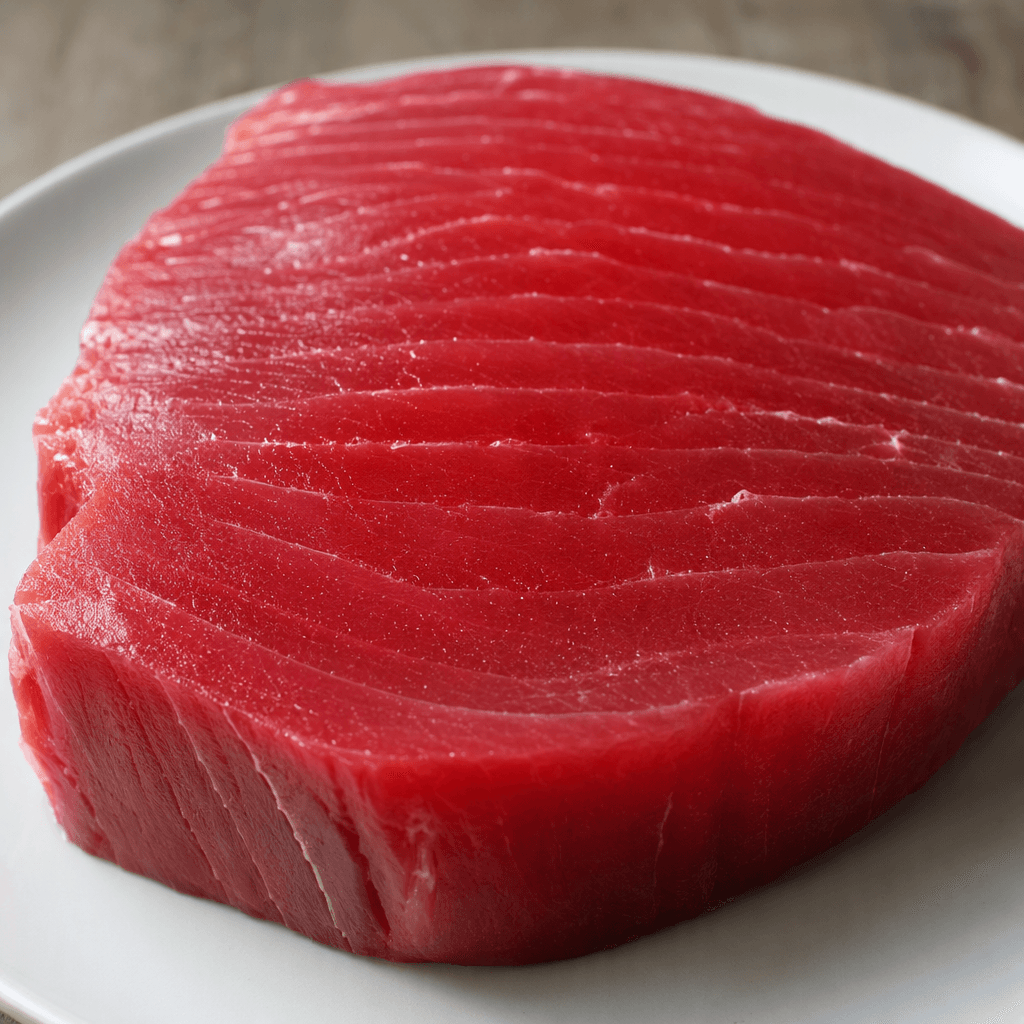
Tuna Calories
High protein, omega-3, low fat
In season: Spring · Summer · Autumn · Winter
CALORIES
GI
POTASSIUM
FIBER
Quick answer
1 piece (medium) of Tuna (150 g) has 198 calories. That works out to 132 calories per 100 g. It contains 0 g of carbs, 42 g of protein, 2 g of fat and 0 g of fiber. Its 120 µg of Selenium covers 218% of the Daily Value. Its glycemic index is 0 (low), so it raises blood sugar slowly.
What is Tuna?
Tuna is the firm, meaty flesh of a large saltwater fish. It is sold fresh as steaks and in cans; fresh cuts have a dense texture and a robust, savoury flavour. A quick sear or grill keeps a steak tender, while canned tuna is ready to use in everyday meals.
Across the English-speaking world, it is commonly served in salads, sandwiches and pasta dishes, or cooked as a main with vegetables. It is high in protein and relatively low in fat, making it a satisfying choice when you want a leaner fish. Pair it with greens and lemon, and use only a little added oil if you want to keep the meal light.
Tuna Nutrition Facts
Selected: 100 g
132
KCAL / 100G
Carbs
0g
· 0% DV
Protein
28g
· 56% DV
Fat
1.3g
· 2% DV
Fiber
0g
· 0% DV
DV is the share of the daily value covered, on a 2,000 kcal reference diet.
Calories come from: Carbs 0% · Protein 91% · Fat 9%
Tuna Vitamins & Minerals
Vitamins
B3
18.5mg · 116% DV
B12
2.2µg · 92% DV
B6
1mg · 59% DV
Vitamin D
5µg · 25% DV
Minerals
Selenium
80µg · 145% DV
Phosphorus
290mg · 41% DV
Iodine
50µg · 33% DV
Magnesium
50mg · 12% DV
How Nutritious Is Tuna?
Nutrient density
Very high
How many vitamins, minerals and how much fiber this food carries per calorie. A high score means a lot of nutrition for few calories.
Satiety score
Medium
An EatBetter score computed from fiber, protein and calorie density. A high score means staying full longer on the same calories.
Both scores are calculated per 100 g and do not change with the selected portion. The satiety score is EatBetter's own calculation, not a clinical measure.
Tuna Glycemic Index
GLYCEMIC INDEX
GLYCEMIC LOAD
Accounts for portion size — a more realistic measure than GI alone.
How to Burn Off Tuna
To burn the 132 calories in 100 g:
🚶
Walking (5 km/h)
🏃
Running (8 km/h)
🚴
Cycling
🏊
Swimming
Times are calculated with the MET equation for a 70 kg adult. Actual burn varies with your weight, age and pace.
Is Tuna Processed?
NOVA 1
Unprocessed
1. Unprocessed
2. Minimally Processed
3. Processed
4. Ultra-Processed
NOVA classifies foods into 4 groups by industrial processing. NOVA 1 (unprocessed) is the healthiest.
Does Tuna Contain Allergens?
Contains these allergens:
Which Diets Is Tuna Good For?
Vegan
— Not suitable
Vegetarian
— Not suitable
Gluten-Free
✓ Suitable
Dairy-Free
— Not suitable
Mediterranean
✓ Suitable
Paleo
✓ Suitable
Whole30
— Not suitable
DASH
— Not suitable
Keto
✓ Suitable
Low FODMAP
— Not suitable
Tuna Fat Profile
SATURATED
0.3g
MONOUNSATURATED
0.3g
POLYUNSATURATED
0.7g
Omega 6:3 ratio 0:1
Below the ideal 4:1 — a good omega balance.
Compare Tuna
Foods Similar to Tuna
Frequently Asked Questions About Tuna
How do you cook tuna steak?
Sear tuna steak briefly in a very hot pan or on a grill. Its firm, lean flesh can dry out if cooked for too long, so keep the centre moist if you enjoy it less than fully cooked.
Can you eat tuna raw?
Yes, tuna can be eaten raw when it has been handled and sold for raw consumption. Ordinary fresh tuna is not automatically safe for sushi or sashimi; cooking it reduces some risks associated with eating raw fish.
What is the difference between fresh tuna and canned tuna?
Fresh tuna is usually sold as steaks or fillets and cooked shortly before serving, while canned tuna is cooked and preserved in a can. Canned tuna may be packed in oil or water, and its texture is softer.
Does tuna contain mercury?
Yes, tuna can contain mercury, and levels vary by species and serving size. People who are pregnant should follow current local advice on tuna portions; ask a healthcare professional for guidance tailored to your situation.
Why does tuna steak turn dry?
Tuna steak turns dry when it is overcooked. Because the flesh is lean and dense, a brief sear helps preserve its moisture; remove it from the heat as soon as it reaches your preferred doneness.
How can you tell if fresh tuna is good to buy?
Fresh tuna should smell clean and mild, with firm flesh and a fresh-looking surface. Avoid pieces with a sour or strongly fishy smell, a sticky coating, or obvious discoloration.
Can you freeze fresh tuna?
Yes, fresh tuna can be frozen. Wrap the steaks tightly to limit air exposure, thaw them in the refrigerator, and use them soon after thawing rather than freezing them again.
What does sushi-grade tuna mean?
“Sushi-grade” is a seller’s description, not a universal guarantee that tuna is free of parasites or bacteria. Buy raw tuna from a reputable supplier who can explain how it was handled and whether it is intended to be eaten uncooked.
How should you season tuna steak?
Season tuna steak simply with salt, pepper, lemon, or herbs so its rich flavour remains noticeable. A light coating of oil helps prevent sticking; acidic marinades should be brief because they can change the surface texture.
What should you serve with tuna steak?
Serve tuna steak with a crisp salad, grilled vegetables, or potatoes. Bright flavours such as lemon and herbs balance the fish’s meaty richness without overwhelming it.
Have another question about Tuna?
Ask the AI nutrition coach — calories, portions, alternatives and more, answered in seconds in the app.

Scan calories with your camera
Instant AI nutrition analysis

Nutrition data compiled from USDA FoodData Central and scientific sources.