

Ready & Packaged Foods
All →Vegetables & Legumes
All →Desserts & Confectionery
All →Meat & Protein
All →Grains & Bakery
All →Beverages
All →Milk & Dairy
All →

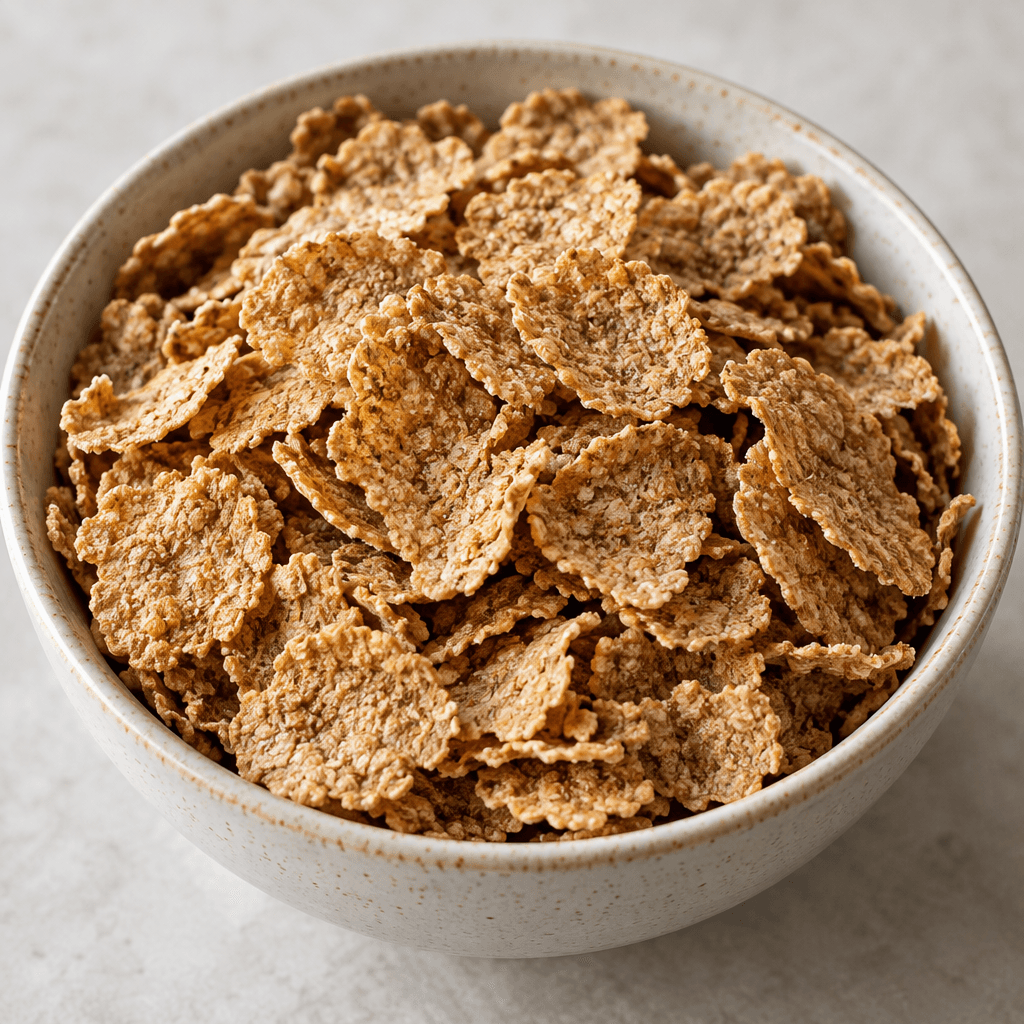
Whole Grain Breakfast Cereal Calories
High in fiber and vitamins, whole grain cereal
In season: Spring · Summer · Autumn · Winter
CALORIES
GI
POTASSIUM
FIBER
Quick answer
1 cup (medium) of Whole Grain Breakfast Cereal (40 g) has 148 calories. That works out to 370 calories per 100 g. It contains 29.6 g of carbs, 3.8 g of protein, 1.4 g of fat and 4 g of fiber. Its 0.9 mg of Manganese covers 38% of the Daily Value. Its glycemic index is 55 (medium), so it raises blood sugar at a moderate pace.
What is Whole Grain Breakfast Cereal?
Whole grain breakfast cereal is a grain-based breakfast product made with whole grains, commonly shaped into flakes or crisp pieces. It has a mild, toasty, grain-like flavour and a crunchy texture when dry; in milk, it softens as it sits. Recipes vary, so some versions are plainer while others are lightly sweetened.
It is often served with cold milk or yoghurt, with fruit or nuts added for extra texture. Its whole grains make it a fibre-rich choice, providing 10 g of fibre per 100 g. For a more filling bowl, pair a modest serving with yoghurt or milk and fresh fruit, and check the package if you prefer to avoid added sweetness.
Whole Grain Breakfast Cereal Nutrition Facts
Selected: 100 g
370
KCAL / 100G
Carbs
74g
· 27% DV
Protein
9.5g
· 19% DV
Fat
3.5g
· 4% DV
Fiber
10g
· 36% DV
DV is the share of the daily value covered, on a 2,000 kcal reference diet.
Calories come from: Carbs 81% · Protein 10% · Fat 9%
Whole Grain Breakfast Cereal Vitamins & Minerals
Vitamins
B12
1.5µg · 63% DV
B2
0.7mg · 54% DV
B1
0.6mg · 50% DV
B3
8mg · 50% DV
Minerals
Manganese
2mg · 87% DV
Iron
8mg · 44% DV
Phosphorus
260mg · 37% DV
Zinc
3mg · 27% DV
How Nutritious Is Whole Grain Breakfast Cereal?
Nutrient density
High
How many vitamins, minerals and how much fiber this food carries per calorie. A high score means a lot of nutrition for few calories.
Satiety score
Medium
An EatBetter score computed from fiber, protein and calorie density. A high score means staying full longer on the same calories.
Both scores are calculated per 100 g and do not change with the selected portion. The satiety score is EatBetter's own calculation, not a clinical measure.
Whole Grain Breakfast Cereal Glycemic Index
GLYCEMIC INDEX
GLYCEMIC LOAD
Accounts for portion size — a more realistic measure than GI alone.
How to Burn Off Whole Grain Breakfast Cereal
To burn the 370 calories in 100 g:
🚶
Walking (5 km/h)
🏃
Running (8 km/h)
🚴
Cycling
🏊
Swimming
Times are calculated with the MET equation for a 70 kg adult. Actual burn varies with your weight, age and pace.
Is Whole Grain Breakfast Cereal Processed?
NOVA 3
Processed
1. Unprocessed
2. Minimally Processed
3. Processed
4. Ultra-Processed
NOVA classifies foods into 4 groups by industrial processing. NOVA 1 (unprocessed) is the healthiest.
Does Whole Grain Breakfast Cereal Contain Allergens?
Contains these allergens:
Which Diets Is Whole Grain Breakfast Cereal Good For?
Vegan
— Not suitable
Vegetarian
✓ Suitable
Gluten-Free
— Not suitable
Dairy-Free
— Not suitable
Mediterranean
✓ Suitable
Paleo
— Not suitable
Whole30
— Not suitable
DASH
— Not suitable
Keto
— Not suitable
Low FODMAP
— Not suitable
Whole Grain Breakfast Cereal Fat Profile
SATURATED
0.6g
MONOUNSATURATED
1.1g
POLYUNSATURATED
1.3g
Omega 6:3 ratio 10:1
Above the ideal 4:1 (10:1).
Compare Whole Grain Breakfast Cereal
Foods Similar to Whole Grain Breakfast Cereal
Frequently Asked Questions About Whole Grain Breakfast Cereal
Is whole grain breakfast cereal healthy?
Yes, whole grain breakfast cereal can be a nutritious breakfast, providing fiber and vitamins. Check the ingredients for added sugars, which vary by product, and pair the cereal with milk or yogurt and fruit for a more filling meal.
Can whole grain breakfast cereal help with weight loss?
Whole grain breakfast cereal does not cause weight loss on its own, but its fiber can help make breakfast more filling. Keep the portion moderate and choose unsweetened toppings such as plain yogurt or fresh fruit.
Do you have to cook whole grain breakfast cereal?
No, flaky whole grain breakfast cereal is usually ready to eat and does not need cooking. Add milk or yogurt and serve; letting it sit briefly will soften the flakes if you prefer a less crunchy texture.
Does whole grain breakfast cereal have added sugar?
Some whole grain breakfast cereals contain added sugar and others do not. Check the ingredient list for sugar, syrups, or other sweeteners; the phrase “whole grain” alone does not tell you whether a cereal is sweetened.
Can children eat whole grain breakfast cereal?
Yes, children can eat whole grain breakfast cereal in an age-appropriate portion. Serve it with milk or yogurt, choose a variety with little or no added sugar, and soften the flakes for younger children if needed.
How do you stop whole grain breakfast cereal from getting soggy?
Add milk to whole grain breakfast cereal just before eating to keep the flakes crisp. For a longer breakfast, serve the milk separately and add a little cereal to the bowl at a time.
How should you store whole grain breakfast cereal after opening?
Store whole grain breakfast cereal in a tightly sealed container in a cool, dry place. Keeping out moisture helps the flakes stay crisp; avoid leaving the opened bag loosely folded in a humid cupboard.
Can you eat whole grain breakfast cereal without milk?
Yes, whole grain breakfast cereal can be eaten dry as a snack or served with yogurt instead of milk. If you eat it dry, have water alongside it, since the flakes are less moist than when served with milk.
Is whole grain breakfast cereal a good pre-workout breakfast?
Yes, whole grain breakfast cereal can work before exercise because it provides carbohydrates for energy. Eat it with enough time to digest, and add milk or yogurt if you want a more substantial meal.
Can people with diabetes eat whole grain breakfast cereal?
People with diabetes can include whole grain breakfast cereal, but added sugar and portion size matter. Pairing it with plain yogurt or milk may make breakfast more filling; ask your clinician or dietitian how it fits your individual meal plan.
Have another question about Whole Grain Breakfast Cereal?
Ask the AI nutrition coach — calories, portions, alternatives and more, answered in seconds in the app.

Scan calories with your camera
Instant AI nutrition analysis

Nutrition data compiled from USDA FoodData Central and scientific sources.