

Ready & Packaged Foods
All →Vegetables & Legumes
All →Desserts & Confectionery
All →Meat & Protein
All →Grains & Bakery
All →Beverages
All →Milk & Dairy
All →

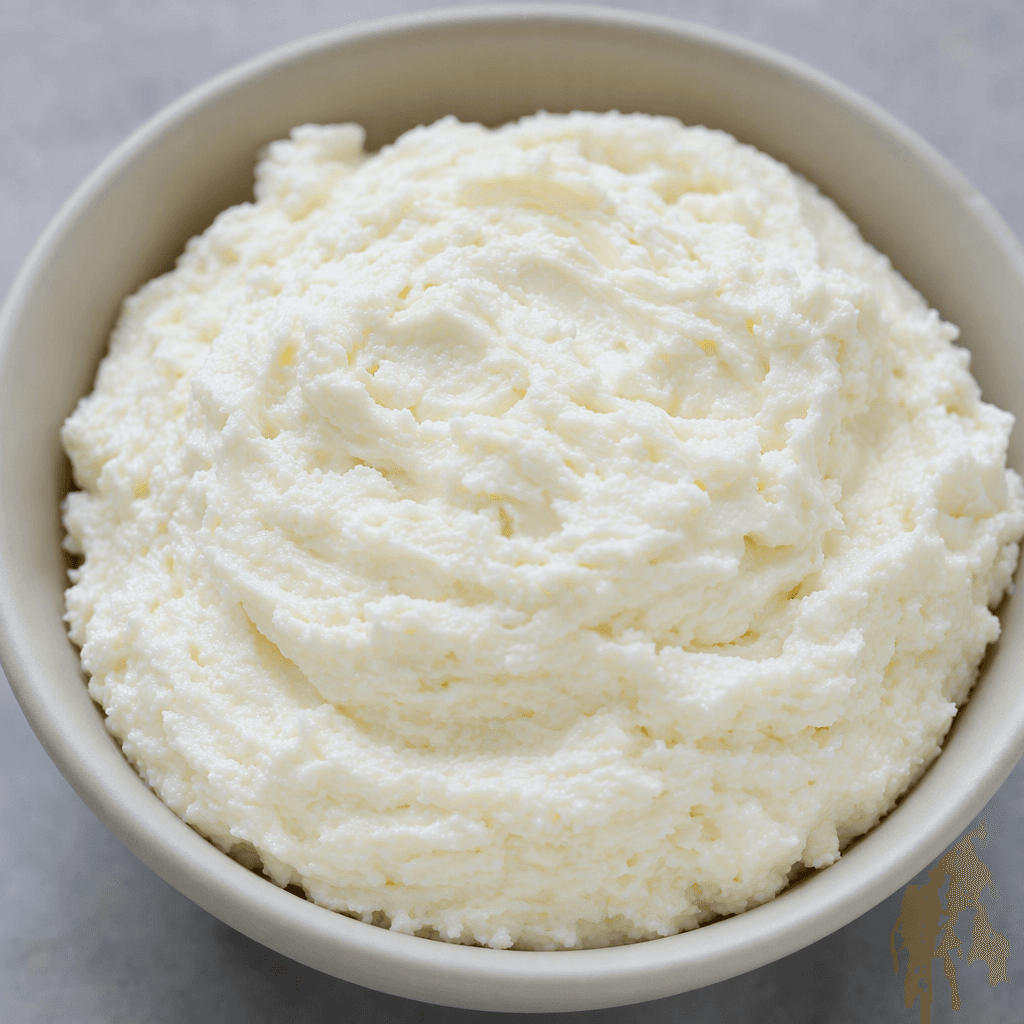
Spreadable strained curd cheese Calories
High-protein spreadable fresh curd cheese
CALORIES
GI
POTASSIUM
FIBER
Quick answer
2 tablespoon (medium) of Spreadable strained curd cheese (30 g) has 29 calories. That works out to 98 calories per 100 g. It contains 1 g of carbs, 5 g of protein, 0.7 g of fat and 0 g of fiber. Its 0.2 µg of B12 covers 8% of the Daily Value. Its glycemic index is 27 (low), so it raises blood sugar slowly.
What is Spreadable strained curd cheese?
Spreadable strained curd cheese is fresh lor curd that has been drained until thick enough to spread. Lor is a familiar Turkish cheese, traditionally made from the curds left during cheesemaking; this version has a mild, fresh taste and a soft texture that can be slightly grainy.
In Turkey, it’s often served at breakfast on bread, alongside tomatoes, cucumbers and olives, or mixed with herbs. It also works well as a sandwich spread or a dip for raw vegetables. It is notably high in protein, with 16.5 g per 100 g. For a lighter snack, spread a modest layer on whole-grain toast and add crisp vegetables or fresh herbs.
Spreadable strained curd cheese Nutrition Facts
Selected: 100 g
98
KCAL / 100G
Carbs
3.2g
· 1% DV
Protein
16.5g
· 33% DV
Fat
2.4g
· 3% DV
Fiber
0g
· 0% DV
DV is the share of the daily value covered, on a 2,000 kcal reference diet.
Calories come from: Carbs 13% · Protein 66% · Fat 21%
Spreadable strained curd cheese Vitamins & Minerals
Vitamins
B12
0.62µg · 26% DV
B2
0.22mg · 17% DV
B5
0.42mg · 8% DV
Biotin
2.1µg · 7% DV
Minerals
Phosphorus
165mg · 24% DV
Selenium
8.6µg · 16% DV
Sodium
320mg · 14% DV
Calcium
92mg · 9% DV
How Nutritious Is Spreadable strained curd cheese?
Nutrient density
High
How many vitamins, minerals and how much fiber this food carries per calorie. A high score means a lot of nutrition for few calories.
Satiety score
Medium
An EatBetter score computed from fiber, protein and calorie density. A high score means staying full longer on the same calories.
Both scores are calculated per 100 g and do not change with the selected portion. The satiety score is EatBetter's own calculation, not a clinical measure.
Spreadable strained curd cheese Glycemic Index
GLYCEMIC INDEX
GLYCEMIC LOAD
Accounts for portion size — a more realistic measure than GI alone.
How to Burn Off Spreadable strained curd cheese
To burn the 98 calories in 100 g:
🚶
Walking (5 km/h)
🏃
Running (8 km/h)
🚴
Cycling
🏊
Swimming
Times are calculated with the MET equation for a 70 kg adult. Actual burn varies with your weight, age and pace.
Is Spreadable strained curd cheese Processed?
NOVA 2
Minimally Processed
1. Unprocessed
2. Minimally Processed
3. Processed
4. Ultra-Processed
NOVA classifies foods into 4 groups by industrial processing. NOVA 1 (unprocessed) is the healthiest.
Does Spreadable strained curd cheese Contain Allergens?
Contains these allergens:
Which Diets Is Spreadable strained curd cheese Good For?
Vegan
— Not suitable
Vegetarian
✓ Suitable
Gluten-Free
✓ Suitable
Dairy-Free
— Not suitable
Mediterranean
✓ Suitable
Paleo
— Not suitable
Whole30
— Not suitable
DASH
— Not suitable
Keto
✓ Suitable
Low FODMAP
— Not suitable
Spreadable strained curd cheese Fat Profile
SATURATED
1.45g
MONOUNSATURATED
0.62g
POLYUNSATURATED
0.11g
Omega 6:3 ratio 2.7:1
Below the ideal 4:1 — a good omega balance.
Compare Spreadable strained curd cheese
Foods Similar to Spreadable strained curd cheese
Frequently Asked Questions About Spreadable strained curd cheese
What is spreadable strained curd cheese?
Spreadable strained curd cheese is a soft, moist form of lor, a fresh cheese traditionally made from whey. Straining removes excess liquid, while mashing or blending gives it a spreadable texture; it is not the same as cream cheese.
How do you use spreadable strained curd cheese?
Spreadable strained curd cheese works on toast, in sandwiches, or as a base for dips. Its mild flavor also suits savory fillings for pastries and crepes; mix in herbs, garlic, or olive oil when you want a more seasoned spread.
Is spreadable strained curd cheese the same as cottage cheese?
No, spreadable strained curd cheese is not the same as cottage cheese. It is a lor-style whey cheese that has been strained and softened, while cottage cheese is made from curds and is usually sold with a looser, more visibly curdy texture.
Can you cook with spreadable strained curd cheese?
Yes, spreadable strained curd cheese can be cooked in pastry fillings, baked dishes, omelets, and savory pancakes. It softens with heat but does not melt into the stretchy, smooth texture of cheeses such as mozzarella.
What can you mix into spreadable strained curd cheese for a dip?
Fresh herbs, garlic, lemon zest, black pepper, or olive oil all work well in spreadable strained curd cheese. Stir in small amounts first so the dip stays thick, then serve it with bread, crackers, or sliced vegetables.
How should you store spreadable strained curd cheese after opening?
Keep spreadable strained curd cheese refrigerated in a tightly covered container and use a clean utensil each time. Follow the package’s guidance for use after opening, and discard it if you notice mold, an unusual smell, or a change in color.
Can you freeze spreadable strained curd cheese?
Yes, spreadable strained curd cheese can be frozen, but thawing may make it watery or grainy. It is usually better to use thawed cheese in cooked fillings, omelets, or baked dishes than to serve it as a fresh spread.
Does spreadable strained curd cheese work in cheesecake?
Yes, spreadable strained curd cheese can be used in cheesecake, though its texture and mild flavor differ from cream cheese. For a smoother filling, blend it thoroughly and drain any excess liquid before mixing it with the other ingredients.
Can spreadable strained curd cheese replace ricotta in recipes?
Spreadable strained curd cheese can replace ricotta in many savory fillings, but the result may be softer and more tangy or grainy. If the recipe relies on ricotta’s drier texture, drain the curd cheese before using it.
Is spreadable strained curd cheese filling?
Yes, spreadable strained curd cheese can make a satisfying snack because it provides protein and pairs easily with bread or vegetables. For a more substantial snack, combine it with whole-grain toast or add it to a sandwich.
Have another question about Spreadable strained curd cheese?
Ask the AI nutrition coach — calories, portions, alternatives and more, answered in seconds in the app.

Scan calories with your camera
Instant AI nutrition analysis

Nutrition data compiled from USDA FoodData Central and scientific sources.