

Ready & Packaged Foods
All →Vegetables & Legumes
All →Desserts & Confectionery
All →Meat & Protein
All →Grains & Bakery
All →Beverages
All →Milk & Dairy
All →

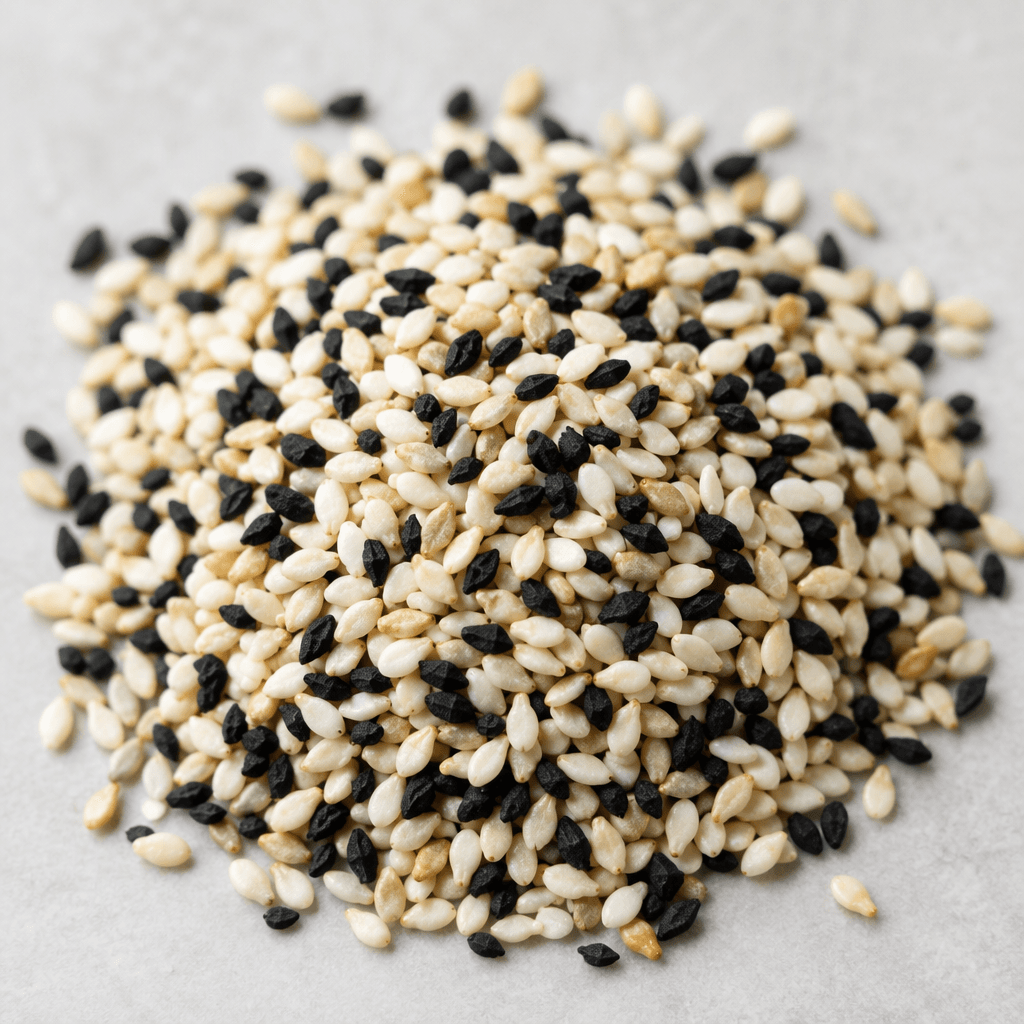
Sesame and nigella seeds Calories
Rich in minerals, healthy fats, antioxidants
In season: Spring · Summer · Autumn · Winter
CALORIES
GI
POTASSIUM
FIBER
Quick answer
1 tablespoon (medium) of Sesame and nigella seeds (10 g) has 57 calories. That works out to 570 calories per 100 g. It contains 2.3 g of carbs, 1.9 g of protein, 4.7 g of fat and 1.3 g of fiber. Its 0.3 mg of Copper covers 28% of the Daily Value. Its glycemic index is 35 (low), so it raises blood sugar slowly.
What is Sesame and nigella seeds?
Sesame and nigella seeds combine pale, nutty sesame with the small black seeds often called kalonji or black cumin. Nigella has a more pungent, peppery flavour, with hints of onion. The pairing is common in Turkish and other Middle Eastern and Mediterranean cooking, though it is not tied to a single dish or region.
You’ll often find the seeds scattered over breads and savoury pastries, or sprinkled on salads, yoghurt and roasted vegetables. They are rich in fats and fibre, with plant protein as well. A small sprinkle adds plenty of flavour and crunch; lightly toasting the seeds can bring out their aroma.
Sesame and nigella seeds Nutrition Facts
Selected: 100 g
570
KCAL / 100G
Carbs
23g
· 8% DV
Protein
18.5g
· 37% DV
Fat
47g
· 60% DV
Fiber
12.5g
· 45% DV
DV is the share of the daily value covered, on a 2,000 kcal reference diet.
Calories come from: Carbs 16% · Protein 13% · Fat 71%
Sesame and nigella seeds Vitamins & Minerals
Vitamins
B1
0.79mg · 66% DV
B6
0.81mg · 48% DV
B3
4.6mg · 29% DV
Biotin
8µg · 27% DV
Minerals
Copper
3mg · 333% DV
Phosphorus
650mg · 93% DV
Calcium
900mg · 90% DV
Magnesium
370mg · 88% DV
How Nutritious Is Sesame and nigella seeds?
Nutrient density
Very high
How many vitamins, minerals and how much fiber this food carries per calorie. A high score means a lot of nutrition for few calories.
Satiety score
Medium
An EatBetter score computed from fiber, protein and calorie density. A high score means staying full longer on the same calories.
Both scores are calculated per 100 g and do not change with the selected portion. The satiety score is EatBetter's own calculation, not a clinical measure.
Sesame and nigella seeds Glycemic Index
GLYCEMIC INDEX
GLYCEMIC LOAD
Accounts for portion size — a more realistic measure than GI alone.
How to Burn Off Sesame and nigella seeds
To burn the 570 calories in 100 g:
🚶
Walking (5 km/h)
🏃
Running (8 km/h)
🚴
Cycling
🏊
Swimming
Times are calculated with the MET equation for a 70 kg adult. Actual burn varies with your weight, age and pace.
Is Sesame and nigella seeds Processed?
NOVA 1
Unprocessed
1. Unprocessed
2. Minimally Processed
3. Processed
4. Ultra-Processed
NOVA classifies foods into 4 groups by industrial processing. NOVA 1 (unprocessed) is the healthiest.
Does Sesame and nigella seeds Contain Allergens?
Contains these allergens:
Which Diets Is Sesame and nigella seeds Good For?
Vegan
✓ Suitable
Vegetarian
✓ Suitable
Gluten-Free
✓ Suitable
Dairy-Free
— Not suitable
Mediterranean
✓ Suitable
Paleo
✓ Suitable
Whole30
— Not suitable
DASH
— Not suitable
Keto
✓ Suitable
Low FODMAP
— Not suitable
Sesame and nigella seeds Fat Profile
SATURATED
7g
MONOUNSATURATED
17.5g
POLYUNSATURATED
21.6g
Omega 6:3 ratio 35:1
Above the ideal 4:1 (35:1).
Compare Sesame and nigella seeds
Foods Similar to Sesame and nigella seeds
Frequently Asked Questions About Sesame and nigella seeds
Are nigella seeds the same as sesame seeds?
No. Nigella and sesame come from different plants and have distinct flavors and appearances. Nigella seeds are small, black, and angular, with a peppery, slightly bitter taste; sesame seeds are oval, usually pale, and milder and nuttier.
What are sesame and nigella seeds used for?
Sesame and nigella seeds are used as toppings and seasonings for breads, crackers, salads, and cooked dishes. Sesame adds a nutty richness, while nigella brings a sharper, savory note. They can be used together or separately, depending on the flavor you want.
What do sesame and nigella seeds taste like?
Sesame seeds taste mildly sweet and nutty, especially after toasting. Nigella seeds have a stronger, peppery, herbal flavor with a faint bitterness. In a blend, sesame softens nigella’s sharper taste, making the mix useful as a savory topping.
How do you use sesame and nigella seeds on naan or flatbread?
Sprinkle sesame and nigella seeds over the shaped naan or flatbread before baking, pressing them lightly into the surface. A little water or the recipe’s usual glaze helps them stick. Add them just before baking so they stay aromatic rather than becoming stale in the dough.
Can you toast sesame and nigella seeds together?
Yes, but toast them briefly over low to medium heat and watch closely. Sesame seeds take on color and release a nutty aroma, while the smaller nigella seeds can burn quickly. Remove the pan from the heat as soon as the sesame smells toasted.
Can sesame and nigella seeds be eaten raw?
Yes, both sesame and nigella seeds can be eaten raw. Sprinkle them over salads, yogurt, or bread for a milder flavor than toasted seeds provide. Keep them dry when adding them to food, and dry them thoroughly if you rinse them.
How should you store sesame and nigella seeds?
Store sesame and nigella seeds in airtight containers in a cool, dark, dry place. Heat, light, and moisture can reduce their quality; sesame’s natural oils may develop an unpleasant stale taste. Refrigeration can help preserve a larger supply for longer.
What can you use instead of sesame and nigella seeds?
For a similar crunchy topping, try sunflower seeds or poppy seeds, though neither reproduces the blend’s exact flavor. If replacing nigella specifically, a small amount of fennel or cumin can add a savory note, but it will taste different.
Are sesame and nigella seeds good for you?
Yes, sesame and nigella seeds provide minerals, unsaturated fats, and plant compounds. They are best treated as flavorful additions rather than remedies; using them in food does not establish a treatment effect. Anyone with a sesame allergy should avoid sesame-containing mixtures.
Do sesame and nigella seeds need to be ground before eating?
No, sesame and nigella seeds do not have to be ground; whole seeds work well as toppings and seasonings. Grinding releases their aromas and can make them easier to mix into sauces, but grind sesame in short bursts because its oil can turn it into a paste.
Have another question about Sesame and nigella seeds?
Ask the AI nutrition coach — calories, portions, alternatives and more, answered in seconds in the app.

Scan calories with your camera
Instant AI nutrition analysis

Nutrition data compiled from USDA FoodData Central and scientific sources.