

Ready & Packaged Foods
All →Vegetables & Legumes
All →Desserts & Confectionery
All →Meat & Protein
All →Grains & Bakery
All →Beverages
All →Milk & Dairy
All →

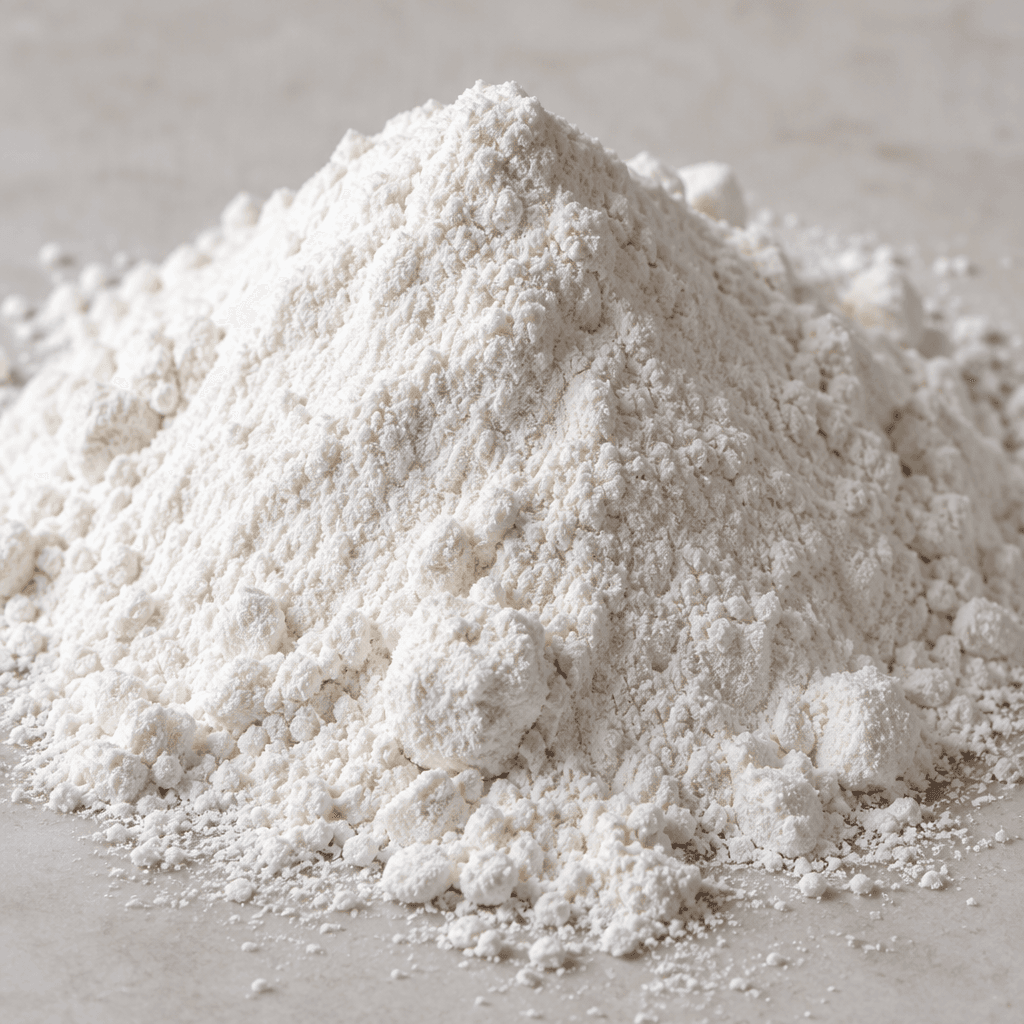
Rice flour (OCN brand) Calories
Gluten-free, finely milled rice flour
In season: Spring · Summer · Autumn · Winter
CALORIES · 100 G
GI
POTASSIUM · 100 G
FIBER · 100 G
Quick answer
1 tablespoon (medium) of Rice flour (OCN brand) (10 g) has 37 calories. That works out to 366 calories per 100 g. It contains 8 g of carbs, 0.6 g of protein, 0.1 g of fat and 0.2 g of fiber. Its 0.1 mg of Manganese covers 5% of the Daily Value. Its glycemic index is 95 (high), so it raises blood sugar quickly.
Rice flour (OCN brand) Nutrition Facts
Selected: 1 tablespoon (medium) · 10 g
37
KCAL / 10G
Carbs
8g
· 3% DV
Protein
0.6g
· 1% DV
Fat
0.1g
· 0% DV
Fiber
0.2g
· 1% DV
DV is the share of the daily value covered, on a 2,000 kcal reference diet.
Calories come from: Carbs 91% · Protein 7% · Fat 2%
Rice flour (OCN brand) nutrition facts table · 1 tablespoon (medium) (10 g)
| Nutrient | Amount | % DV |
|---|---|---|
| Calories | 37 kcal | |
| Total fat | 0.1 g | 0% |
| Saturated fat | 0.03 g | 0% |
| Trans fat | 0 g | |
| Sodium | 0.2 mg | 0% |
| Total carbohydrate | 8 g | 3% |
| Fiber | 0.2 g | 1% |
| Protein | 0.6 g | 1% |
Calories: Calories measure energy. Average daily need is 2,000 kcal. Excess calories are stored as fat, too few cause weight loss.
Carbs: Your body's primary energy source. The brain runs exclusively on carbs. Daily need: 275g.
Protein: Essential for muscle repair and cell growth. Daily need: 50g. Keeps you full and boosts metabolism.
Fat: Needed for hormone production and vitamin absorption. Daily need: 78g. Limit saturated fats, choose unsaturated.
Fiber: Critical for digestive health and satiety. Daily need: 28g. Stabilizes blood sugar, lowers cholesterol.

Log this food in EatBetter
100,000+ people use it
- Get your daily calorie target
- Snap your meal, log it in seconds
- See every vitamin and mineral

📸 Scan the code to get the app free.

How Many Calories in 1 Tablespoon of Rice flour (OCN brand)?
| Serving | Amount | Calories |
|---|---|---|
| 1 tablespoon (medium) | 10 g | 37 kcal |
| 1 tablespoon (small) | 7 g | 26 kcal |
| 1 tablespoon (large) | 15 g | 55 kcal |
| 1 serving (medium) | 30 g | 110 kcal |
| 1 serving (large) | 50 g | 183 kcal |
| 100 g | 100 g | 366 kcal |
| 1 cup (small) | 100 g | 366 kcal |
| 1 cup (medium) | 130 g | 476 kcal |
| 1 cup (large) | 160 g | 586 kcal |
| 1 pack (whole) | 500 g | 1830 kcal |
Calculated from 366 calories per 100 g.
Frequently Asked Questions About Rice flour (OCN brand)
What is OCN rice flour used for?
OCN rice flour is used to thicken soups and sauces, make batters and baked goods, and coat foods before frying. Mix it gradually into liquid to reduce lumps, or follow a recipe designed for rice flour.
Can you substitute OCN rice flour for all-purpose flour?
Not reliably in a one-to-one swap. OCN rice flour does not form gluten, so doughs and batters may turn out crumbly or dense; use a recipe formulated for rice flour or combine it with other flours and suitable binders.
Is OCN rice flour the same as glutinous rice flour?
No. OCN rice flour is finely milled ordinary rice, while glutinous rice flour is made from sticky rice and produces a much chewier, more elastic texture. They are not interchangeable in recipes such as mochi.
Can you make mochi with OCN rice flour?
No, ordinary OCN rice flour does not give mochi its characteristic stretchy, chewy texture. Mochi is traditionally made with glutinous rice flour, also called sweet rice flour, so use that rather than regular rice flour.
Can OCN rice flour be used for frying?
Yes, OCN rice flour can make a light coating for fried foods. Dust the food evenly and shake off excess flour before frying; the coating works best when the surface is not dripping wet.
Can OCN rice flour thicken sauces and soups?
Yes, OCN rice flour thickens sauces and soups when heated. First whisk it into a little cold liquid until smooth, then stir that mixture into the hot dish and cook while stirring to prevent lumps.
Can you bake cakes with OCN rice flour?
Yes, OCN rice flour works in cakes, especially in recipes made for rice flour. Cakes made with it alone can be more delicate and crumbly than wheat-flour cakes, so use a recipe with suitable binders.
Is OCN rice flour suitable for making bread?
Yes, but OCN rice flour alone will not make bread with the stretchy structure of wheat bread. Choose a rice-flour bread recipe that includes binders or a blend of other flours for a less crumbly loaf.
Is OCN rice flour suitable for baby cereal?
Yes, OCN rice flour can be cooked into baby cereal, but it should be thoroughly cooked rather than served raw. Introduce it only when the baby is ready for complementary foods, and prepare it with age-appropriate ingredients.
Can people with diabetes eat OCN rice flour?
People with diabetes can eat OCN rice flour, but its carbohydrates can raise blood glucose quickly. Consider the serving and what you eat with it as part of your meal plan; ask a dietitian or clinician for advice tailored to you.
Rice flour (OCN brand) Vitamins & Minerals
Vitamins
B3
0.16mg · 1% DV
B5
0.05mg · 1% DV
B6
0.01mg · 1% DV
B1
0mg · 0% DV
Minerals
Manganese
0.12mg · 5% DV
Phosphorus
9.8mg · 1% DV
Selenium
0.7µg · 1% DV
Copper
0.01mg · 1% DV
Potassium ⭐
7.6mg · 0% DV
Sodium
0.2mg · 0% DV
Rice flour (OCN brand) Glycemic Index
GLYCEMIC INDEX
GLYCEMIC LOAD
Accounts for portion size — a more realistic measure than GI alone.
How to Burn Off Rice flour (OCN brand)
To burn the 37 calories in 1 tablespoon (medium) (10 g):
🚶
Walking (5 km/h)
🏃
Running (8 km/h)
🚴
Cycling
🏊
Swimming
Times are calculated with the MET equation for a 70 kg adult. Actual burn varies with your weight, age and pace.
What is Rice flour (OCN brand)?
Rice flour (OCN brand) is finely milled rice with a mild flavour and a smooth texture. Across South and East Asian cooking, rice flour is used in batters, noodles, steamed cakes and puddings; it is also handy as a thickener. In many Western kitchens, it appears in gluten-free baking and is often combined with other flours for a less crumbly result.
Stir it into a little cool liquid before adding it to a hot mixture to help prevent lumps. Its nutritional profile is mostly carbohydrate, with 80 g per 100 g, and comparatively little fibre. It suits gluten-free cooking, though it does not provide wheat flour’s elasticity or rise on its own. Try it for a smooth pudding or a crisp, light batter.
How Nutritious Is Rice flour (OCN brand)?
Nutrient density
Low
How many vitamins, minerals and how much fiber this food carries per calorie. A high score means a lot of nutrition for few calories.
Satiety score
Low
An EatBetter score computed from fiber, protein and calorie density. A high score means staying full longer on the same calories.
Both scores are calculated per 100 g and do not change with the selected portion. The satiety score is EatBetter's own calculation, not a clinical measure.
Is Rice flour (OCN brand) Processed?
NOVA 2
Minimally Processed
1. Unprocessed
2. Minimally Processed
3. Processed
4. Ultra-Processed
NOVA classifies foods into 4 groups by industrial processing. NOVA 1 (unprocessed) is the healthiest.
Does Rice flour (OCN brand) Contain Allergens?
No known major allergens
Which Diets Is Rice flour (OCN brand) Good For?
Vegan
✓ Suitable
Vegetarian
✓ Suitable
Gluten-Free
✓ Suitable
Dairy-Free
— Not suitable
Mediterranean
✓ Suitable
Paleo
— Not suitable
Whole30
— Not suitable
DASH
— Not suitable
Keto
— Not suitable
Low FODMAP
— Not suitable
Rice flour (OCN brand) Fat Profile
SATURATED
0.03g
MONOUNSATURATED
0.03g
POLYUNSATURATED
0.04g
Compare Rice flour (OCN brand)
Foods Similar to Rice flour (OCN brand)
Have another question about Rice flour (OCN brand)?
Ask the AI nutrition coach — calories, portions, alternatives and more, answered in seconds in the app.

Scan calories with your camera
Instant AI nutrition analysis

Nutrition data compiled from USDA FoodData Central and scientific sources.