

Ready & Packaged Foods
All →Vegetables & Legumes
All →Desserts & Confectionery
All →Meat & Protein
All →Grains & Bakery
All →Beverages
All →Milk & Dairy
All →

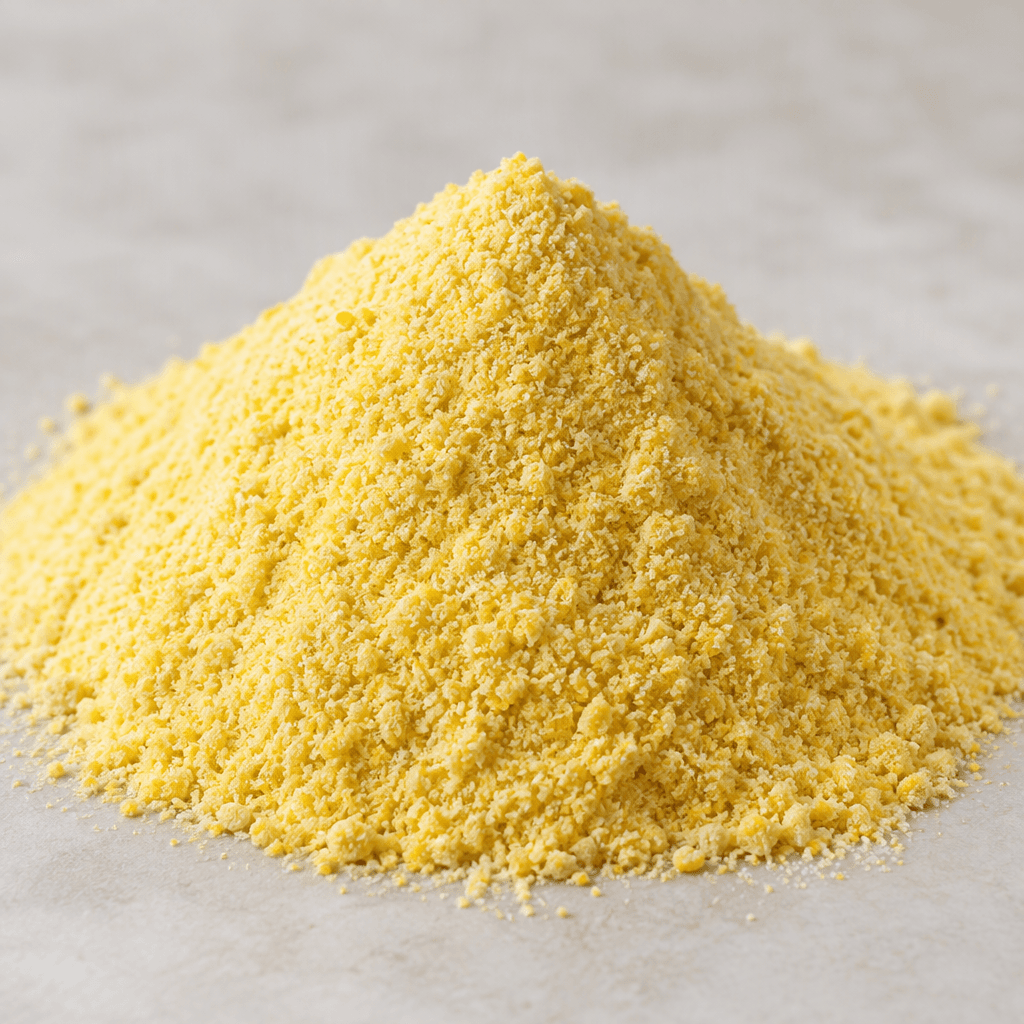
Corn Flour Calories
Gluten-free, carbohydrate source, contains B vitamins
In season: Spring · Summer · Autumn · Winter
CALORIES
GI
POTASSIUM
FIBER
Quick answer
1 cup (medium) of Corn Flour (120 g) has 433 calories. That works out to 361 calories per 100 g. It contains 92.3 g of carbs, 8.3 g of protein, 4.7 g of fat and 8.8 g of fiber. Its 0.5 mg of B1 covers 39% of the Daily Value. Its glycemic index is 70 (high), so it raises blood sugar quickly.
What is Corn Flour?
Corn flour is made by finely grinding dried maize kernels into a pale yellow powder. Maize originated in the Americas, and ground maize is now used in many cuisines, from tortillas and arepas to breads and batters. Here, corn flour means ground whole maize, not the starch sold as “cornflour” in some countries.
Its flavour is gently sweet and earthy; depending on how finely it is milled, it can make a smooth batter or give baked goods a pleasantly grainy crumb. It is mainly a source of carbohydrates, with fibre and B vitamins as well. Use it in cornbread or to coat fish before frying; blending it with wheat flour can make a softer, less crumbly loaf.
Corn Flour Nutrition Facts
Selected: 100 g
361
KCAL / 100G
Carbs
76.9g
· 28% DV
Protein
6.9g
· 14% DV
Fat
3.9g
· 5% DV
Fiber
7.3g
· 26% DV
DV is the share of the daily value covered, on a 2,000 kcal reference diet.
Calories come from: Carbs 83% · Protein 7% · Fat 10%
Corn Flour Vitamins & Minerals
Vitamins
B1
0.39mg · 33% DV
B6
0.49mg · 29% DV
B3
2.3mg · 14% DV
B2
0.12mg · 9% DV
Minerals
Manganese
1mg · 43% DV
Phosphorus
89mg · 13% DV
Zinc
1mg · 9% DV
Potassium ⭐
315mg · 9% DV
How Nutritious Is Corn Flour?
Nutrient density
Medium
How many vitamins, minerals and how much fiber this food carries per calorie. A high score means a lot of nutrition for few calories.
Satiety score
Medium
An EatBetter score computed from fiber, protein and calorie density. A high score means staying full longer on the same calories.
Both scores are calculated per 100 g and do not change with the selected portion. The satiety score is EatBetter's own calculation, not a clinical measure.
Corn Flour Glycemic Index
GLYCEMIC INDEX
GLYCEMIC LOAD
Accounts for portion size — a more realistic measure than GI alone.
How to Burn Off Corn Flour
To burn the 361 calories in 100 g:
🚶
Walking (5 km/h)
🏃
Running (8 km/h)
🚴
Cycling
🏊
Swimming
Times are calculated with the MET equation for a 70 kg adult. Actual burn varies with your weight, age and pace.
Is Corn Flour Processed?
NOVA 2
Minimally Processed
1. Unprocessed
2. Minimally Processed
3. Processed
4. Ultra-Processed
NOVA classifies foods into 4 groups by industrial processing. NOVA 1 (unprocessed) is the healthiest.
Does Corn Flour Contain Allergens?
No known major allergens
Which Diets Is Corn Flour Good For?
Vegan
✓ Suitable
Vegetarian
✓ Suitable
Gluten-Free
✓ Suitable
Dairy-Free
— Not suitable
Mediterranean
✓ Suitable
Paleo
✓ Suitable
Whole30
— Not suitable
DASH
— Not suitable
Keto
— Not suitable
Low FODMAP
— Not suitable
Corn Flour Fat Profile
SATURATED
0.5g
MONOUNSATURATED
1.1g
POLYUNSATURATED
2g
Omega 6:3 ratio 63.3:1
Above the ideal 4:1 (63.3:1).
Compare Corn Flour
Foods Similar to Corn Flour
Frequently Asked Questions About Corn Flour
What is corn flour used for?
Corn flour is used in cornbread, baked goods, batters, and as a coating for fried foods. It can also add body to soups and sauces, but it does not thicken them in quite the same way as cornstarch.
Is corn flour the same as cornstarch?
No. Corn flour is ground corn, while cornstarch is the purified starch separated from the kernel. Corn flour adds corn flavor and texture; cornstarch is mainly used to thicken sauces and usually needs to be mixed with liquid before heating.
What is the difference between corn flour and cornmeal?
Corn flour is ground more finely than cornmeal, which has a coarser, grainier texture. The exact naming varies by country, so compare the texture: fine corn flour suits smoother batters, while cornmeal gives breads and coatings more bite.
Can you use corn flour to thicken soup or gravy?
Yes, corn flour can thicken soup or gravy, though it may leave a more noticeable corn flavor and a less glossy finish than cornstarch. Whisk it into cold liquid first, then stir the mixture into the hot dish to prevent lumps.
Can corn flour replace wheat flour in baking?
Not as a straight one-for-one replacement in most baking. Corn flour lacks gluten, so breads and cakes made entirely with it can turn crumbly or dense; use a recipe developed for corn flour or replace only part of the wheat flour.
Can you make tortillas with corn flour?
Usually not with ordinary corn flour alone. Traditional corn tortillas are made with masa harina, corn treated with lime and ground into a dough; plain corn flour lacks that treatment and may not form tortillas that hold together.
Can you use corn flour for frying?
Yes, corn flour works as a coating for fish, chicken, and vegetables, giving them a crisp, lightly corn-flavored crust. Pat the food dry, coat it evenly, shake off excess flour, and fry until cooked through.
How should you store corn flour, and does it go bad?
Store corn flour in a tightly sealed container in a cool, dry cupboard, away from sunlight and heat. It can go stale or rancid over time; discard it if it smells musty or bitter, or shows signs of moisture or pests.
Is corn flour suitable for people with diabetes?
Corn flour contains carbohydrates that can raise blood sugar, so portion size and what you eat with it matter. Pairing it with protein and vegetables can make a meal more balanced; people managing diabetes can ask their clinician or dietitian about portions.
Can you eat corn flour raw?
It is better not to eat corn flour raw. Like other uncooked flours, it can carry germs from handling or processing, and raw flour is difficult to digest; cook it thoroughly in bread, porridge, or another recipe first.
Have another question about Corn Flour?
Ask the AI nutrition coach — calories, portions, alternatives and more, answered in seconds in the app.

Scan calories with your camera
Instant AI nutrition analysis

Nutrition data compiled from USDA FoodData Central and scientific sources.