

Ready & Packaged Foods
All →Vegetables & Legumes
All →Desserts & Confectionery
All →Meat & Protein
All →Grains & Bakery
All →Beverages
All →Milk & Dairy
All →

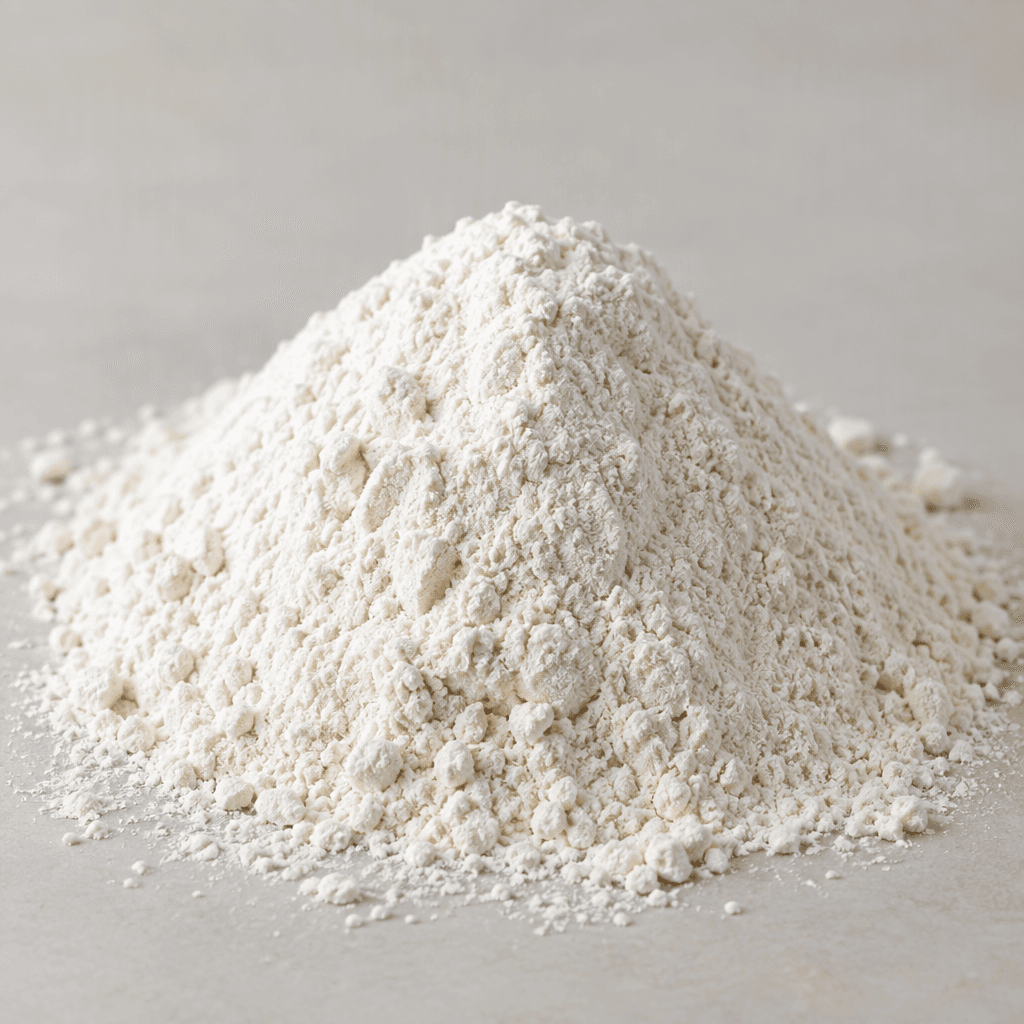
Flour Calories
Versatile staple, source of carbohydrates
In season: Spring · Summer · Autumn · Winter
CALORIES
GI
POTASSIUM
FIBER
Quick answer
1 cup (medium) of Flour (120 g) has 437 calories. That works out to 364 calories per 100 g. It contains 91.6 g of carbs, 12.4 g of protein, 1.2 g of fat and 3.2 g of fiber. Its 33.6 µg of Selenium covers 61% of the Daily Value. Its glycemic index is 85 (high), so it raises blood sugar quickly.
What is Flour?
Flour is a fine powder made by milling grains; the white flour shown here is wheat flour. It is a pantry staple used around the world to make bread, pasta, pastries and sauces, with local varieties and recipes shaping how it appears at the table.
Its flavour is mild, and when mixed with liquid it forms dough that can bake up tender, crisp or chewy depending on the recipe. It also thickens soups and gravies. Flour is mainly a source of carbohydrates, with some protein and little fat. Choose the type that suits your recipe, or replace part of the white flour with wholemeal flour when you want a heartier texture and more fibre.
Flour Nutrition Facts
Selected: 100 g
364
KCAL / 100G
Carbs
76.3g
· 28% DV
Protein
10.3g
· 21% DV
Fat
1g
· 1% DV
Fiber
2.7g
· 10% DV
DV is the share of the daily value covered, on a 2,000 kcal reference diet.
Calories come from: Carbs 86% · Protein 12% · Fat 2%
Flour Vitamins & Minerals
Vitamins
B1
0.11mg · 9% DV
B3
1.2mg · 8% DV
B5
0.4mg · 8% DV
Folate
23µg · 6% DV
Minerals
Selenium
28µg · 51% DV
Phosphorus
108mg · 15% DV
Zinc
1mg · 9% DV
Iron
1mg · 6% DV
How Nutritious Is Flour?
Nutrient density
Low
How many vitamins, minerals and how much fiber this food carries per calorie. A high score means a lot of nutrition for few calories.
Satiety score
Low
An EatBetter score computed from fiber, protein and calorie density. A high score means staying full longer on the same calories.
Both scores are calculated per 100 g and do not change with the selected portion. The satiety score is EatBetter's own calculation, not a clinical measure.
Flour Glycemic Index
GLYCEMIC INDEX
GLYCEMIC LOAD
Accounts for portion size — a more realistic measure than GI alone.
How to Burn Off Flour
To burn the 364 calories in 100 g:
🚶
Walking (5 km/h)
🏃
Running (8 km/h)
🚴
Cycling
🏊
Swimming
Times are calculated with the MET equation for a 70 kg adult. Actual burn varies with your weight, age and pace.
Is Flour Processed?
NOVA 3
Processed
1. Unprocessed
2. Minimally Processed
3. Processed
4. Ultra-Processed
NOVA classifies foods into 4 groups by industrial processing. NOVA 1 (unprocessed) is the healthiest.
Does Flour Contain Allergens?
Contains these allergens:
Which Diets Is Flour Good For?
Vegan
✓ Suitable
Vegetarian
✓ Suitable
Gluten-Free
— Not suitable
Dairy-Free
— Not suitable
Mediterranean
✓ Suitable
Paleo
— Not suitable
Whole30
— Not suitable
DASH
— Not suitable
Keto
— Not suitable
Low FODMAP
— Not suitable
Flour Fat Profile
SATURATED
0.2g
MONOUNSATURATED
0.1g
POLYUNSATURATED
0.5g
Omega 6:3 ratio 14.3:1
Above the ideal 4:1 (14.3:1).
Compare Flour
Foods Similar to Flour
Frequently Asked Questions About Flour
What is flour made from?
Flour is made by grinding grains or other plant foods into a powder. The white flour shown here is wheat flour; wheat’s gluten-forming proteins help give many doughs their structure and elasticity.
Does flour go bad?
Yes, flour can lose quality or spoil, especially if it gets damp or is stored poorly. Discard it if it smells musty or sour, has changed color, or shows signs of mold or insects.
How should flour be stored?
Store flour in a clean, airtight container in a cool, dry place, away from sunlight and strong-smelling foods. Keeping moisture out helps prevent clumping and spoilage and protects the flour from pantry pests.
Can you freeze flour?
Yes, flour can be frozen in an airtight, moisture-proof container or bag. Let it come to room temperature while still sealed before opening, so condensation forms on the outside rather than dampening the flour.
Why does flour get bugs?
Flour can contain insect eggs before it reaches your pantry, or pests can get into an opened package. A tightly sealed container helps limit infestations; inspect nearby dry foods if you find insects in your flour.
Should you sift flour before using it?
Not always. Sifting breaks up clumps and aerates flour, which can help with delicate cakes or a smooth batter. If the recipe does not call for it and the flour is already lump-free, you can usually skip the step.
What can you use instead of flour?
The best substitute depends on the recipe: oat flour or cornstarch can work in some dishes, but they do not behave exactly like wheat flour. Swapping one for another may change the texture, and a direct one-to-one replacement may not work.
Is it safe to eat raw flour?
No, raw flour is not considered safe to eat because it can carry harmful bacteria. Baking or cooking flour-containing foods thoroughly helps make them safe; avoid tasting raw dough or batter.
What is the difference between white flour and whole-wheat flour?
White flour is milled after most of the wheat bran and germ have been removed, while whole-wheat flour retains more of the grain. They differ in color, texture, and how they behave in recipes.
Can you use flour after finding bugs in it?
No, discard flour with insects or signs of infestation; sifting does not reliably remove eggs or contamination. Seal it in a bag before throwing it away, then clean the container and check other dry goods nearby.
Have another question about Flour?
Ask the AI nutrition coach — calories, portions, alternatives and more, answered in seconds in the app.

Scan calories with your camera
Instant AI nutrition analysis

Nutrition data compiled from USDA FoodData Central and scientific sources.