

Ready & Packaged Foods
All →Vegetables & Legumes
All →Desserts & Confectionery
All →Meat & Protein
All →Grains & Bakery
All →Beverages
All →Milk & Dairy
All →

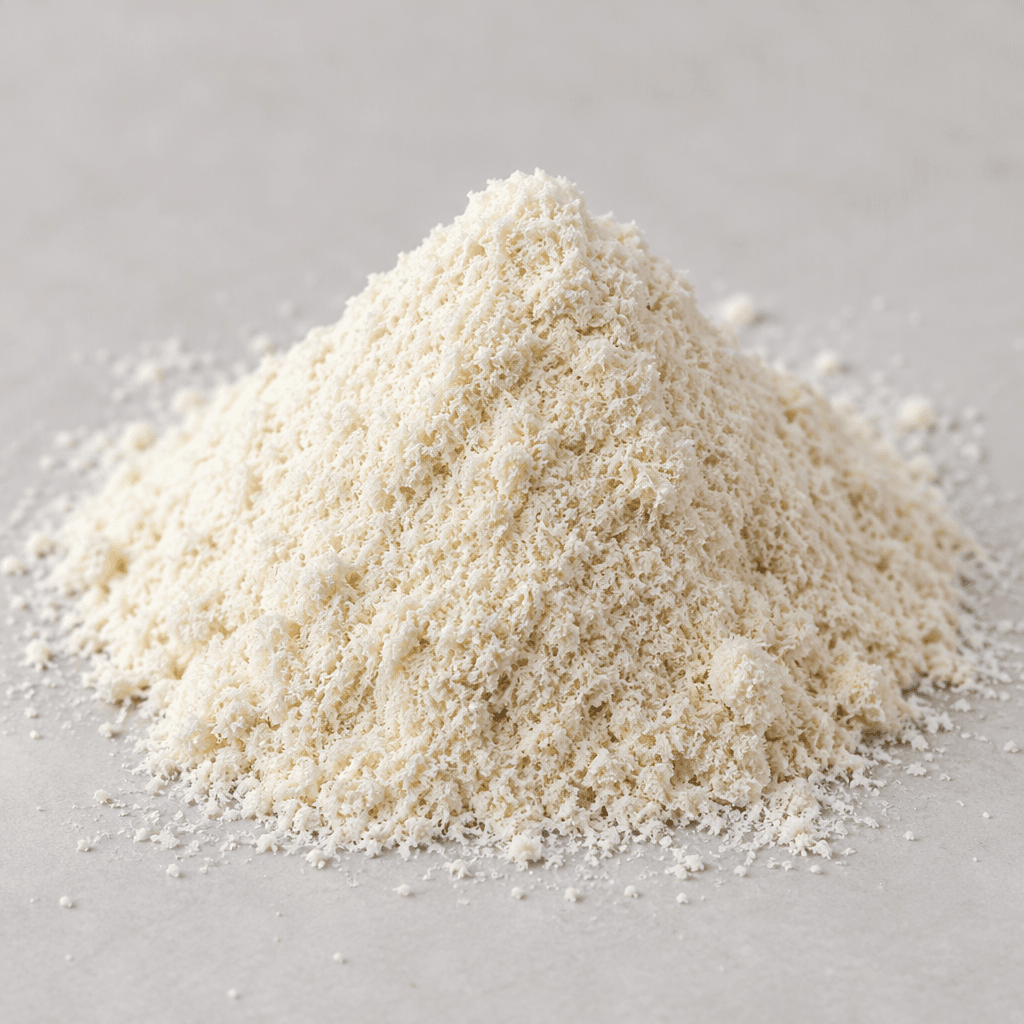
Coconut Flour Calories
Gluten-free, high fiber, low carb, good protein source
In season: Spring · Summer · Autumn · Winter
CALORIES
GI
POTASSIUM
FIBER
Quick answer
2 tablespoon (medium) of Coconut Flour (15 g) has 60 calories. That works out to 400 calories per 100 g. It contains 9 g of carbs, 2.7 g of protein, 1.8 g of fat and 5.4 g of fiber. Its 0.3 mg of Manganese covers 14% of the Daily Value. Its glycemic index is 45 (low), so it raises blood sugar slowly.
What is Coconut Flour?
Coconut flour is made by drying and finely grinding coconut flesh, often after some of its milk or oil has been extracted. It has a gentle coconut sweetness and a dry, fibrous texture that absorbs liquid readily.
Used in coconut-growing regions and in gluten-free home baking worldwide, it works well in pancakes, muffins, cakes and biscuits. It is not a straightforward one-for-one replacement for wheat flour: recipes usually need more liquid and enough egg or another binder to hold together. Its standout nutritional feature is its fibre content, at 36 g per 100 g. For a lighter, less dense bake, use a modest amount alongside another flour, or stir a spoonful into yoghurt or a smoothie.
Coconut Flour Nutrition Facts
Selected: 100 g
400
KCAL / 100G
Carbs
60g
· 22% DV
Protein
18g
· 36% DV
Fat
12g
· 15% DV
Fiber
36g
· 129% DV
DV is the share of the daily value covered, on a 2,000 kcal reference diet.
Calories come from: Carbs 57% · Protein 17% · Fat 26%

Log this food in EatBetter
100,000+ people use it
- Get your daily calorie target
- Snap your meal, log it in seconds
- See every vitamin and mineral

📸 Scan the code to get the app free.

Coconut Flour Vitamins & Minerals
Vitamins
B6
0.3mg · 18% DV
B5
0.6mg · 12% DV
Folate
35µg · 9% DV
B1
0.1mg · 8% DV
Minerals
Manganese
2mg · 87% DV
Iron
6mg · 33% DV
Phosphorus
200mg · 29% DV
Potassium ⭐
400mg · 12% DV
Copper
0mg · 0% DV
How Nutritious Is Coconut Flour?
Nutrient density
High
How many vitamins, minerals and how much fiber this food carries per calorie. A high score means a lot of nutrition for few calories.
Satiety score
Medium
An EatBetter score computed from fiber, protein and calorie density. A high score means staying full longer on the same calories.
Both scores are calculated per 100 g and do not change with the selected portion. The satiety score is EatBetter's own calculation, not a clinical measure.
Coconut Flour Glycemic Index
GLYCEMIC INDEX
GLYCEMIC LOAD
Accounts for portion size — a more realistic measure than GI alone.
How to Burn Off Coconut Flour
To burn the 400 calories in 100 g:
🚶
Walking (5 km/h)
🏃
Running (8 km/h)
🚴
Cycling
🏊
Swimming
Times are calculated with the MET equation for a 70 kg adult. Actual burn varies with your weight, age and pace.
Is Coconut Flour Processed?
NOVA 2
Minimally Processed
1. Unprocessed
2. Minimally Processed
3. Processed
4. Ultra-Processed
NOVA classifies foods into 4 groups by industrial processing. NOVA 1 (unprocessed) is the healthiest.
Does Coconut Flour Contain Allergens?
No known major allergens
Which Diets Is Coconut Flour Good For?
Vegan
✓ Suitable
Vegetarian
✓ Suitable
Gluten-Free
✓ Suitable
Dairy-Free
— Not suitable
Mediterranean
✓ Suitable
Paleo
✓ Suitable
Whole30
— Not suitable
DASH
— Not suitable
Keto
✓ Suitable
Low FODMAP
— Not suitable
Coconut Flour Fat Profile
SATURATED
10g
MONOUNSATURATED
1.2g
POLYUNSATURATED
0.17g
Omega 6:3 ratio 7.5:1
Above the ideal 4:1 (7.5:1).
Compare Coconut Flour
Foods Similar to Coconut Flour
Frequently Asked Questions About Coconut Flour
Can you replace all-purpose flour with Coconut Flour?
No, Coconut Flour is not a one-to-one substitute for all-purpose flour. It absorbs much more liquid and has no gluten, so replacing flour by equal weight or volume can leave baked goods dry and crumbly. Use a recipe developed for Coconut Flour.
Why does Coconut Flour absorb so much liquid?
Coconut Flour absorbs a lot of liquid because its fine, fiber-rich structure holds moisture. Batter can thicken as it sits, so add liquid gradually and allow a short resting period before deciding whether it needs more.
Do you need eggs when baking with Coconut Flour?
Often, yes: many Coconut Flour baking recipes use eggs to bind the batter and provide structure. Coconut Flour lacks gluten and can make baked goods crumbly, so follow a tested recipe rather than simply adding it to a standard one.
What can you make with Coconut Flour?
Coconut Flour works well in recipes for muffins, cookies, cakes, and pancakes. You can also stir a small amount into yogurt or porridge to thicken it, but add it gradually because it absorbs liquid quickly.
Can you make pancakes with Coconut Flour?
Yes, you can make pancakes with Coconut Flour. Its strong absorbency can make the batter thick, and its lack of gluten changes the texture, so a pancake recipe written specifically for Coconut Flour is the most reliable choice.
Does Coconut Flour taste strongly of coconut?
Coconut Flour has a mild coconut flavor, which can be more noticeable in lightly flavored recipes. Cocoa, vanilla, cinnamon, or other pronounced flavors can balance it when you do not want the coconut taste to stand out.
What is the difference between Coconut Flour and almond flour?
Coconut Flour absorbs far more liquid and has a fibrous texture, while almond flour is oilier and gives baked goods a denser, richer crumb. They are not interchangeable in equal amounts; each needs recipes suited to its properties.
Can Coconut Flour be used to make bread?
Yes, Coconut Flour can be used to make bread, but it does not behave like wheat flour on its own. Bread recipes commonly pair it with eggs or other binders to help the loaf hold together.
How should you store Coconut Flour?
Store Coconut Flour in a tightly sealed container in a cool, dry place. Keep moisture out to prevent clumping and spoilage, and follow any storage directions on the package, especially after opening.
Can you make Coconut Flour at home?
Yes, you can make Coconut Flour at home by drying the leftover coconut pulp from making coconut milk and grinding it finely. Homemade flour may be coarser or retain more moisture than packaged flour, so check the batter texture as you cook.
Have another question about Coconut Flour?
Ask the AI nutrition coach — calories, portions, alternatives and more, answered in seconds in the app.

Scan calories with your camera
Instant AI nutrition analysis

Nutrition data compiled from USDA FoodData Central and scientific sources.