

Ready & Packaged Foods
All →Vegetables & Legumes
All →Desserts & Confectionery
All →Meat & Protein
All →Grains & Bakery
All →Beverages
All →Milk & Dairy
All →

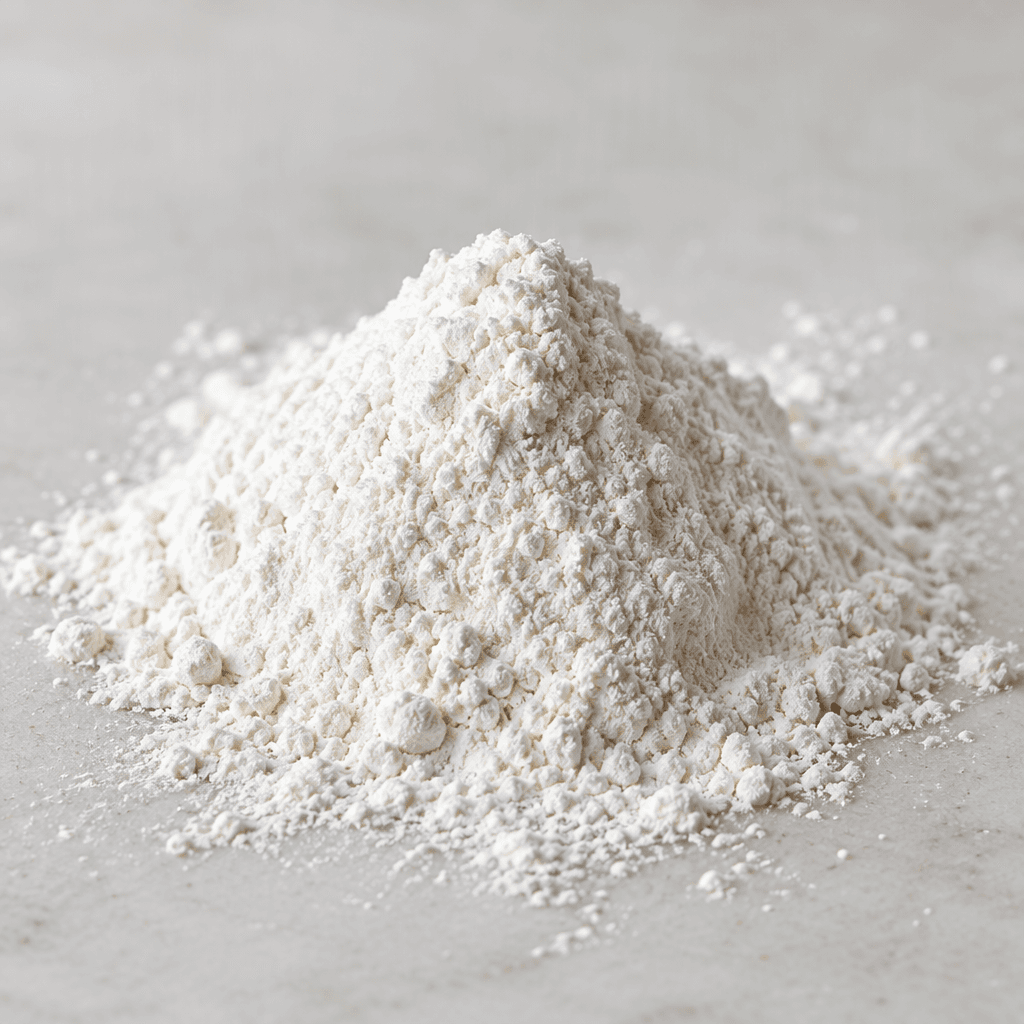
White flour Calories
Refined wheat flour, low fiber, high carbohydrate
In season: Spring · Summer · Autumn · Winter
CALORIES
GI
POTASSIUM
FIBER
Quick answer
1 cup (medium) of White flour (120 g) has 437 calories. That works out to 364 calories per 100 g. It contains 91.6 g of carbs, 12.4 g of protein, 1.2 g of fat and 3.2 g of fiber. Its 27.6 µg of Selenium covers 50% of the Daily Value. Its glycemic index is 85 (high), so it raises blood sugar quickly.
What is White flour?
White flour is made by milling wheat after much of the bran and germ have been removed, leaving a fine, pale powder. It is a versatile baking ingredient used for bread, cakes, biscuits, pastries and pasta, and can also thicken soups or sauces.
Its flavour is mild and its texture soft and fine, helping batters and doughs turn out smooth. Across many English-speaking kitchens, it is a familiar pantry staple for everyday baking and homemade bread. White flour is mainly a source of carbohydrate and is relatively low in fibre. For a more fibre-rich bake, you can replace part of it with wholemeal flour, adjusting the liquid if the dough feels dry.
White flour Nutrition Facts
Selected: 100 g
364
KCAL / 100G
Carbs
76.3g
· 28% DV
Protein
10.3g
· 21% DV
Fat
1g
· 1% DV
Fiber
2.7g
· 10% DV
DV is the share of the daily value covered, on a 2,000 kcal reference diet.
Calories come from: Carbs 86% · Protein 12% · Fat 2%

Log this food in EatBetter
100,000+ people use it
- Get your daily calorie target
- Snap your meal, log it in seconds
- See every vitamin and mineral

📸 Scan the code to get the app free.

White flour Vitamins & Minerals
Vitamins
Folate
26µg · 7% DV
B1
0.06mg · 5% DV
B5
0.2mg · 4% DV
Biotin
1.2µg · 4% DV
Minerals
Selenium
23µg · 42% DV
Phosphorus
108mg · 15% DV
Potassium ⭐
107mg · 3% DV
Manganese
0mg · 0% DV
Copper
0mg · 0% DV
How Nutritious Is White flour?
Nutrient density
Low
How many vitamins, minerals and how much fiber this food carries per calorie. A high score means a lot of nutrition for few calories.
Satiety score
Low
An EatBetter score computed from fiber, protein and calorie density. A high score means staying full longer on the same calories.
Both scores are calculated per 100 g and do not change with the selected portion. The satiety score is EatBetter's own calculation, not a clinical measure.
White flour Glycemic Index
GLYCEMIC INDEX
GLYCEMIC LOAD
Accounts for portion size — a more realistic measure than GI alone.
How to Burn Off White flour
To burn the 364 calories in 100 g:
🚶
Walking (5 km/h)
🏃
Running (8 km/h)
🚴
Cycling
🏊
Swimming
Times are calculated with the MET equation for a 70 kg adult. Actual burn varies with your weight, age and pace.
Is White flour Processed?
NOVA 3
Processed
1. Unprocessed
2. Minimally Processed
3. Processed
4. Ultra-Processed
NOVA classifies foods into 4 groups by industrial processing. NOVA 1 (unprocessed) is the healthiest.
Does White flour Contain Allergens?
Contains these allergens:
Which Diets Is White flour Good For?
Vegan
— Not suitable
Vegetarian
✓ Suitable
Gluten-Free
— Not suitable
Dairy-Free
— Not suitable
Mediterranean
— Not suitable
Paleo
— Not suitable
Whole30
— Not suitable
DASH
— Not suitable
Keto
— Not suitable
Low FODMAP
— Not suitable
White flour Fat Profile
SATURATED
0.16g
MONOUNSATURATED
0.13g
POLYUNSATURATED
0.37g
Omega 6:3 ratio 30:1
Above the ideal 4:1 (30:1).
Compare White flour
Foods Similar to White flour
Frequently Asked Questions About White flour
What is the difference between white flour and whole wheat flour?
White flour is milled after the bran and germ are removed, while whole wheat flour includes all parts of the wheat kernel. Whole wheat flour provides more fiber and gives breads and baked goods a denser texture.
Can I substitute whole wheat flour for white flour?
Yes, but a full one-for-one swap can make baked goods denser and drier because whole wheat flour absorbs more liquid. In cakes and pastries, replace only part of the white flour at first and adjust the liquid if the batter feels stiff.
How should I store white flour?
Keep white flour in an airtight container in a cool, dry place away from sunlight, heat, and strong-smelling foods. Moisture can cause clumping, while an open package is more exposed to pantry pests and odors.
Is white flour the same as all-purpose flour?
Usually, yes: in the United States, all-purpose flour is a common type of white wheat flour. The term describes its moderate protein level and broad baking uses; flour strength and labeling can vary between countries.
Can you make bread with white flour?
Yes. White flour contains gluten-forming proteins that help bread dough stretch and trap gas as it rises. Combine it with yeast, water, and salt, then knead and proof the dough; different flours may absorb different amounts of water.
Should you sift white flour before baking?
Not always. Sifting white flour breaks up lumps and can help produce a lighter texture in delicate cakes, but it is usually unnecessary for bread dough. Follow the recipe if it specifically calls for flour to be sifted.
Why does dough made with white flour fail to rise?
White-flour yeast dough may stay flat if the yeast is inactive, the liquid is too hot or too cold, or the dough has not had enough time to proof. Use fresh yeast, warm—not hot—liquid, and let the dough rise until visibly expanded.
Is white flour bad for people with diabetes?
White-flour foods can raise blood sugar quickly, so people with diabetes may need to manage portions and pair them with other foods in a balanced meal. For advice matched to your medication and glucose targets, consult your diabetes care team.
Does eating white flour cause weight gain?
White flour does not cause weight gain by itself, but pastries and other foods made with it can be easy to overeat and may contribute to excess energy intake. Portion size and how often you eat them matter.
Is it safe to eat raw white flour?
No. Raw white flour can carry harmful germs, so do not taste uncooked batter or dough. Bake foods thoroughly and wash hands and surfaces that have contacted raw flour before using them for ready-to-eat foods.
Have another question about White flour?
Ask the AI nutrition coach — calories, portions, alternatives and more, answered in seconds in the app.

Scan calories with your camera
Instant AI nutrition analysis

Nutrition data compiled from USDA FoodData Central and scientific sources.