

Ready & Packaged Foods
All →Vegetables & Legumes
All →Desserts & Confectionery
All →Meat & Protein
All →Grains & Bakery
All →Beverages
All →Milk & Dairy
All →

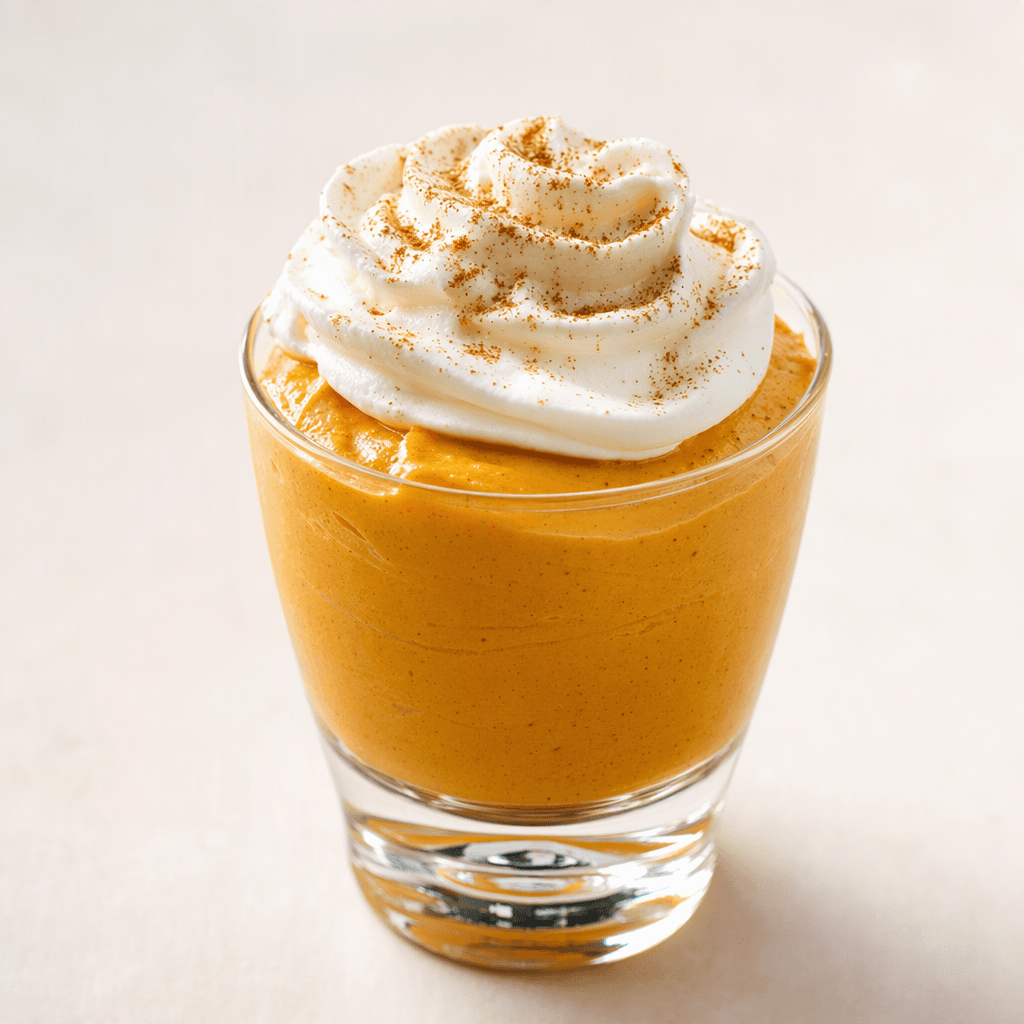
Pumpkin mousse Calories
Light, creamy mousse with pumpkin
In season: Autumn · Winter
CALORIES
GI
POTASSIUM
FIBER
Quick answer
1 serving (medium) of Pumpkin mousse (120 g) has 168 calories. That works out to 140 calories per 100 g. It contains 26.4 g of carbs, 2.8 g of protein, 5.4 g of fat and 1.9 g of fiber. Its 504 µg of Vitamin A covers 56% of the Daily Value. Its glycemic index is 55 (medium), so it raises blood sugar at a moderate pace.
What is Pumpkin mousse?
Pumpkin mousse is a spoonable dessert made by folding pumpkin purée into a creamy mixture, often with cream and eggs. It uses the airy mousse technique rather than the slow-cooked style of pumpkin desserts familiar in some cuisines, and is served in different forms across home kitchens and restaurant menus rather than belonging to one clearly defined regional tradition.
Its texture is soft and light, with a mellow sweetness that can be deepened with spices such as cinnamon or nutmeg. Serve it chilled after a meal, or top it with toasted nuts for crunch. At 140 calories per 100 g, it is a relatively modest dessert portion, though sweetness and richness vary by recipe; using less cream lets the pumpkin flavour take centre stage.
Pumpkin mousse Nutrition Facts
Selected: 100 g
140
KCAL / 100G
Carbs
22g
· 8% DV
Protein
2.3g
· 5% DV
Fat
4.5g
· 6% DV
Fiber
1.6g
· 6% DV
DV is the share of the daily value covered, on a 2,000 kcal reference diet.
Calories come from: Carbs 64% · Protein 7% · Fat 29%
Pumpkin mousse Vitamins & Minerals
Vitamins
Vitamin A
420µg · 47% DV
B2
0.09mg · 7% DV
Vitamin E
1.1mg · 7% DV
B5
0.32mg · 6% DV
Minerals
Iron
1mg · 6% DV
Phosphorus
38mg · 5% DV
Calcium
38mg · 4% DV
Potassium ⭐
140mg · 4% DV
How Nutritious Is Pumpkin mousse?
Nutrient density
Low
How many vitamins, minerals and how much fiber this food carries per calorie. A high score means a lot of nutrition for few calories.
Satiety score
Medium
An EatBetter score computed from fiber, protein and calorie density. A high score means staying full longer on the same calories.
Both scores are calculated per 100 g and do not change with the selected portion. The satiety score is EatBetter's own calculation, not a clinical measure.
Pumpkin mousse Glycemic Index
GLYCEMIC INDEX
GLYCEMIC LOAD
Accounts for portion size — a more realistic measure than GI alone.
How to Burn Off Pumpkin mousse
To burn the 140 calories in 100 g:
🚶
Walking (5 km/h)
🏃
Running (8 km/h)
🚴
Cycling
🏊
Swimming
Times are calculated with the MET equation for a 70 kg adult. Actual burn varies with your weight, age and pace.
Is Pumpkin mousse Processed?
NOVA 3
Processed
1. Unprocessed
2. Minimally Processed
3. Processed
4. Ultra-Processed
NOVA classifies foods into 4 groups by industrial processing. NOVA 1 (unprocessed) is the healthiest.
Does Pumpkin mousse Contain Allergens?
Contains these allergens:
Which Diets Is Pumpkin mousse Good For?
Vegan
— Not suitable
Vegetarian
✓ Suitable
Gluten-Free
— Not suitable
Dairy-Free
— Not suitable
Mediterranean
— Not suitable
Paleo
— Not suitable
Whole30
— Not suitable
DASH
— Not suitable
Keto
— Not suitable
Low FODMAP
— Not suitable
Pumpkin mousse Fat Profile
SATURATED
2.1g
MONOUNSATURATED
1.3g
POLYUNSATURATED
0.15g
Omega 6:3 ratio 4:1
Below the ideal 4:1 — a good omega balance.
Compare Pumpkin mousse
Foods Similar to Pumpkin mousse
Frequently Asked Questions About Pumpkin mousse
How do you make pumpkin mousse?
Pumpkin mousse is made by folding pumpkin purée into whipped cream or another airy base, then chilling it until set. Sweeten the purée and season it first; fold gently so you keep the mixture light rather than knocking out the air.
What is pumpkin mousse made of?
Pumpkin mousse usually contains pumpkin purée, cream, sugar, and warming spices such as cinnamon. Some recipes also use eggs, gelatin, or chocolate, so check the specific recipe if you need to avoid an ingredient.
Can pumpkin mousse be made with canned pumpkin?
Yes, pumpkin mousse works well with canned pumpkin purée. Use plain purée rather than pumpkin pie filling, which is already sweetened and spiced; if the purée seems watery, drain or reduce it before folding it into the cream.
What is the difference between pumpkin mousse and pumpkin pie?
Pumpkin mousse is a chilled, airy dessert, while pumpkin pie is baked in a pastry crust and has a denser custard filling. Mousse is typically served in cups, without the crust that defines a pie.
Can you make pumpkin mousse without gelatin?
Yes, pumpkin mousse can be made without gelatin. Whipped cream and thick pumpkin purée can give it a soft, spoonable set after chilling, though it may be less firm than a gelatin-based version.
Can pumpkin mousse be made ahead of time?
Yes, pumpkin mousse is well suited to making ahead. Prepare and portion it the day before serving, cover the cups, and refrigerate them; add crunchy toppings just before serving so they stay crisp.
How long does pumpkin mousse last in the fridge?
Pumpkin mousse generally keeps for about 2–3 days in a covered container in the refrigerator. Since many versions contain cream or eggs, keep it chilled and discard it if its smell or appearance changes.
Can you freeze pumpkin mousse?
You can freeze pumpkin mousse, but thawing may make its creamy texture watery or separated. Freeze it in a sealed, freezer-safe container and thaw it in the refrigerator; it may be better served partially frozen if the texture changes.
How do you keep pumpkin mousse from getting runny?
Use thick pumpkin purée and let it cool completely before folding it into the whipped cream. Drain watery purée first, and fold gently; warm purée or overmixing can deflate the cream and leave the mousse loose.
What can you serve with pumpkin mousse?
Serve pumpkin mousse chilled with a crisp cookie, toasted pecans, or a little whipped cream. A crunchy topping contrasts with the mousse’s soft texture; add it at the last moment to keep it from becoming soggy.
Have another question about Pumpkin mousse?
Ask the AI nutrition coach — calories, portions, alternatives and more, answered in seconds in the app.

Scan calories with your camera
Instant AI nutrition analysis

Nutrition data compiled from USDA FoodData Central and scientific sources.