

Ready & Packaged Foods
All →Vegetables & Legumes
All →Desserts & Confectionery
All →Meat & Protein
All →Grains & Bakery
All →Beverages
All →Milk & Dairy
All →

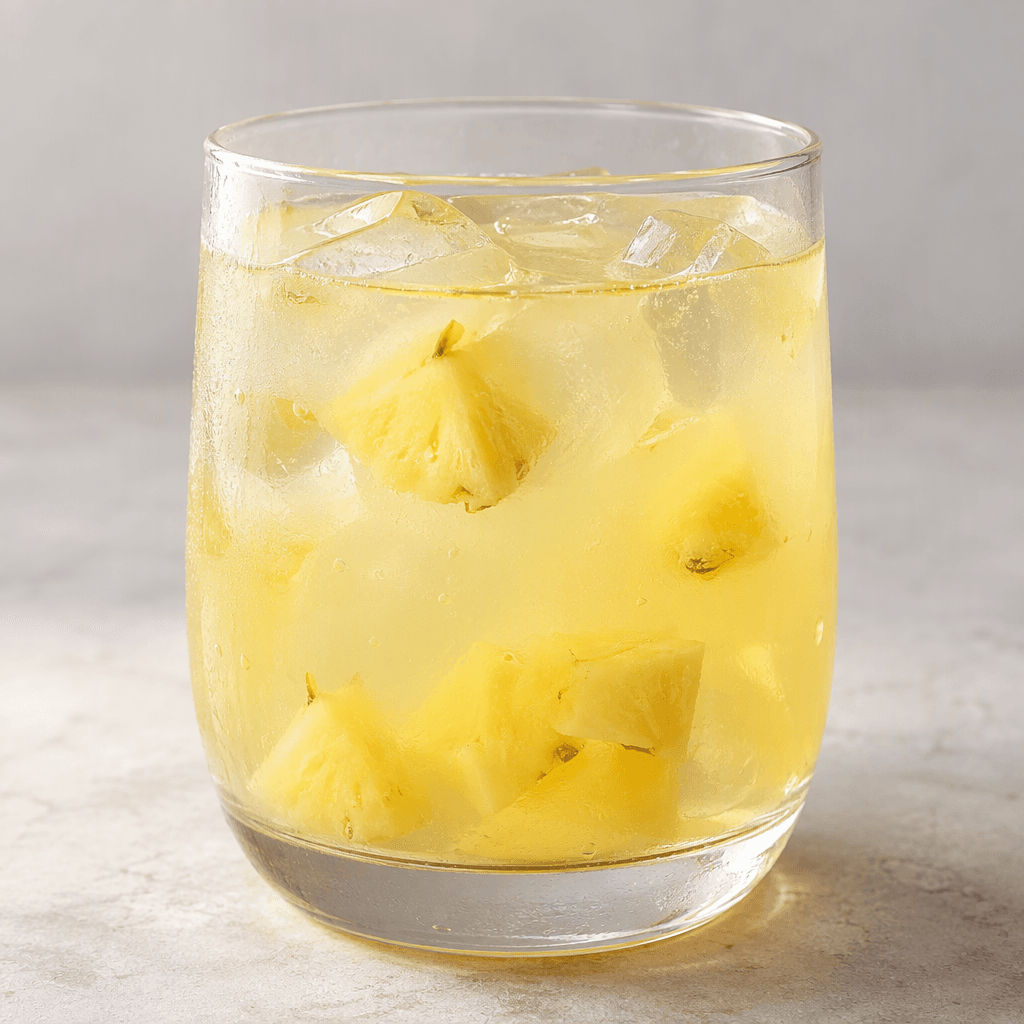
Pineapple water Calories
Refreshing, low-calorie, source of vitamin C
In season: Summer · Spring
CALORIES
GI
POTASSIUM
FIBER
Quick answer
1 cup (medium) of Pineapple water (240 g) has 29 calories. That works out to 12 calories per 100 g. It contains 7.2 g of carbs, 0.2 g of protein, 0 g of fat and 0.2 g of fiber. Its 0.5 mg of Manganese covers 21% of the Daily Value. Its glycemic index is 20 (low), so it raises blood sugar slowly.
What is Pineapple water?
Pineapple water is a light drink made with pineapple and water. It may be prepared by blending fruit with water or by letting pineapple pieces infuse it, so the drink can be clear or slightly cloudy and pulpy. In Mexico and elsewhere in Latin America, it is often served as agua fresca, sometimes sweetened.
Serve it chilled with a meal or as a refreshing drink on a warm day. Its flavour is gently sweet and tangy, with a soft texture if blended or fruit pieces are left in the glass. It is low in energy, at 12 calories per 100 g. For a lighter version, skip added sugar; mint or a squeeze of lime pairs well.
Pineapple water Nutrition Facts
Selected: 100 g
12
KCAL / 100G
Carbs
3g
· 1% DV
Protein
0.1g
· 0% DV
Fat
0g
· 0% DV
Fiber
0.1g
· 0% DV
DV is the share of the daily value covered, on a 2,000 kcal reference diet.
Calories come from: Carbs 97% · Protein 3% · Fat 0%
Pineapple water Vitamins & Minerals
Vitamins
Vitamin C
6mg · 7% DV
B1
0.01mg · 1% DV
B2
0.01mg · 1% DV
B3
0.1mg · 1% DV
Minerals
Calcium
7mg · 1% DV
Magnesium
5mg · 1% DV
Phosphorus
5mg · 1% DV
Potassium ⭐
30mg · 1% DV
How Nutritious Is Pineapple water?
Nutrient density
Low
How many vitamins, minerals and how much fiber this food carries per calorie. A high score means a lot of nutrition for few calories.
Satiety score
Medium
An EatBetter score computed from fiber, protein and calorie density. A high score means staying full longer on the same calories.
Both scores are calculated per 100 g and do not change with the selected portion. The satiety score is EatBetter's own calculation, not a clinical measure.
Pineapple water Glycemic Index
GLYCEMIC INDEX
GLYCEMIC LOAD
Accounts for portion size — a more realistic measure than GI alone.
How to Burn Off Pineapple water
To burn the 12 calories in 100 g:
🚶
Walking (5 km/h)
🏃
Running (8 km/h)
🚴
Cycling
🏊
Swimming
Times are calculated with the MET equation for a 70 kg adult. Actual burn varies with your weight, age and pace.
Is Pineapple water Processed?
NOVA 2
Minimally Processed
1. Unprocessed
2. Minimally Processed
3. Processed
4. Ultra-Processed
NOVA classifies foods into 4 groups by industrial processing. NOVA 1 (unprocessed) is the healthiest.
Does Pineapple water Contain Allergens?
No known major allergens
Which Diets Is Pineapple water Good For?
Vegan
✓ Suitable
Vegetarian
✓ Suitable
Gluten-Free
✓ Suitable
Dairy-Free
— Not suitable
Mediterranean
✓ Suitable
Paleo
— Not suitable
Whole30
— Not suitable
DASH
— Not suitable
Keto
— Not suitable
Low FODMAP
— Not suitable
Pineapple water Fat Profile
SATURATED
0g
MONOUNSATURATED
0g
POLYUNSATURATED
0g
Compare Pineapple water
Foods Similar to Pineapple water
Frequently Asked Questions About Pineapple water
How do you make pineapple water?
Pineapple water is made by infusing fresh pineapple pieces in drinking water. Add washed, chopped pineapple to a covered jug, refrigerate it for a few hours, then drink it with the fruit pieces or strain them out.
What is pineapple water?
Pineapple water is water flavored by pieces of pineapple, usually served chilled. It is different from straight pineapple juice: the fruit infuses the water rather than being fully juiced into it.
Can you make pineapple water with the peel?
Yes, pineapple water can be made with the peel, but scrub the whole pineapple thoroughly under running water first and remove damaged areas. Keep the peel steeping in the refrigerator, not on the counter.
How long should pineapple water steep?
Pineapple water usually needs a few hours in the refrigerator for the fruit flavor to infuse. Taste it as it steeps and remove the pieces once the flavor is right rather than leaving them in for days.
Does pineapple water need to be refrigerated while it infuses?
Yes, refrigerate pineapple water while it infuses. Cut fruit can support bacterial growth at room temperature, so use a covered container in the refrigerator and pour out any drink that develops an unusual smell or appearance.
How long does pineapple water last in the fridge?
Pineapple water is best consumed within a day or two when stored covered in the refrigerator. The pineapple softens and the flavor changes over time; discard it sooner if it smells fermented or looks unusual.
Is pineapple water the same as pineapple juice?
No, pineapple water is not the same as pineapple juice. It is water flavored by infusing pineapple pieces, while juice is extracted from the fruit and is generally more concentrated in natural sugars.
Does pineapple water help with weight loss?
No, pineapple water does not cause weight loss on its own. Choosing it instead of a sugary drink may reduce added sugar intake, but it has no special fat-burning effect.
Does pineapple water detox your body?
No, pineapple water does not detoxify the body. It can make plain water more appealing, but your liver and kidneys handle waste processing; pineapple water is not a cleanse or a treatment.
Does pineapple water contain bromelain?
Pineapple contains bromelain, but pineapple water is not a reliable source of a meaningful amount. How much, if any, passes into the water depends on the fruit and preparation, so it should not be treated like a bromelain supplement.
Have another question about Pineapple water?
Ask the AI nutrition coach — calories, portions, alternatives and more, answered in seconds in the app.

Scan calories with your camera
Instant AI nutrition analysis

Nutrition data compiled from USDA FoodData Central and scientific sources.