

Ready & Packaged Foods
All →Vegetables & Legumes
All →Desserts & Confectionery
All →Meat & Protein
All →Grains & Bakery
All →Beverages
All →Milk & Dairy
All →

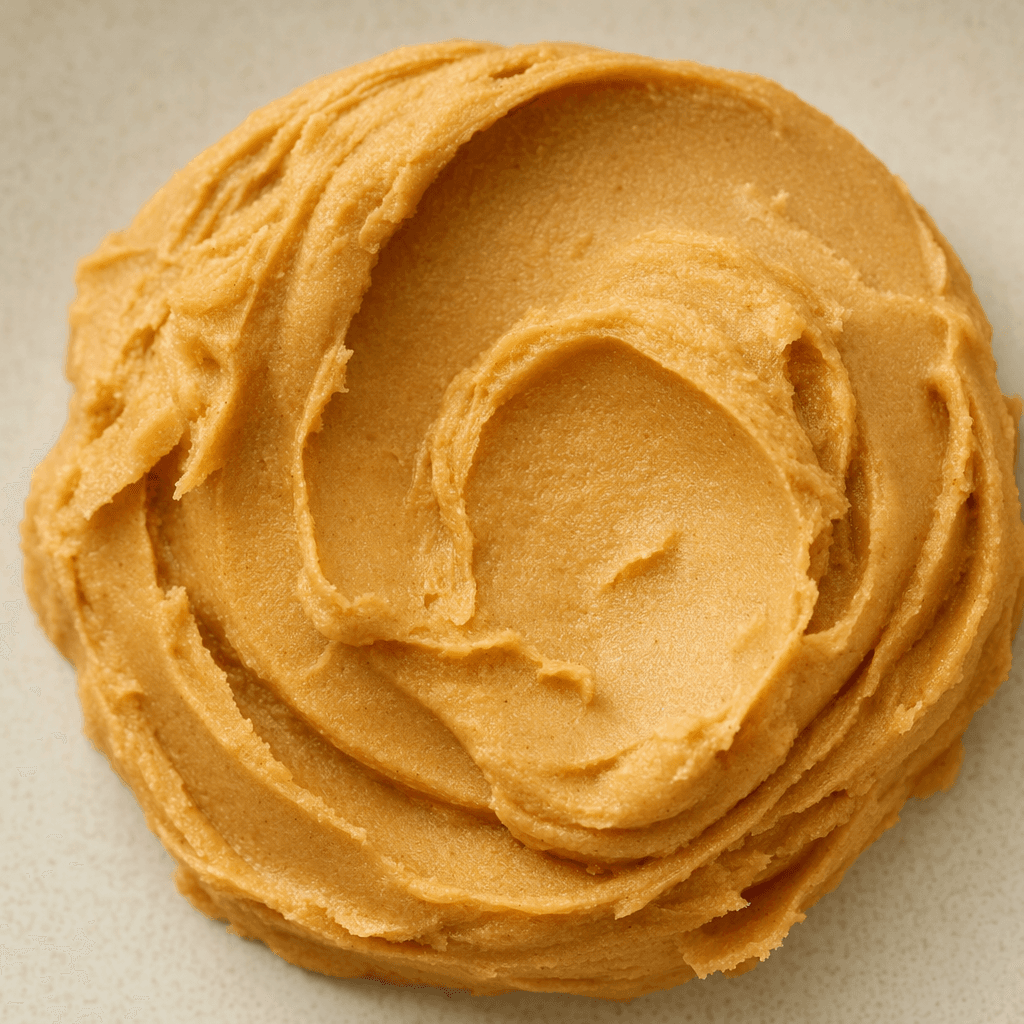
Peanut Butter (100%, unsweetened, fat-free) Calories
High protein, fat-free, unsweetened, fiber source
In season: Spring · Summer · Autumn · Winter
CALORIES
GI
POTASSIUM
FIBER
Quick answer
2 tablespoon (medium) of Peanut Butter (100%, unsweetened, fat-free) (32 g) has 74 calories. That works out to 230 calories per 100 g. It contains 10.2 g of carbs, 10.4 g of protein, 0.5 g of fat and 3.4 g of fiber. Its 0.4 mg of Copper covers 43% of the Daily Value. Its glycemic index is 35 (low), so it raises blood sugar slowly.
What is Peanut Butter (100%, unsweetened, fat-free)?
Peanut butter is made by grinding roasted peanuts into a thick, spreadable paste. This 100% version has no added sugar or oil; it still has the natural character of peanuts, rather than being a sweetened spread.
Its rich, roasted flavour works on toast, stirred into porridge or spooned over fruit. It is a source of protein and fibre, so a modest serving can make breakfast or a snack more sustaining. Pair it with banana or apple, or mix a little into plain yoghurt; if you prefer a lighter topping, thin it with a splash of water and use sparingly.
Peanut Butter (100%, unsweetened, fat-free) Nutrition Facts
Selected: 100 g
230
KCAL / 100G
Carbs
32g
· 12% DV
Protein
32.5g
· 65% DV
Fat
1.5g
· 2% DV
Fiber
10.5g
· 38% DV
DV is the share of the daily value covered, on a 2,000 kcal reference diet.
Calories come from: Carbs 47% · Protein 48% · Fat 5%
Peanut Butter (100%, unsweetened, fat-free) Vitamins & Minerals
Vitamins
B3
13.5mg · 84% DV
Biotin
18µg · 60% DV
B1
0.45mg · 38% DV
Folate
130µg · 33% DV
Minerals
Copper
1mg · 111% DV
Manganese
2mg · 87% DV
Phosphorus
390mg · 56% DV
Magnesium
140mg · 33% DV
How Nutritious Is Peanut Butter (100%, unsweetened, fat-free)?
Nutrient density
High
How many vitamins, minerals and how much fiber this food carries per calorie. A high score means a lot of nutrition for few calories.
Satiety score
High
An EatBetter score computed from fiber, protein and calorie density. A high score means staying full longer on the same calories.
Both scores are calculated per 100 g and do not change with the selected portion. The satiety score is EatBetter's own calculation, not a clinical measure.
Peanut Butter (100%, unsweetened, fat-free) Glycemic Index
GLYCEMIC INDEX
GLYCEMIC LOAD
Accounts for portion size — a more realistic measure than GI alone.
How to Burn Off Peanut Butter (100%, unsweetened, fat-free)
To burn the 230 calories in 100 g:
🚶
Walking (5 km/h)
🏃
Running (8 km/h)
🚴
Cycling
🏊
Swimming
Times are calculated with the MET equation for a 70 kg adult. Actual burn varies with your weight, age and pace.
Is Peanut Butter (100%, unsweetened, fat-free) Processed?
NOVA 3
Processed
1. Unprocessed
2. Minimally Processed
3. Processed
4. Ultra-Processed
NOVA classifies foods into 4 groups by industrial processing. NOVA 1 (unprocessed) is the healthiest.
Does Peanut Butter (100%, unsweetened, fat-free) Contain Allergens?
Contains these allergens:
Which Diets Is Peanut Butter (100%, unsweetened, fat-free) Good For?
Vegan
✓ Suitable
Vegetarian
✓ Suitable
Gluten-Free
✓ Suitable
Dairy-Free
— Not suitable
Mediterranean
✓ Suitable
Paleo
— Not suitable
Whole30
— Not suitable
DASH
— Not suitable
Keto
— Not suitable
Low FODMAP
— Not suitable
Peanut Butter (100%, unsweetened, fat-free) Fat Profile
SATURATED
0.3g
MONOUNSATURATED
0.7g
POLYUNSATURATED
0.5g
Omega 6:3 ratio 16.7:1
Above the ideal 4:1 (16.7:1).
Compare Peanut Butter (100%, unsweetened, fat-free)
Foods Similar to Peanut Butter (100%, unsweetened, fat-free)
Frequently Asked Questions About Peanut Butter (100%, unsweetened, fat-free)
Is peanut butter healthy?
Peanut butter provides protein and fiber, and an unsweetened version avoids added sugar. This fat-free variety has a different nutrient profile from conventional peanut butter, so use its own nutrition information rather than assuming the two are interchangeable.
Does peanut butter need to be refrigerated after opening?
Peanut butter can generally be kept in a cool, dry place with the lid tightly closed. Refrigeration may help preserve freshness, but follow the storage directions on the package if they differ.
Why does peanut butter separate?
Peanut butter separates when the peanuts’ natural oil rises to the surface over time. This fat-free variety may separate less than regular peanut butter; if you see a little liquid on top, stir it in before using.
How is fat-free peanut butter made?
Fat-free peanut butter is commonly made by removing some of the peanuts’ natural oil before grinding them. “100%” can mean no other ingredients were added, not that peanuts contain absolutely no fat; this product’s nutrition facts list a small amount.
Can dogs eat peanut butter?
Dogs can eat a small amount of plain peanut butter, but never give them a product containing xylitol, which is dangerous to dogs. This product is described as made from peanuts alone, but check its ingredient list before sharing it.
Can you bake with peanut butter?
Yes, peanut butter can be used in cookies, bars, and other baked goods. Fat-free peanut butter behaves differently from regular peanut butter because it contributes less oil, so a recipe may need adjustments to liquid or texture.
Does peanut butter help with weight loss?
Peanut butter does not cause weight loss by itself, though its protein and fiber can help make a meal more filling. This fat-free version is not a reason to eat unlimited amounts; use a portion that fits your meals.
Is peanut butter suitable for people with diabetes?
Yes, unsweetened peanut butter can fit into a diabetes meal plan, but portion size and the rest of the meal still matter. If you use glucose-lowering medication or need help matching foods to your treatment plan, ask your clinician or dietitian.
How can you tell if peanut butter has gone bad?
Discard peanut butter if it has mold, an unusual sour or rancid smell, or an unpleasant off taste. Oil separation alone is normal and does not mean it has spoiled; use a clean utensil and keep the lid closed.
Can peanut butter be frozen?
Yes, peanut butter can be frozen in an airtight, freezer-safe container. Leave a little room for expansion, then thaw it in the refrigerator and stir it well; its texture may be less smooth afterward.
Have another question about Peanut Butter (100%, unsweetened, fat-free)?
Ask the AI nutrition coach — calories, portions, alternatives and more, answered in seconds in the app.

Scan calories with your camera
Instant AI nutrition analysis

Nutrition data compiled from USDA FoodData Central and scientific sources.