

Ready & Packaged Foods
All →Vegetables & Legumes
All →Desserts & Confectionery
All →Meat & Protein
All →Grains & Bakery
All →Beverages
All →Milk & Dairy
All →

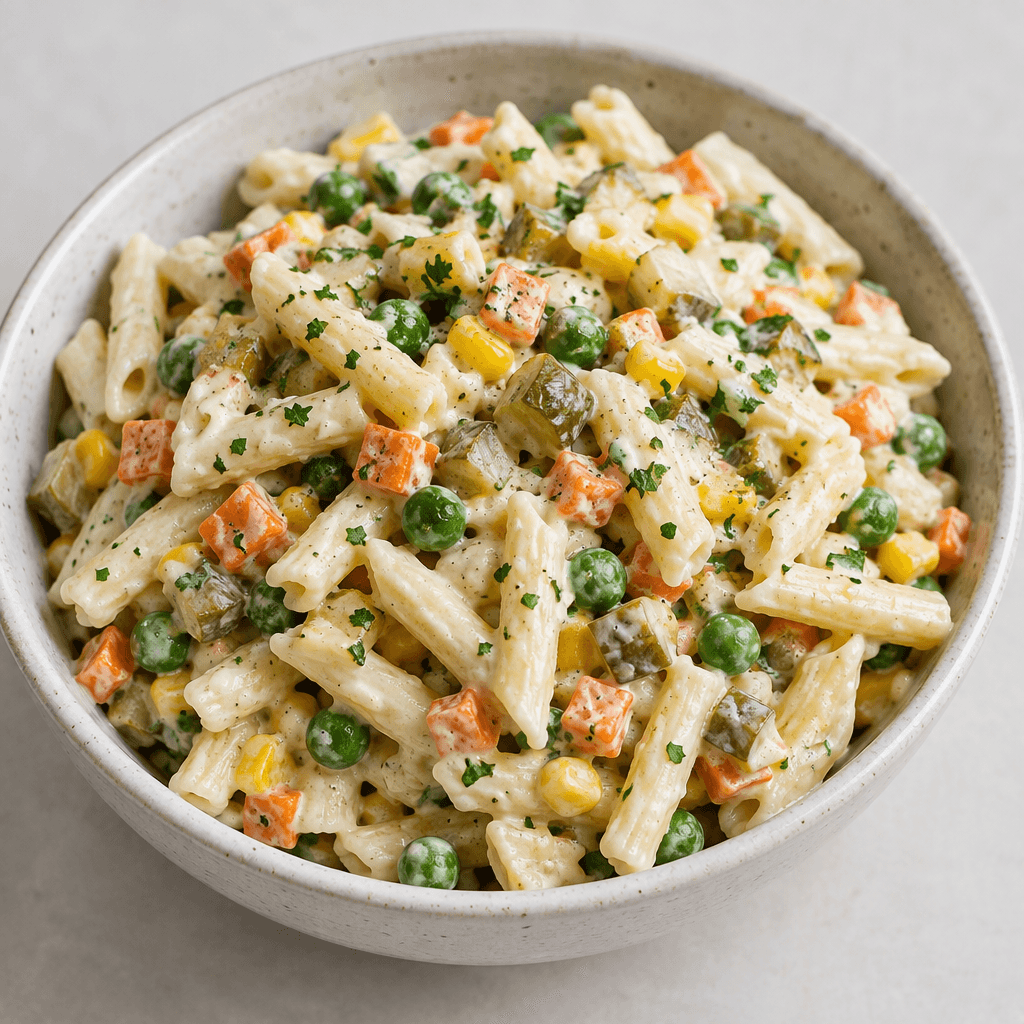
Pasta Salad Calories
Cold pasta mixed with vegetables, olive oil or mayonnaise, popular salad.
In season: Spring · Summer · Autumn
CALORIES
GI
POTASSIUM
FIBER
Quick answer
1 cup (medium) of Pasta Salad (150 g) has 240 calories. That works out to 160 calories per 100 g. It contains 33.8 g of carbs, 6.3 g of protein, 7.8 g of fat and 2.6 g of fiber. Its 270 mg of Sodium covers 12% of the Daily Value. Its glycemic index is 45 (medium), so it raises blood sugar at a moderate pace.
What is Pasta Salad?
Pasta Salad combines cooked, cooled short pasta with vegetables such as carrots, peas and corn, often with chopped pickles and herbs. The creamy version shown here is dressed with mayonnaise or a similar sauce, though recipes vary: some use olive oil or a lighter dressing instead. It is a familiar make-ahead dish in many places, with ingredients shaped by local tastes.
Serve it chilled as a side at a picnic, barbecue or shared meal; it also works as a simple lunch. The pasta makes it chiefly a carbohydrate-based dish, while the vegetables add some fibre and texture. For a lighter bowl, use less creamy dressing and add extra vegetables, or pair a modest portion with a green salad or a protein-rich main.
Pasta Salad Nutrition Facts
Selected: 100 g
160
KCAL / 100G
Carbs
22.5g
· 8% DV
Protein
4.2g
· 8% DV
Fat
5.2g
· 7% DV
Fiber
1.7g
· 6% DV
DV is the share of the daily value covered, on a 2,000 kcal reference diet.
Calories come from: Carbs 59% · Protein 11% · Fat 30%
Pasta Salad Vitamins & Minerals
Vitamins
Vitamin K
9µg · 8% DV
Vitamin A
65µg · 7% DV
B1
0.08mg · 7% DV
Vitamin E
0.8mg · 5% DV
Minerals
Sodium
180mg · 8% DV
Iron
1mg · 6% DV
Phosphorus
43mg · 6% DV
Selenium
2.8µg · 5% DV
How Nutritious Is Pasta Salad?
Nutrient density
Medium
How many vitamins, minerals and how much fiber this food carries per calorie. A high score means a lot of nutrition for few calories.
Satiety score
Medium
An EatBetter score computed from fiber, protein and calorie density. A high score means staying full longer on the same calories.
Both scores are calculated per 100 g and do not change with the selected portion. The satiety score is EatBetter's own calculation, not a clinical measure.
Pasta Salad Glycemic Index
GLYCEMIC INDEX
GLYCEMIC LOAD
Accounts for portion size — a more realistic measure than GI alone.
How to Burn Off Pasta Salad
To burn the 160 calories in 100 g:
🚶
Walking (5 km/h)
🏃
Running (8 km/h)
🚴
Cycling
🏊
Swimming
Times are calculated with the MET equation for a 70 kg adult. Actual burn varies with your weight, age and pace.
Is Pasta Salad Processed?
NOVA 3
Processed
1. Unprocessed
2. Minimally Processed
3. Processed
4. Ultra-Processed
NOVA classifies foods into 4 groups by industrial processing. NOVA 1 (unprocessed) is the healthiest.
Does Pasta Salad Contain Allergens?
Contains these allergens:
Which Diets Is Pasta Salad Good For?
Vegan
— Not suitable
Vegetarian
✓ Suitable
Gluten-Free
— Not suitable
Dairy-Free
— Not suitable
Mediterranean
✓ Suitable
Paleo
— Not suitable
Whole30
— Not suitable
DASH
— Not suitable
Keto
— Not suitable
Low FODMAP
— Not suitable
Pasta Salad Fat Profile
SATURATED
0.7g
MONOUNSATURATED
2.1g
POLYUNSATURATED
1.2g
Omega 6:3 ratio 3.6:1
Below the ideal 4:1 — a good omega balance.
Compare Pasta Salad
Foods Similar to Pasta Salad
Frequently Asked Questions About Pasta Salad
What is in pasta salad?
Pasta salad usually combines cooked short pasta with chopped vegetables and a dressing. Common additions include peas, carrots, corn, pickles, herbs, and mayonnaise or an oil-based dressing; ingredients vary by recipe and region.
What is the best pasta shape for pasta salad?
Short shapes with ridges or curves, such as fusilli, rotini, and farfalle, work especially well in pasta salad. They hold dressing and small add-ins without making the dish difficult to serve.
Should you rinse pasta for pasta salad?
Yes, rinse pasta briefly with cold water when making a cold pasta salad. This cools it quickly and stops it cooking, which helps keep the pieces firm; drain it thoroughly before adding the dressing.
How do you keep pasta salad from drying out?
To keep pasta salad from drying out, reserve a little dressing and stir it in just before serving. Cooked pasta absorbs dressing as it chills, so dressing it generously at first may still leave it needing a refresh later.
Can you make pasta salad the day before?
Yes, you can make pasta salad a day ahead and keep it covered in the refrigerator. For the freshest texture, add delicate herbs shortly before serving and stir in a little reserved dressing if the pasta has absorbed it.
How long does pasta salad last in the fridge?
Pasta salad generally keeps for 3–4 days in a covered container in the refrigerator. Keep it chilled between servings, use a clean utensil, and discard it if it has been left at room temperature for too long or shows signs of spoilage.
Can pasta salad sit out at a picnic?
Pasta salad should not sit out for more than two hours, or more than one hour in hot weather. Keep it in a cooler or set the serving bowl over ice, especially when the dressing contains mayonnaise or dairy.
Can you freeze pasta salad?
Freezing pasta salad is usually not recommended. Mayonnaise- or yogurt-based dressing can separate after thawing, and the pasta and vegetables may turn soft; prepare only what you expect to use and refrigerate leftovers instead.
What dressing is best for pasta salad?
A tangy vinaigrette or a creamy mayonnaise-based dressing both work well for pasta salad. Choose a vinaigrette for a lighter, sharper flavor, or use mayonnaise with a little yogurt for a creamy dressing that is less rich.
What goes well with pasta salad?
Pasta salad pairs well with grilled chicken, burgers, sandwiches, or other picnic foods. Its cool, creamy texture also makes it a useful side for grilled vegetables and barbecued dishes.
Have another question about Pasta Salad?
Ask the AI nutrition coach — calories, portions, alternatives and more, answered in seconds in the app.

Scan calories with your camera
Instant AI nutrition analysis

Nutrition data compiled from USDA FoodData Central and scientific sources.