

Ready & Packaged Foods
All →Vegetables & Legumes
All →Desserts & Confectionery
All →Meat & Protein
All →Grains & Bakery
All →Beverages
All →Milk & Dairy
All →

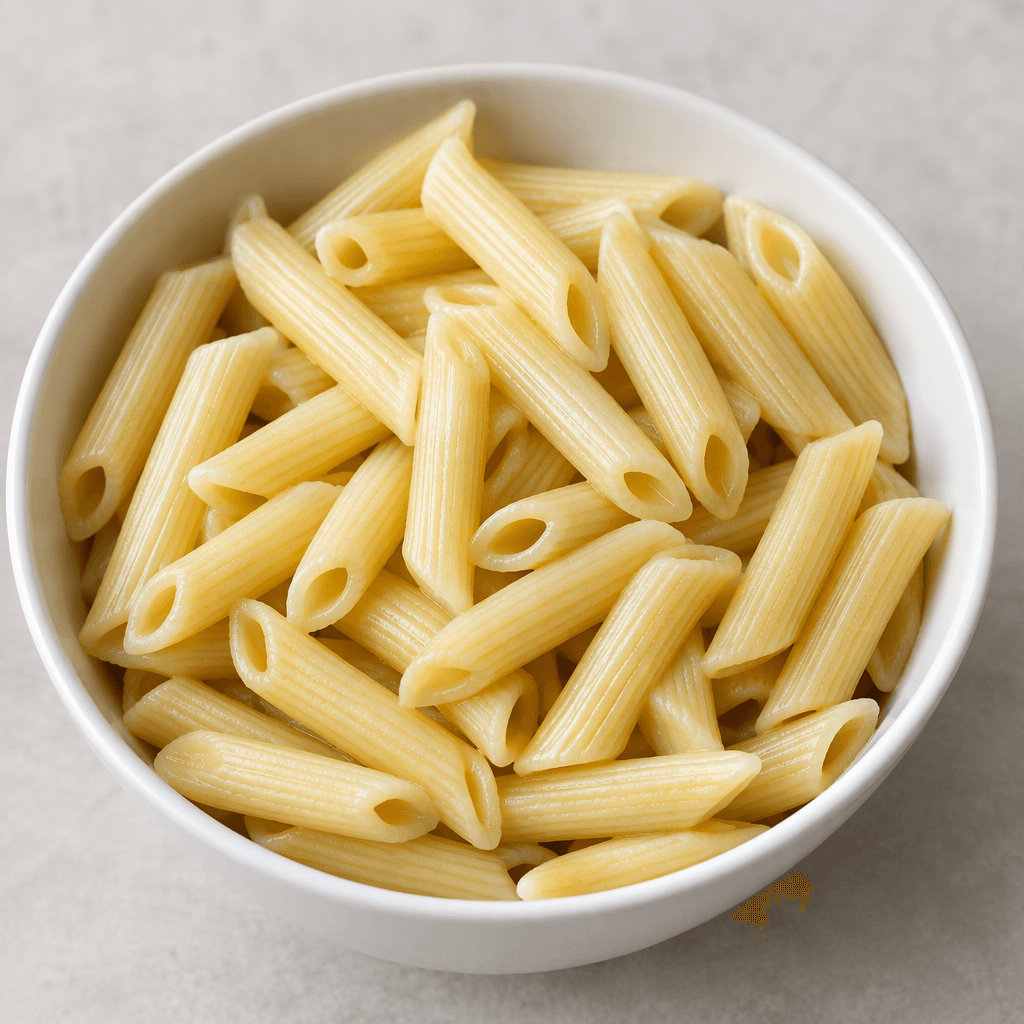
Pasta (no oil) Calories
Classic boiled pasta, prepared without added oil.
In season: Spring · Summer · Autumn · Winter
CALORIES
GI
POTASSIUM
FIBER
Quick answer
1 cup (medium) of Pasta (no oil) (140 g) has 183 calories. That works out to 131 calories per 100 g. It contains 35.3 g of carbs, 7 g of protein, 1 g of fat and 2 g of fiber. Its 21 µg of Selenium covers 38% of the Daily Value. Its glycemic index is 45 (medium), so it raises blood sugar at a moderate pace.
What is Pasta (no oil)?
Pasta without oil is boiled pasta served without added oil, typically made from wheat flour or durum wheat semolina and water. A familiar staple in Italian cooking, it is now eaten around the world in many forms.
The pieces are pleasantly chewy when cooked al dente and softer when cooked longer; their mild flavour works well with sauces and other ingredients. It is commonly served as a main dish or side, with tomato sauce, vegetables, or a protein-rich accompaniment. It is mainly a source of carbohydrates, with little fat in this preparation. For a lighter meal, pair it with vegetables and a tomato-based sauce rather than a rich, oily one.
Pasta (no oil) Nutrition Facts
Selected: 100 g
131
KCAL / 100G
Carbs
25.2g
· 9% DV
Protein
5g
· 10% DV
Fat
0.7g
· 1% DV
Fiber
1.4g
· 5% DV
DV is the share of the daily value covered, on a 2,000 kcal reference diet.
Calories come from: Carbs 79% · Protein 16% · Fat 5%
Pasta (no oil) Vitamins & Minerals
Vitamins
B1
0.11mg · 9% DV
B3
0.6mg · 4% DV
B5
0.16mg · 3% DV
Biotin
1µg · 3% DV
Minerals
Selenium
15µg · 27% DV
Zinc
1mg · 9% DV
Phosphorus
44mg · 6% DV
Magnesium
18mg · 4% DV
How Nutritious Is Pasta (no oil)?
Nutrient density
Low
How many vitamins, minerals and how much fiber this food carries per calorie. A high score means a lot of nutrition for few calories.
Satiety score
Medium
An EatBetter score computed from fiber, protein and calorie density. A high score means staying full longer on the same calories.
Both scores are calculated per 100 g and do not change with the selected portion. The satiety score is EatBetter's own calculation, not a clinical measure.
Pasta (no oil) Glycemic Index
GLYCEMIC INDEX
GLYCEMIC LOAD
Accounts for portion size — a more realistic measure than GI alone.
How to Burn Off Pasta (no oil)
To burn the 131 calories in 100 g:
🚶
Walking (5 km/h)
🏃
Running (8 km/h)
🚴
Cycling
🏊
Swimming
Times are calculated with the MET equation for a 70 kg adult. Actual burn varies with your weight, age and pace.
Is Pasta (no oil) Processed?
NOVA 2
Minimally Processed
1. Unprocessed
2. Minimally Processed
3. Processed
4. Ultra-Processed
NOVA classifies foods into 4 groups by industrial processing. NOVA 1 (unprocessed) is the healthiest.
Does Pasta (no oil) Contain Allergens?
Contains these allergens:
Which Diets Is Pasta (no oil) Good For?
Vegan
— Not suitable
Vegetarian
✓ Suitable
Gluten-Free
— Not suitable
Dairy-Free
— Not suitable
Mediterranean
✓ Suitable
Paleo
— Not suitable
Whole30
— Not suitable
DASH
— Not suitable
Keto
— Not suitable
Low FODMAP
— Not suitable
Pasta (no oil) Fat Profile
SATURATED
0.13g
MONOUNSATURATED
0.07g
POLYUNSATURATED
0.19g
Omega 6:3 ratio 18:1
Above the ideal 4:1 (18:1).
Compare Pasta (no oil)
Foods Similar to Pasta (no oil)
Frequently Asked Questions About Pasta (no oil)
How do you cook pasta without oil?
Cook pasta without oil in a pot of plenty of salted, boiling water; oil is not needed in the water. Add the pasta once the water boils, stir occasionally, and drain it when it reaches the texture you like.
Should you add oil to pasta water to stop pasta cooked without oil from sticking?
No, oil in the water is not needed to keep pasta cooked without oil from sticking. Use plenty of boiling water and stir the pasta, especially soon after adding it; oil can also leave a coating that makes sauce cling less well.
Should you rinse pasta cooked without oil after boiling?
Usually no: rinsing pasta cooked without oil removes surface starch that helps sauce cling. Rinse it under cold water only when you are cooling it for a cold pasta salad or another chilled dish.
How can you tell when pasta cooked without oil is al dente?
Taste a piece of pasta cooked without oil to check its texture. Al dente pasta is tender on the outside but still slightly firm in the center; use the package’s cooking guidance as a starting point and check before draining.
Can you use the cooking water from pasta made without oil?
Yes, reserve some cooking water from pasta made without oil before draining it. Its starch helps loosen a thick sauce and helps the sauce cling to the pasta when you toss them together.
What sauces go well with pasta cooked without oil?
Tomato, pesto, cheese, and vegetable-based sauces all work well with pasta cooked without oil. Toss the pasta with the sauce soon after draining so it coats the surface; a little reserved cooking water can help bring the sauce together.
How should you store leftover pasta cooked without oil?
Refrigerate leftover pasta cooked without oil in a covered container once it has cooled. Do not leave it at room temperature for a long time, and reheat it thoroughly before eating; discard it if its smell or appearance has changed.
How do you reheat pasta cooked without oil without drying it out?
Add a splash of water when reheating pasta cooked without oil. Warm it gently in a covered pan or covered microwave-safe dish, stirring once or twice so the pasta heats evenly and stays moist.
Can people with diabetes eat pasta cooked without oil?
Yes, people with diabetes can include pasta cooked without oil in a meal, but its carbohydrates can affect blood glucose. Pairing a measured portion with vegetables and a protein source may help make the meal more balanced; ask a dietitian for advice tailored to your needs.
Does pasta cooked without oil help with weight loss?
Pasta cooked without oil does not cause weight loss by itself. Leaving out added oil can make it easier to avoid rich preparations, while pairing a suitable portion with vegetables and protein can make a meal more filling.
Have another question about Pasta (no oil)?
Ask the AI nutrition coach — calories, portions, alternatives and more, answered in seconds in the app.

Scan calories with your camera
Instant AI nutrition analysis

Nutrition data compiled from USDA FoodData Central and scientific sources.