

Ready & Packaged Foods
All →Vegetables & Legumes
All →Desserts & Confectionery
All →Meat & Protein
All →Grains & Bakery
All →Beverages
All →Milk & Dairy
All →

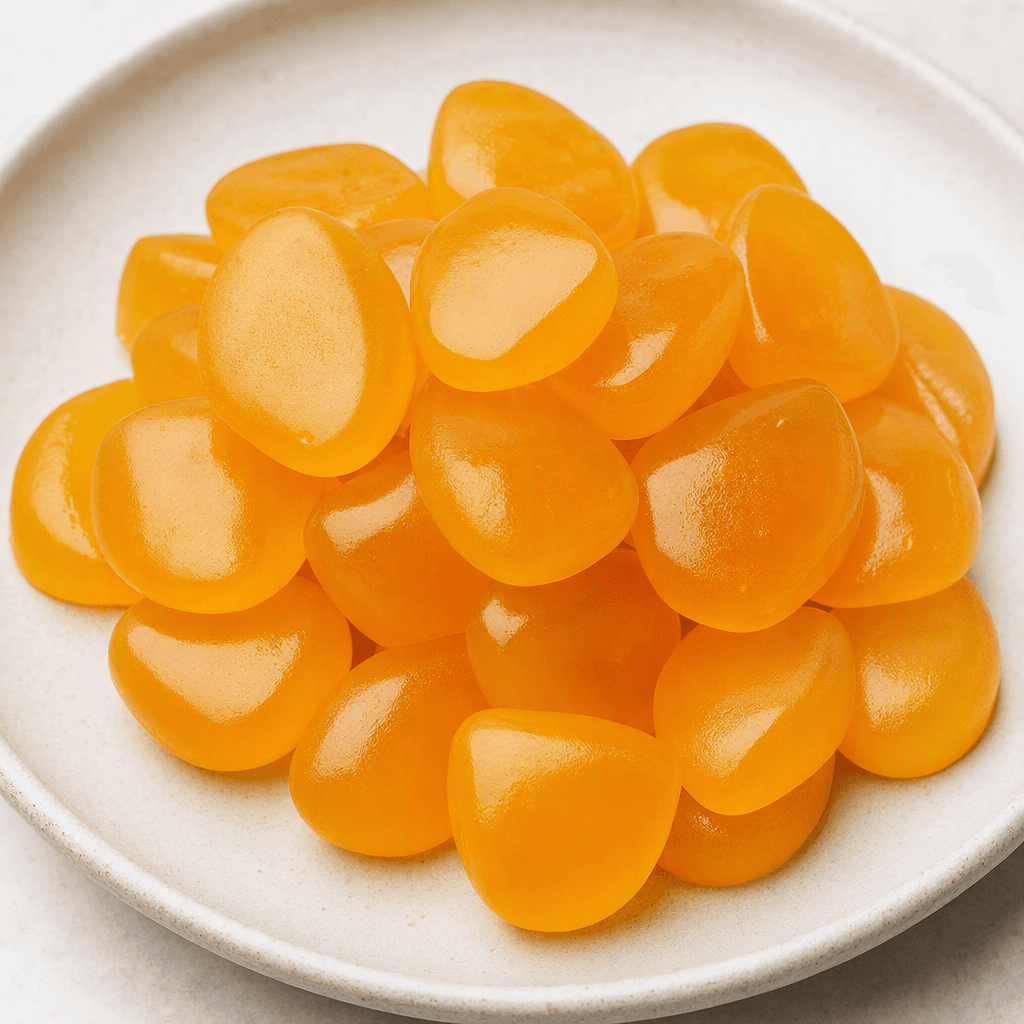
Organic mango gummies Calories
Organic, mango, gummy, sweet snack
CALORIES
GI
POTASSIUM
FIBER
Quick answer
5 piece (medium) of Organic mango gummies (40 g) has 132 calories. That works out to 330 calories per 100 g. It contains 32 g of carbs, 0.4 g of protein, 0.1 g of fat and 0.6 g of fiber. Its glycemic index is 65 (high), so it raises blood sugar quickly.
What is Organic mango gummies?
Organic mango gummies are chewy sweets flavoured with mango, made for eating by the piece rather than as part of a meal. Their soft, springy texture and sweet, fruity taste make them an easy snack to pack, share on a trip or serve during a film. In many places, people enjoy gummies as an occasional treat between meals or add them to a lunchbox; they are not usually served as a dessert course.
They are mostly a source of carbohydrate: 100 g provides 80 g. If you want a more sustaining snack, have a small handful alongside nuts or another savoury bite. The mango flavour gives them a bright, tropical note, while the chewy texture is the main appeal.
Organic mango gummies Nutrition Facts
Selected: 100 g
330
KCAL / 100G
Carbs
80g
· 29% DV
Protein
1g
· 2% DV
Fat
0.2g
· 0% DV
Fiber
1.5g
· 5% DV
DV is the share of the daily value covered, on a 2,000 kcal reference diet.
Calories come from: Carbs 98% · Protein 1% · Fat 1%
Organic mango gummies Vitamins & Minerals
Vitamins
Vitamin C
3mg · 3% DV
Vitamin A
5µg · 1% DV
B1
0.01mg · 1% DV
B2
0.01mg · 1% DV
Minerals
Calcium
8mg · 1% DV
Magnesium
3mg · 1% DV
Phosphorus
5mg · 1% DV
Iron
0mg · 0% DV
How Nutritious Is Organic mango gummies?
Nutrient density
Low
How many vitamins, minerals and how much fiber this food carries per calorie. A high score means a lot of nutrition for few calories.
Satiety score
Low
An EatBetter score computed from fiber, protein and calorie density. A high score means staying full longer on the same calories.
Both scores are calculated per 100 g and do not change with the selected portion. The satiety score is EatBetter's own calculation, not a clinical measure.
Organic mango gummies Glycemic Index
GLYCEMIC INDEX
GLYCEMIC LOAD
Accounts for portion size — a more realistic measure than GI alone.
How to Burn Off Organic mango gummies
To burn the 330 calories in 100 g:
🚶
Walking (5 km/h)
🏃
Running (8 km/h)
🚴
Cycling
🏊
Swimming
Times are calculated with the MET equation for a 70 kg adult. Actual burn varies with your weight, age and pace.
Is Organic mango gummies Processed?
NOVA 3
Processed
1. Unprocessed
2. Minimally Processed
3. Processed
4. Ultra-Processed
NOVA classifies foods into 4 groups by industrial processing. NOVA 1 (unprocessed) is the healthiest.
Does Organic mango gummies Contain Allergens?
No known major allergens
Which Diets Is Organic mango gummies Good For?
Vegan
— Not suitable
Vegetarian
✓ Suitable
Gluten-Free
— Not suitable
Dairy-Free
— Not suitable
Mediterranean
— Not suitable
Paleo
— Not suitable
Whole30
— Not suitable
DASH
— Not suitable
Keto
— Not suitable
Low FODMAP
— Not suitable
Organic mango gummies Fat Profile
SATURATED
0.05g
MONOUNSATURATED
0.03g
POLYUNSATURATED
0.02g
Compare Organic mango gummies
Foods Similar to Organic mango gummies
Frequently Asked Questions About Organic mango gummies
Do organic mango gummies contain real mango?
Not necessarily: mango flavour can come from flavourings rather than mango fruit. Look for mango, mango purée, or mango juice in the ingredients if you want to know whether the gummies contain fruit and in what form.
What makes organic mango gummies organic?
The organic claim refers to ingredients or production meeting the applicable organic standards; it does not mean the gummies are made only from mango. Organic certification also does not mean they are sugar-free.
Do organic mango gummies contain added sugar?
That depends on the product’s recipe, and the word “mango” does not tell you. Sugar, glucose syrup, or another sweetener listed among the ingredients indicates added sweetening.
Are organic mango gummies made with gelatin or pectin?
The gelling agent varies by product, so the name alone cannot tell you whether organic mango gummies use gelatin or pectin. Check the ingredients for the named gelling agent rather than assuming one is used.
Why do organic mango gummies stick to your teeth?
Their chewy gel structure and sweet coating can leave a sticky residue on teeth. Drinking water after eating them helps rinse away some residue, but it does not replace regular brushing.
Can toddlers eat organic mango gummies?
Organic mango gummies can pose a choking risk for toddlers because they are chewy and may be difficult to manage. Follow age guidance on the package, and supervise children while they eat.
How should you store organic mango gummies after opening?
Keep organic mango gummies sealed in their original pack or an airtight container in a cool, dry place. Moisture and heat can make them sticky or change their texture.
Can organic mango gummies melt in a hot car?
Yes. Heat can soften organic mango gummies and make them clump together, so avoid leaving the package in direct sun or a hot car. Store them somewhere cool and shaded.
Can people with diabetes eat organic mango gummies?
Organic mango gummies are a sweet, carbohydrate-containing snack and can raise blood glucose. If you have diabetes, ask your clinician or dietitian how to fit a portion into your individual meal and medication plan.
What happens if you eat too many organic mango gummies?
Eating a large amount of organic mango gummies can mean a substantial intake of sugary carbohydrates and may upset your stomach. Keeping the serving modest is especially useful when you are also having other sweets.
Have another question about Organic mango gummies?
Ask the AI nutrition coach — calories, portions, alternatives and more, answered in seconds in the app.

Scan calories with your camera
Instant AI nutrition analysis

Nutrition data compiled from USDA FoodData Central and scientific sources.