

Ready & Packaged Foods
All →Vegetables & Legumes
All →Desserts & Confectionery
All →Meat & Protein
All →Grains & Bakery
All →Beverages
All →Milk & Dairy
All →

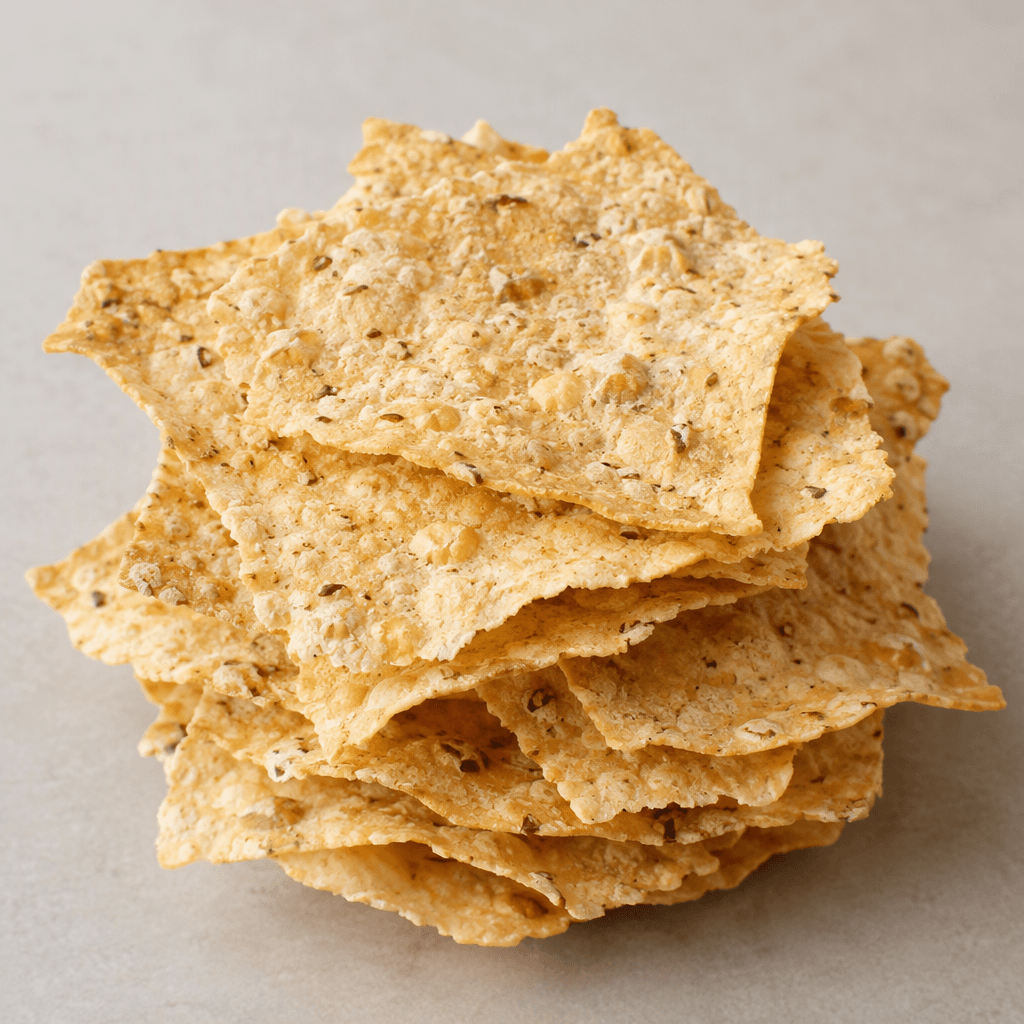
Chickpea cracker Calories
Gluten-free, protein source, high fiber, vegan
CALORIES
GI
POTASSIUM
FIBER
Quick answer
1 piece (medium) of Chickpea cracker (20 g) has 82 calories. That works out to 410 calories per 100 g. It contains 12 g of carbs, 3.3 g of protein, 1.7 g of fat and 2 g of fiber. Its 0.1 mg of Copper covers 11% of the Daily Value. Its glycemic index is 35 (low), so it raises blood sugar slowly.
What is Chickpea cracker?
A chickpea cracker is a thin, crisp snack made from chickpea flour or ground chickpeas mixed into a dough and baked or otherwise crisped. It is a modern legume-based cracker rather than a dish tied to one particular region, and is sold in many places as a savoury alternative to wheat-based crackers. Expect a lightly nutty, earthy flavour and a brittle, sometimes bubbled texture; seasoning varies by brand or recipe.
Enjoy it on its own, with tea, or alongside dips such as hummus and yoghurt-based sauces. Its protein and fibre make it a more substantial snack than a plain crisp, and it pairs well with fresh vegetables for a lighter plate.
Chickpea cracker Nutrition Facts
Selected: 100 g
410
KCAL / 100G
Carbs
60g
· 22% DV
Protein
16.5g
· 33% DV
Fat
8.5g
· 11% DV
Fiber
10g
· 36% DV
DV is the share of the daily value covered, on a 2,000 kcal reference diet.
Calories come from: Carbs 63% · Protein 17% · Fat 20%
Chickpea cracker Vitamins & Minerals
Vitamins
Folate
160µg · 40% DV
B1
0.35mg · 29% DV
B6
0.45mg · 26% DV
Biotin
7µg · 23% DV
Minerals
Copper
1mg · 111% DV
Manganese
1mg · 43% DV
Phosphorus
210mg · 30% DV
Magnesium
75mg · 18% DV
How Nutritious Is Chickpea cracker?
Nutrient density
High
How many vitamins, minerals and how much fiber this food carries per calorie. A high score means a lot of nutrition for few calories.
Satiety score
Medium
An EatBetter score computed from fiber, protein and calorie density. A high score means staying full longer on the same calories.
Both scores are calculated per 100 g and do not change with the selected portion. The satiety score is EatBetter's own calculation, not a clinical measure.
Chickpea cracker Glycemic Index
GLYCEMIC INDEX
GLYCEMIC LOAD
Accounts for portion size — a more realistic measure than GI alone.
How to Burn Off Chickpea cracker
To burn the 410 calories in 100 g:
🚶
Walking (5 km/h)
🏃
Running (8 km/h)
🚴
Cycling
🏊
Swimming
Times are calculated with the MET equation for a 70 kg adult. Actual burn varies with your weight, age and pace.
Is Chickpea cracker Processed?
NOVA 3
Processed
1. Unprocessed
2. Minimally Processed
3. Processed
4. Ultra-Processed
NOVA classifies foods into 4 groups by industrial processing. NOVA 1 (unprocessed) is the healthiest.
Does Chickpea cracker Contain Allergens?
No known major allergens
Which Diets Is Chickpea cracker Good For?
Vegan
✓ Suitable
Vegetarian
✓ Suitable
Gluten-Free
✓ Suitable
Dairy-Free
— Not suitable
Mediterranean
✓ Suitable
Paleo
— Not suitable
Whole30
— Not suitable
DASH
— Not suitable
Keto
— Not suitable
Low FODMAP
— Not suitable
Chickpea cracker Fat Profile
SATURATED
0.9g
MONOUNSATURATED
2.1g
POLYUNSATURATED
2.4g
Omega 6:3 ratio 16.9:1
Above the ideal 4:1 (16.9:1).
Compare Chickpea cracker
Foods Similar to Chickpea cracker
Frequently Asked Questions About Chickpea cracker
What are chickpea crackers made of?
Chickpea crackers are usually made with chickpea flour or chickpeas combined with other ingredients. Depending on the recipe, they may also contain oil, starch, seeds, salt, or seasonings, so the texture and flavor vary between products.
Are chickpea crackers healthy?
Chickpea crackers can be a convenient snack with fiber and plant protein, but that does not make every variety equally nutritious. Salt, added oil, and other ingredients vary, and crackers are best treated as a snack rather than a meal.
How do chickpea crackers compare with rice cakes?
Chickpea crackers are usually more savory and chickpea-flavored, while rice cakes tend to have a milder taste and a puffed texture. The ingredients and crunch differ, so check the specific product rather than assuming all versions are alike.
Do chickpea crackers cause bloating or gas?
They can cause gas or bloating in some people. Chickpeas and their fiber may be harder to tolerate for those sensitive to legumes; try a small serving first and notice how you feel.
Are chickpea crackers good for weight loss?
They do not cause weight loss on their own, though their fiber and protein may help some people feel satisfied between meals. Keep portions in mind, since it is easy to eat several crackers without noticing.
Do chickpea crackers raise blood sugar?
Yes, chickpea crackers contain carbohydrates and can raise blood sugar; the effect varies with portion size and what you eat with them. If you have diabetes, fit them into your individual meal plan and ask your clinician or dietitian if needed.
How do you store chickpea crackers after opening?
Store chickpea crackers in an airtight container in a cool, dry place. Once exposed to air and moisture, they can lose their crispness, so seal the package promptly after serving.
Can you make chickpea crackers at home?
Yes, you can make chickpea crackers at home by mixing chickpea flour with water and seasonings, rolling the dough thin, and baking it until crisp. Recipes differ, so baking time depends on thickness and your oven.
What do chickpea crackers taste like?
Chickpea crackers usually have a mild, savory, slightly earthy flavor. Plain versions let the chickpea taste come through, while seasoned varieties can be more strongly flavored; their thin, crisp texture is often a key part of their appeal.
What can you eat with chickpea crackers?
Chickpea crackers pair well with hummus, bean dips, or yogurt-based spreads, and can be served alongside soup or cut vegetables. Their crisp texture also makes them useful for scooping thicker dips.
Have another question about Chickpea cracker?
Ask the AI nutrition coach — calories, portions, alternatives and more, answered in seconds in the app.

Scan calories with your camera
Instant AI nutrition analysis

Nutrition data compiled from USDA FoodData Central and scientific sources.