

Ready & Packaged Foods
All →Vegetables & Legumes
All →Desserts & Confectionery
All →Meat & Protein
All →Grains & Bakery
All →Beverages
All →Milk & Dairy
All →

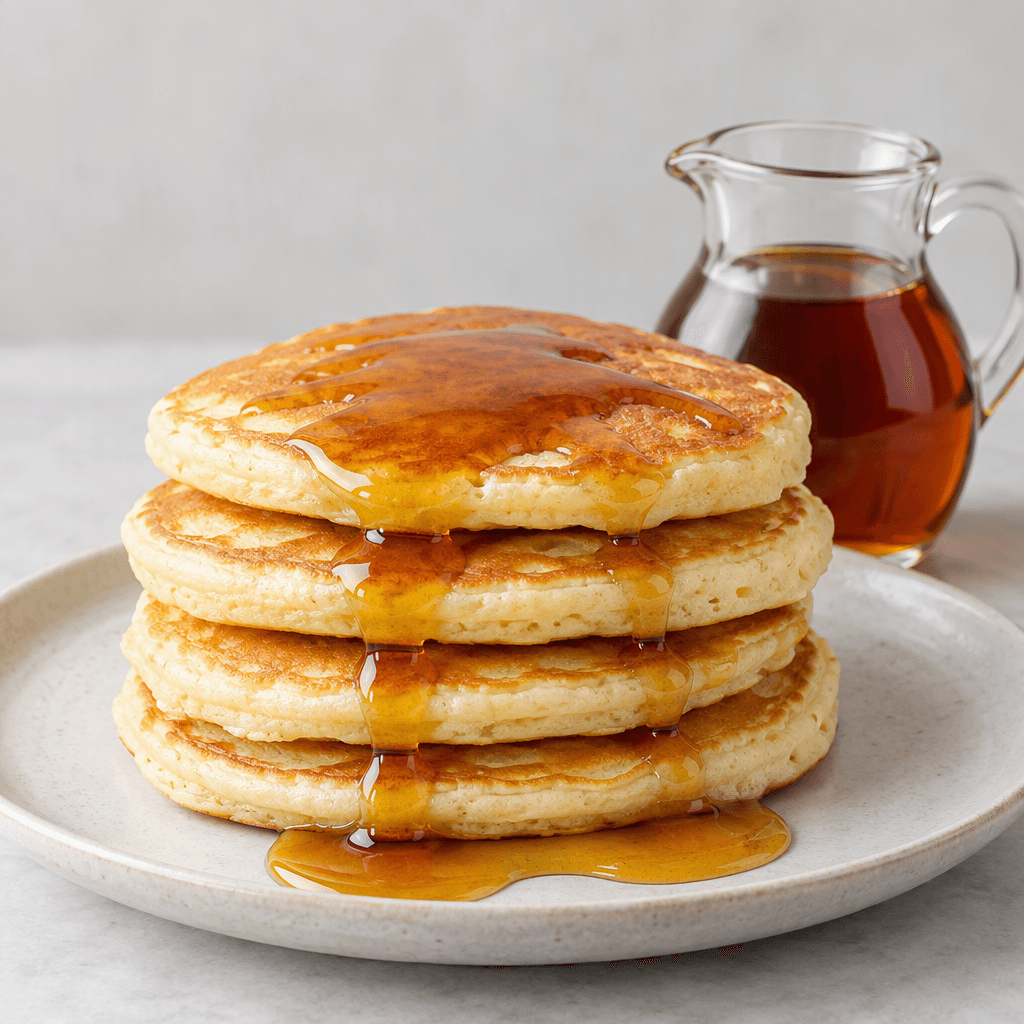
Maple syrup Calories
Natural sweetener, contains antioxidants
In season: Spring
CALORIES
GI
POTASSIUM
FIBER
Quick answer
1 tablespoon (medium) of Maple syrup (20 g) has 52 calories. That works out to 260 calories per 100 g. It contains 13.4 g of carbs, 0 g of protein, 0 g of fat and 0 g of fiber. Its 0.4 mg of Manganese covers 18% of the Daily Value. Its glycemic index is 54 (medium), so it raises blood sugar at a moderate pace.
What is Maple syrup?
Maple syrup is made by boiling down the sap of maple trees, especially in Canada and the northeastern United States. Its smooth, pourable texture and mellow caramel-like flavour can range from delicate to more robust, depending on the syrup.
It is a familiar topping for pancakes and waffles, and also works well stirred into porridge, yoghurt or baking. For English-speaking readers outside North America, it is widely available but usually used as a sweetener rather than an everyday table staple. Most of its energy comes from carbohydrates—67 g per 100 g—so a drizzle is often enough. Pair it with fruit or plain yoghurt, or use a little in place of other sweeteners in a recipe.
Maple syrup Nutrition Facts
Selected: 100 g
260
KCAL / 100G
Carbs
67g
· 24% DV
Protein
0.1g
· 0% DV
Fat
0g
· 0% DV
Fiber
0g
· 0% DV
DV is the share of the daily value covered, on a 2,000 kcal reference diet.
Calories come from: Carbs 100% · Protein 0% · Fat 0%
Maple syrup Vitamins & Minerals
Vitamins
B2
0.11mg · 8% DV
B1
0.01mg · 1% DV
B3
0.08mg · 1% DV
B6
0.01mg · 1% DV
Minerals
Manganese
2mg · 87% DV
Zinc
2mg · 18% DV
Calcium
102mg · 10% DV
Potassium ⭐
212mg · 6% DV
How Nutritious Is Maple syrup?
Nutrient density
Low
How many vitamins, minerals and how much fiber this food carries per calorie. A high score means a lot of nutrition for few calories.
Satiety score
Low
An EatBetter score computed from fiber, protein and calorie density. A high score means staying full longer on the same calories.
Both scores are calculated per 100 g and do not change with the selected portion. The satiety score is EatBetter's own calculation, not a clinical measure.
Maple syrup Glycemic Index
GLYCEMIC INDEX
GLYCEMIC LOAD
Accounts for portion size — a more realistic measure than GI alone.
How to Burn Off Maple syrup
To burn the 260 calories in 100 g:
🚶
Walking (5 km/h)
🏃
Running (8 km/h)
🚴
Cycling
🏊
Swimming
Times are calculated with the MET equation for a 70 kg adult. Actual burn varies with your weight, age and pace.
Is Maple syrup Processed?
NOVA 2
Minimally Processed
1. Unprocessed
2. Minimally Processed
3. Processed
4. Ultra-Processed
NOVA classifies foods into 4 groups by industrial processing. NOVA 1 (unprocessed) is the healthiest.
Does Maple syrup Contain Allergens?
No known major allergens
Which Diets Is Maple syrup Good For?
Vegan
✓ Suitable
Vegetarian
✓ Suitable
Gluten-Free
✓ Suitable
Dairy-Free
— Not suitable
Mediterranean
✓ Suitable
Paleo
✓ Suitable
Whole30
— Not suitable
DASH
— Not suitable
Keto
— Not suitable
Low FODMAP
— Not suitable
Maple syrup Fat Profile
SATURATED
0g
MONOUNSATURATED
0g
POLYUNSATURATED
0g
Compare Maple syrup
Foods Similar to Maple syrup
Frequently Asked Questions About Maple syrup
What is maple syrup made from?
Maple syrup is made from the sap of maple trees, especially sugar maples. The sap is collected and boiled to evaporate water, leaving a concentrated syrup with its characteristic sweet, caramel-like flavor.
How is maple syrup made?
Maple syrup is made by collecting sap from tapped maple trees and boiling it until much of its water evaporates. Pure maple syrup comes from this concentrated sap; imitation pancake syrups use other sweeteners and flavorings.
What is the difference between maple syrup and pancake syrup?
Maple syrup comes from concentrated maple sap, while pancake syrup is usually made with other sweeteners, such as corn syrup, plus flavoring. Check the ingredient list: pure maple syrup should list maple syrup as its sole ingredient.
Does maple syrup need to be refrigerated after opening?
Yes, refrigerate maple syrup after opening. Keeping it tightly sealed and using a clean utensil helps prevent mold and spoilage; unopened syrup can generally be stored in a cool, dark cupboard.
Can maple syrup replace sugar in baking?
Yes, maple syrup can replace sugar in some baking recipes, but it adds liquid as well as sweetness. Adjusting other liquids may be necessary, and its distinct flavor works especially well in muffins, cakes, and granola.
Why does maple syrup crystallize?
Maple syrup can crystallize when some of its sugar separates from the liquid; crystals alone do not mean it has spoiled. Set the container in warm water to help dissolve them, and refrigerate the syrup afterward.
What is the difference between light and dark maple syrup?
The color and flavor of maple syrup vary with when the sap is collected. Lighter grades tend to taste more delicate, while darker grades have a stronger flavor; darker syrup is not automatically lower quality.
Is maple syrup healthier than honey or white sugar?
Maple syrup is not automatically healthier than honey or white sugar: all are concentrated sources of sugar. It contains some antioxidant compounds, but that does not make it a substitute for a varied diet or a reason to use it freely.
Does maple syrup raise blood sugar?
Yes, maple syrup can raise blood sugar because it is rich in carbohydrates, even though it comes from a tree. People with diabetes should account for it as a sweetener and follow their individual meal plan.
Can maple syrup be used for more than pancakes?
Yes, maple syrup works in oatmeal, yogurt, roasted vegetables, marinades, and salad dressings as well as on pancakes. Its sweet, caramel-like flavor pairs particularly well with mustard, citrus, nuts, and warm spices.
Have another question about Maple syrup?
Ask the AI nutrition coach — calories, portions, alternatives and more, answered in seconds in the app.

Scan calories with your camera
Instant AI nutrition analysis

Nutrition data compiled from USDA FoodData Central and scientific sources.