

Ready & Packaged Foods
All →Vegetables & Legumes
All →Desserts & Confectionery
All →Meat & Protein
All →Grains & Bakery
All →Beverages
All →Milk & Dairy
All →

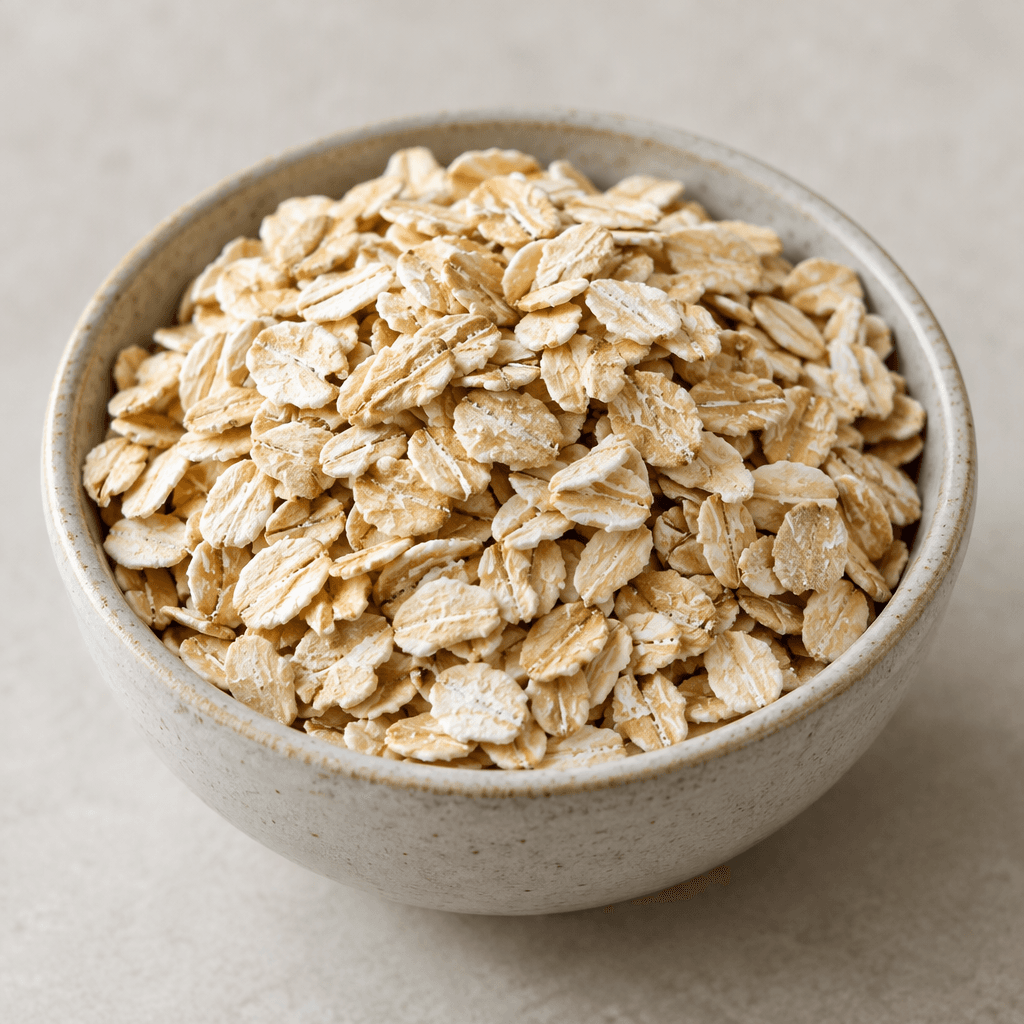
Lifalif Oats Calories
High fiber, complex carbs, plant protein
In season: Spring · Summer · Autumn · Winter
CALORIES
GI
POTASSIUM
FIBER
Quick answer
1 cup (medium) of Lifalif Oats (80 g) has 296 calories. That works out to 370 calories per 100 g. It contains 49.6 g of carbs, 10.4 g of protein, 5.6 g of fat and 8 g of fiber. Its 2.9 mg of Manganese covers 125% of the Daily Value. Its glycemic index is 55 (medium), so it raises blood sugar at a moderate pace.
What is Lifalif Oats?
Lifalif Oats are packaged oat flakes, made by rolling oat grains into flat pieces for easy cooking and baking. Their flavour is mild and lightly nutty; simmering makes them soft and creamy, while a shorter soak leaves more chew. Across many English-speaking kitchens, they are a familiar breakfast base: cook them with water or milk, or stir them into yoghurt with fruit and nuts. They also work in porridge, overnight oats, and homemade baking.
Oats offer fibre, complex carbohydrates and plant protein; Lifalif provides 10 g of fibre per 100 g. For a lighter bowl, cook a portion with water and add fresh fruit rather than relying on rich toppings. You can also use the flakes to add substance to smoothies or savoury patties.
Lifalif Oats Nutrition Facts
Selected: 100 g
370
KCAL / 100G
Carbs
62g
· 23% DV
Protein
13g
· 26% DV
Fat
7g
· 9% DV
Fiber
10g
· 36% DV
DV is the share of the daily value covered, on a 2,000 kcal reference diet.
Calories come from: Carbs 68% · Protein 14% · Fat 18%
Lifalif Oats Vitamins & Minerals
Vitamins
B1
0.45mg · 38% DV
B5
1mg · 20% DV
Biotin
6µg · 20% DV
B2
0.15mg · 12% DV
Minerals
Manganese
4mg · 174% DV
Phosphorus
410mg · 59% DV
Selenium
28µg · 51% DV
Magnesium
138mg · 33% DV
How Nutritious Is Lifalif Oats?
Nutrient density
High
How many vitamins, minerals and how much fiber this food carries per calorie. A high score means a lot of nutrition for few calories.
Satiety score
Medium
An EatBetter score computed from fiber, protein and calorie density. A high score means staying full longer on the same calories.
Both scores are calculated per 100 g and do not change with the selected portion. The satiety score is EatBetter's own calculation, not a clinical measure.
Lifalif Oats Glycemic Index
GLYCEMIC INDEX
GLYCEMIC LOAD
Accounts for portion size — a more realistic measure than GI alone.
How to Burn Off Lifalif Oats
To burn the 370 calories in 100 g:
🚶
Walking (5 km/h)
🏃
Running (8 km/h)
🚴
Cycling
🏊
Swimming
Times are calculated with the MET equation for a 70 kg adult. Actual burn varies with your weight, age and pace.
Is Lifalif Oats Processed?
NOVA 2
Minimally Processed
1. Unprocessed
2. Minimally Processed
3. Processed
4. Ultra-Processed
NOVA classifies foods into 4 groups by industrial processing. NOVA 1 (unprocessed) is the healthiest.
Does Lifalif Oats Contain Allergens?
No known major allergens
Which Diets Is Lifalif Oats Good For?
Vegan
✓ Suitable
Vegetarian
✓ Suitable
Gluten-Free
✓ Suitable
Dairy-Free
— Not suitable
Mediterranean
✓ Suitable
Paleo
✓ Suitable
Whole30
— Not suitable
DASH
— Not suitable
Keto
— Not suitable
Low FODMAP
— Not suitable
Lifalif Oats Fat Profile
SATURATED
1.3g
MONOUNSATURATED
2.2g
POLYUNSATURATED
2.5g
Omega 6:3 ratio 20:1
Above the ideal 4:1 (20:1).
Compare Lifalif Oats
Foods Similar to Lifalif Oats
Frequently Asked Questions About Lifalif Oats
How do you cook Lifalif Oats?
Cook Lifalif Oats in water or milk, stirring until the flakes soften and the mixture thickens. Add fruit, nuts, or spices for a sweet bowl, or use vegetables and seasoning for a savoury version.
Can you eat Lifalif Oats without cooking them?
Yes, Lifalif Oats can be eaten without cooking. Stir them into milk or yogurt and let them soften before eating; this makes the flakes easier to chew and gives them a softer texture.
Can you use Lifalif Oats for overnight oats?
Yes, mix Lifalif Oats with milk or yogurt in a covered container and refrigerate overnight. Add fruit or nuts before serving, and stir in extra liquid if the mixture has become thicker than you like.
Do you need to wash Lifalif Oats before cooking?
No, Lifalif Oats do not need to be washed before use. Rinsing can make the flakes wet and clumpy, so add them directly to your recipe from the pack.
How should you store Lifalif Oats after opening?
Keep Lifalif Oats in a cool, dry place in a tightly sealed container. Protect them from moisture and heat, and follow the date and storage directions printed on the package.
Can you make oat flour from Lifalif Oats?
Yes, blend Lifalif Oats until finely ground to make oat flour. Use it in pancakes, cookies, or other baking, but expect a different texture from wheat flour and adjust the recipe if needed.
Are Lifalif Oats good for overnight oats or porridge?
Yes, Lifalif Oats work for both porridge and overnight oats. Cooking gives them a warm, soft texture, while soaking them in milk or yogurt in the refrigerator is a convenient make-ahead option.
Can you use Lifalif Oats in baking?
Yes, you can add Lifalif Oats to cookies, muffins, pancakes, and homemade bread. They can also be blended into flour; because oats behave differently from wheat flour, they may not work as a one-for-one replacement in every recipe.
Do Lifalif Oats help keep you full?
Lifalif Oats can make a meal more filling because they provide fibre and take up space in a bowl. Pair them with yogurt, milk, nuts, or fruit for a more substantial breakfast.
Are Lifalif Oats a good choice for people with diabetes?
Lifalif Oats can fit into some diabetes meal plans, but portion size and toppings affect the meal’s impact on blood sugar. If you use glucose-lowering medication or follow a prescribed meal plan, ask your healthcare professional how to include them.
Have another question about Lifalif Oats?
Ask the AI nutrition coach — calories, portions, alternatives and more, answered in seconds in the app.

Scan calories with your camera
Instant AI nutrition analysis

Nutrition data compiled from USDA FoodData Central and scientific sources.