

Ready & Packaged Foods
All →Vegetables & Legumes
All →Desserts & Confectionery
All →Meat & Protein
All →Grains & Bakery
All →Beverages
All →Milk & Dairy
All →

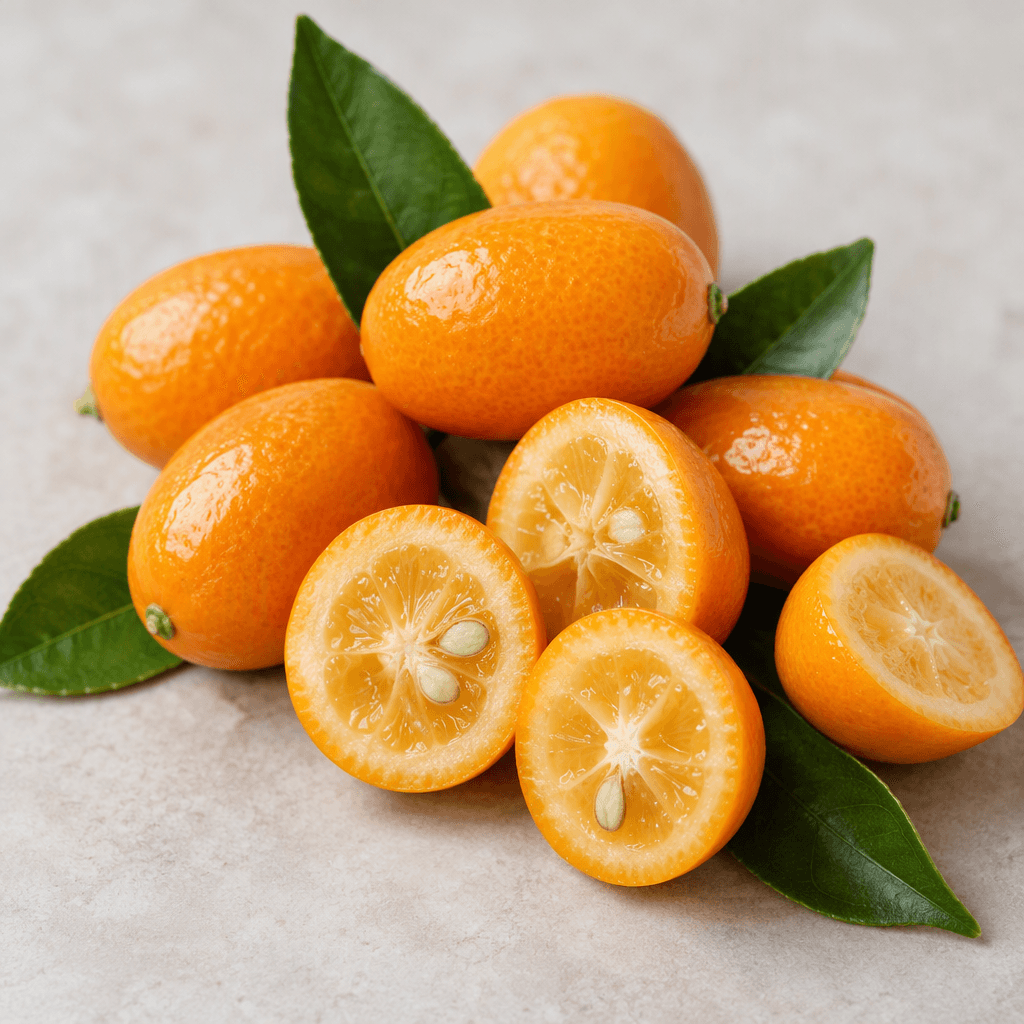
Kumquat Calories
High in vitamin C, fiber, antioxidant
In season: Winter · Spring
CALORIES
GI
POTASSIUM
FIBER
Quick answer
100 g of Kumquat has 71 calories. It contains 15.9 g of carbs, 1.9 g of protein, 0.9 g of fat and 6.5 g of fiber. Its 44 mg of Vitamin C covers 49% of the Daily Value. Its glycemic index is 40 (low), so it raises blood sugar slowly.
What is Kumquat?
Kumquat is a small citrus fruit, traditionally associated with southern China. Its glossy orange skin surrounds segmented flesh and a few seeds. Unlike most citrus, it is usually eaten whole: the thin peel is sweet and fragrant, while the juicy centre is sharply tart. The contrast makes it refreshing as a snack, and it also works well sliced into fruit salads, baked goods or preserves.
Across its growing regions and in English-speaking kitchens, kumquat is often served fresh, candied or cooked into marmalade and sauces. It contributes fibre and vitamin C; a 100 g portion provides 6.5 g of fibre. If you find the acidity strong, pair it with sweeter fruit, or use a few slices to brighten a salad or drink.
Kumquat Nutrition Facts
Selected: 100 g
71
KCAL / 100G
Carbs
15.9g
· 6% DV
Protein
1.9g
· 4% DV
Fat
0.9g
· 1% DV
Fiber
6.5g
· 23% DV
DV is the share of the daily value covered, on a 2,000 kcal reference diet.
Calories come from: Carbs 80% · Protein 10% · Fat 10%
Kumquat Vitamins & Minerals
Vitamins
Vitamin C
44mg · 49% DV
B2
0.09mg · 7% DV
Biotin
1.5µg · 5% DV
B5
0.21mg · 4% DV
Minerals
Calcium
62mg · 6% DV
Iron
1mg · 6% DV
Magnesium
20mg · 5% DV
Potassium ⭐
186mg · 5% DV
How Nutritious Is Kumquat?
Nutrient density
Very high
How many vitamins, minerals and how much fiber this food carries per calorie. A high score means a lot of nutrition for few calories.
Satiety score
High
An EatBetter score computed from fiber, protein and calorie density. A high score means staying full longer on the same calories.
Both scores are calculated per 100 g and do not change with the selected portion. The satiety score is EatBetter's own calculation, not a clinical measure.
Kumquat Glycemic Index
GLYCEMIC INDEX
GLYCEMIC LOAD
Accounts for portion size — a more realistic measure than GI alone.
How to Burn Off Kumquat
To burn the 71 calories in 100 g:
🚶
Walking (5 km/h)
🏃
Running (8 km/h)
🚴
Cycling
🏊
Swimming
Times are calculated with the MET equation for a 70 kg adult. Actual burn varies with your weight, age and pace.
Is Kumquat Processed?
NOVA 1
Unprocessed
1. Unprocessed
2. Minimally Processed
3. Processed
4. Ultra-Processed
NOVA classifies foods into 4 groups by industrial processing. NOVA 1 (unprocessed) is the healthiest.
Does Kumquat Contain Allergens?
No known major allergens
Which Diets Is Kumquat Good For?
Vegan
✓ Suitable
Vegetarian
✓ Suitable
Gluten-Free
✓ Suitable
Dairy-Free
— Not suitable
Mediterranean
✓ Suitable
Paleo
✓ Suitable
Whole30
— Not suitable
DASH
— Not suitable
Keto
— Not suitable
Low FODMAP
— Not suitable
Kumquat Fat Profile
SATURATED
0.1g
MONOUNSATURATED
0.08g
POLYUNSATURATED
0.09g
Omega 6:3 ratio 3.5:1
Below the ideal 4:1 — a good omega balance.
Compare Kumquat
Foods Similar to Kumquat
Frequently Asked Questions About Kumquat
What is a kumquat?
A kumquat is a small citrus fruit with an edible, sweet-tasting peel and tart flesh. Unlike most citrus, it is commonly eaten whole, so each bite combines the fragrant outer skin with the sharper fruit inside.
How do you eat a kumquat?
Wash a kumquat and eat it whole, including the peel. Gently rolling it between your fingers before taking a bite can release its fragrant oils and soften the contrast between the sweet skin and tart center.
Do you eat kumquat skin?
Yes, kumquat skin is edible and is usually eaten along with the fruit. It tastes sweeter and more aromatic than the flesh, which is why peeling a kumquat removes an important part of its characteristic sweet-tart flavor.
What does a kumquat taste like?
A kumquat has a sweet, fragrant peel and a tart, sometimes slightly bitter center. The contrast is strongest when you eat it whole; a very ripe fruit may taste milder than one that is still firm and underripe.
How can you tell when kumquats are ripe?
Ripe kumquats are usually bright orange, plump, and firm, with smooth, glossy skin. Avoid fruit that is greenish, shriveled, bruised, or moldy; a ripe kumquat should feel substantial rather than dried out.
How should you store kumquats?
Store ripe kumquats in the refrigerator in a container that is not tightly sealed. Keep them dry and wash them just before eating, since trapped moisture can encourage spoilage. Let a chilled fruit sit briefly at room temperature for fuller flavor.
Can you freeze kumquats?
Yes, kumquats freeze well. Wash and dry them thoroughly, then freeze them in a single layer before transferring them to a sealed container. Their texture softens after thawing, so frozen kumquats work especially well in marmalade, sauces, and baking.
Are kumquat seeds edible?
Kumquat seeds are generally harmless if swallowed, but they can taste bitter. You can remove them by slicing the fruit before eating, or simply spit them out if you notice them while chewing.
Are kumquats oranges?
No, kumquats are not oranges, although both are citrus fruits. Kumquats are much smaller and are typically eaten whole with their sweet peel, while oranges are generally peeled and have a larger, juicier interior.
Can you grow kumquats in a pot?
Yes, kumquats can grow in pots, especially when planted in a container with good drainage and kept in a sunny spot. Choose a suitable compact citrus variety, water without leaving the roots sitting in soggy soil, and protect the plant from hard freezes.
Have another question about Kumquat?
Ask the AI nutrition coach — calories, portions, alternatives and more, answered in seconds in the app.

Scan calories with your camera
Instant AI nutrition analysis

Nutrition data compiled from USDA FoodData Central and scientific sources.