

Ready & Packaged Foods
All →Vegetables & Legumes
All →Desserts & Confectionery
All →Meat & Protein
All →Grains & Bakery
All →Beverages
All →Milk & Dairy
All →

Grapes Calories
Sweet, juicy, antioxidant-rich
In season: Summer · Autumn
CALORIES
GI
POTASSIUM
FIBER
Quick answer
1 cup (medium) of Grapes (151 g) has 104 calories. That works out to 69 calories per 100 g. It contains 27.3 g of carbs, 1.1 g of protein, 0.3 g of fat and 1.4 g of fiber. Its 0.2 mg of Copper covers 22% of the Daily Value. Its glycemic index is 53 (medium), so it raises blood sugar at a moderate pace.
What is Grapes?
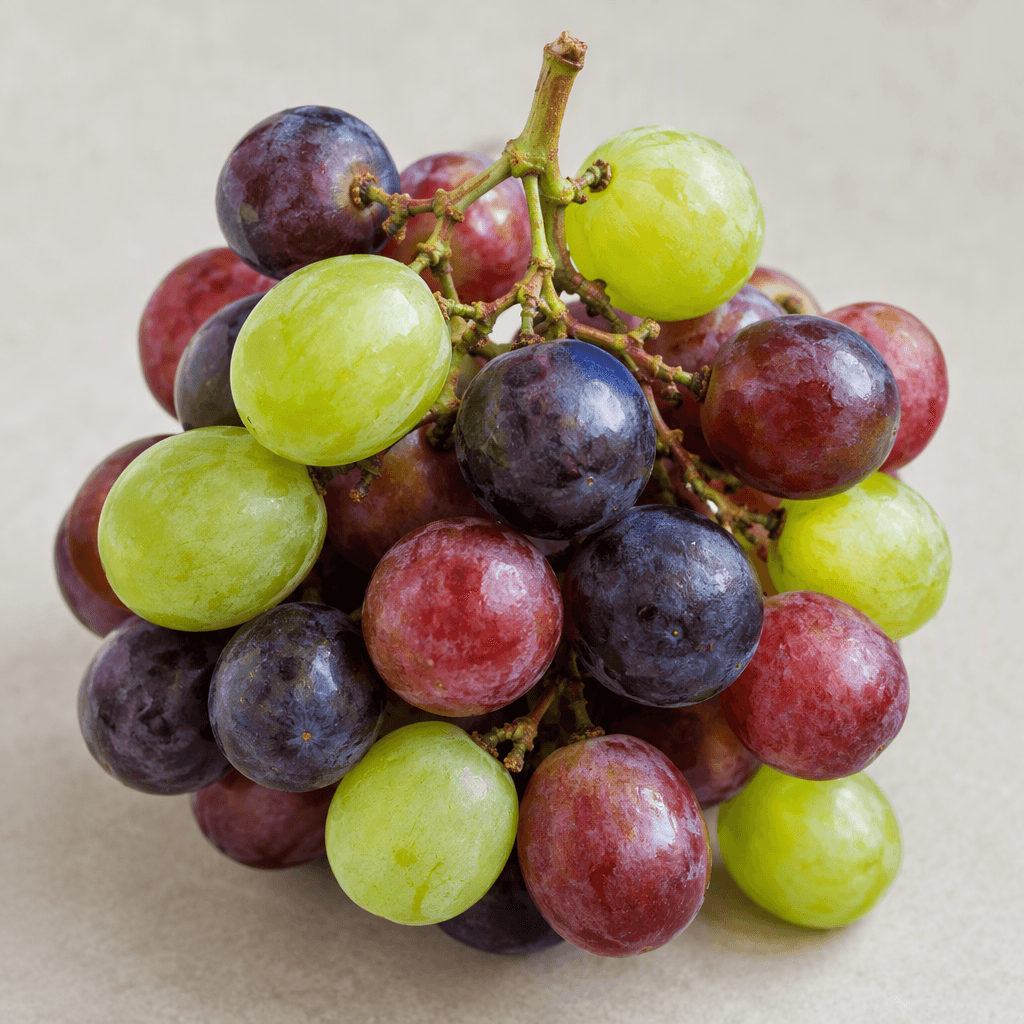
Grapes are small, round fruits that grow in clusters on vines, with green, red or purple skins. They are eaten fresh as table fruit and also dried into raisins; varieties range from crisp and mildly tart to soft and very sweet.
Enjoy them chilled as a snack, add them to a fruit bowl, or serve them with cheese and crackers. Across grape-growing regions, they are also used in juices, preserves and wine. Grapes are juicy and naturally sweet, with very little fat and relatively little fibre, so they make a refreshing bite but are not especially filling on their own. Pair them with plain yoghurt or nuts for a more sustaining snack.
Grapes Nutrition Facts
Selected: 100 g
69
KCAL / 100G
Carbs
18.1g
· 7% DV
Protein
0.7g
· 1% DV
Fat
0.2g
· 0% DV
Fiber
0.9g
· 3% DV
DV is the share of the daily value covered, on a 2,000 kcal reference diet.
Calories come from: Carbs 94% · Protein 4% · Fat 2%
Grapes Vitamins & Minerals
Vitamins
Vitamin C
10.8mg · 12% DV
Vitamin K
14.6µg · 12% DV
B1
0.07mg · 6% DV
B2
0.07mg · 5% DV
Minerals
Potassium ⭐
191mg · 6% DV
Phosphorus
20mg · 3% DV
Magnesium
7mg · 2% DV
Calcium
10mg · 1% DV
How Nutritious Is Grapes?
Nutrient density
High
How many vitamins, minerals and how much fiber this food carries per calorie. A high score means a lot of nutrition for few calories.
Satiety score
Medium
An EatBetter score computed from fiber, protein and calorie density. A high score means staying full longer on the same calories.
Both scores are calculated per 100 g and do not change with the selected portion. The satiety score is EatBetter's own calculation, not a clinical measure.
Grapes Glycemic Index
GLYCEMIC INDEX
GLYCEMIC LOAD
Accounts for portion size — a more realistic measure than GI alone.
How to Burn Off Grapes
To burn the 69 calories in 100 g:
🚶
Walking (5 km/h)
🏃
Running (8 km/h)
🚴
Cycling
🏊
Swimming
Times are calculated with the MET equation for a 70 kg adult. Actual burn varies with your weight, age and pace.
Is Grapes Processed?
NOVA 1
Unprocessed
1. Unprocessed
2. Minimally Processed
3. Processed
4. Ultra-Processed
NOVA classifies foods into 4 groups by industrial processing. NOVA 1 (unprocessed) is the healthiest.
Does Grapes Contain Allergens?
No known major allergens
Which Diets Is Grapes Good For?
Vegan
✓ Suitable
Vegetarian
✓ Suitable
Gluten-Free
✓ Suitable
Dairy-Free
— Not suitable
Mediterranean
✓ Suitable
Paleo
— Not suitable
Whole30
— Not suitable
DASH
— Not suitable
Keto
— Not suitable
Low FODMAP
— Not suitable
Grapes Fat Profile
SATURATED
0.03g
MONOUNSATURATED
0.01g
POLYUNSATURATED
0.05g
Omega 6:3 ratio 3:1
Below the ideal 4:1 — a good omega balance.
Compare Grapes
Foods Similar to Grapes
Frequently Asked Questions About Grapes
Are grapes good for you?
Yes, grapes can be a nutritious choice: they provide water and plant compounds, including antioxidants, and are easy to add to snacks or meals. Choose fresh, firm fruit and enjoy it whole rather than relying on grape juice.
Can dogs eat grapes?
No, dogs should never eat grapes or raisins. Even a small amount can cause serious kidney injury in some dogs, and the toxic dose is unpredictable. If a dog has eaten grapes, contact a veterinarian or animal poison service promptly.
Should grapes be refrigerated?
Yes, refrigerate grapes to keep them fresh longer. Store them unwashed, with the stems attached, in a ventilated bag or container in the fridge. Remove damaged or moldy berries, and rinse the rest just before eating.
Do you need to wash grapes before eating them?
Yes, rinse grapes under cool running water before eating them to remove dirt and surface residue. Don’t use soap or detergent. Wash only the amount you plan to eat, since storing wet grapes can encourage them to spoil.
Can you eat grape seeds?
Yes, grape seeds are safe to swallow for most people, though they can taste bitter and feel crunchy. You can chew them or swallow them whole; if you dislike their texture, choose seedless grapes or remove the seeds.
Can you freeze grapes?
Yes, grapes freeze well as a snack or smoothie ingredient. Rinse and dry the berries thoroughly, remove the stems, and freeze them in a single layer before transferring them to a sealed container. Their texture becomes softer after thawing.
Are red grapes healthier than green grapes?
Red and purple grapes generally contain more anthocyanins, the pigments that give their skins color, while green grapes have a different mix of plant compounds. Both are nutritious choices, so neither color is universally better.
Do grapes raise blood sugar?
Yes, grapes can raise blood sugar because they contain natural sugars, although the effect varies with the portion and what else you eat. If you have diabetes, follow your own meal plan and monitor how grapes affect your readings.
How can you tell if grapes have gone bad?
Grapes that are moldy, leaking, very soft, or smell sour should be discarded. A few loose berries or a slight loss of firmness can indicate age, but check the whole bunch carefully for spreading mold before eating.
How long do grapes last in the fridge?
Fresh grapes usually keep for about one to two weeks in the refrigerator when stored unwashed and kept dry. Check the bunch regularly and remove spoiled berries, since mold can spread quickly from one grape to another.
Have another question about Grapes?
Ask the AI nutrition coach — calories, portions, alternatives and more, answered in seconds in the app.

Scan calories with your camera
Instant AI nutrition analysis

Nutrition data compiled from USDA FoodData Central and scientific sources.