

Ready & Packaged Foods
All →Vegetables & Legumes
All →Desserts & Confectionery
All →Meat & Protein
All →Grains & Bakery
All →Beverages
All →Milk & Dairy
All →

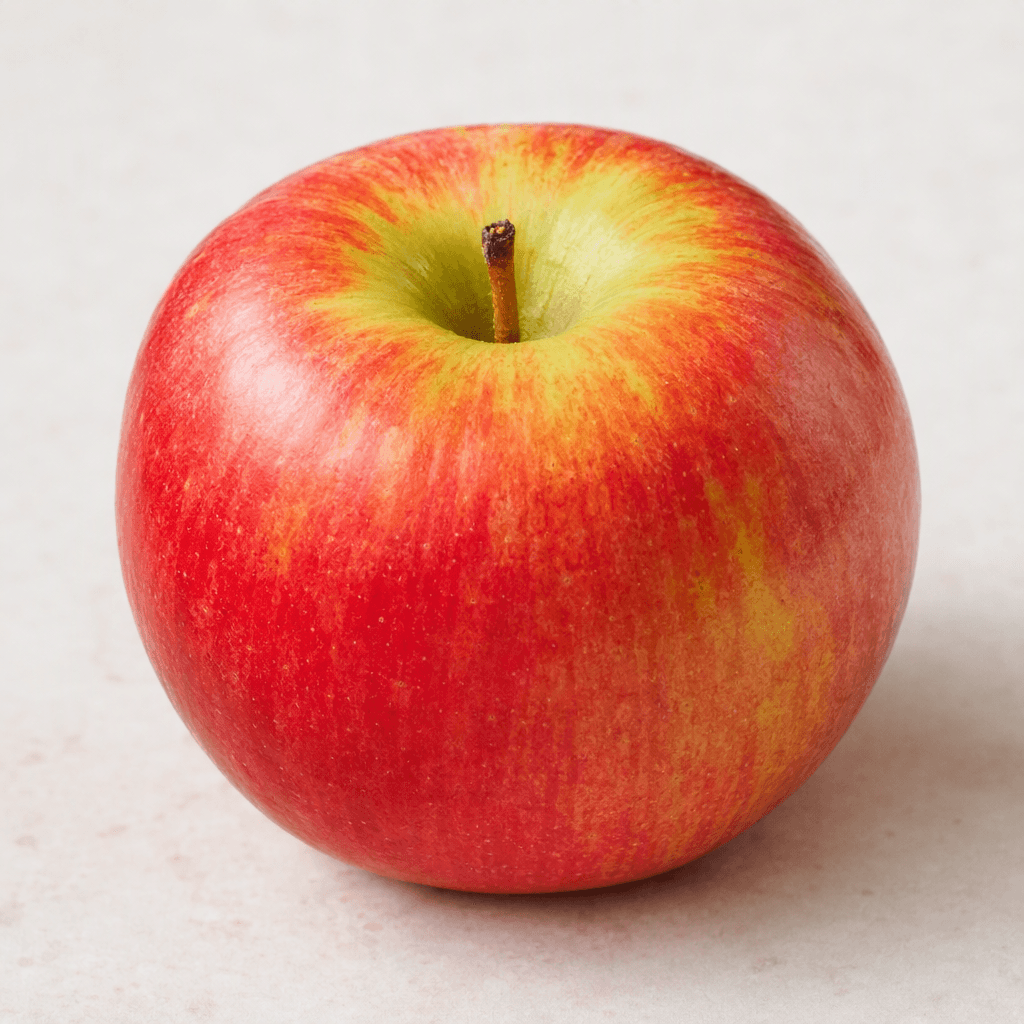
Apple Calories
Vitamin C, fiber, low calorie
In season: Autumn
CALORIES
GI
POTASSIUM
FIBER
Quick answer
1 piece (medium) of Apple (150 g) has 78 calories. That works out to 52 calories per 100 g. It contains 20.7 g of carbs, 0.5 g of protein, 0.3 g of fat and 3.6 g of fiber. Its 6.9 mg of Vitamin C covers 8% of the Daily Value. Its glycemic index is 36 (low), so it raises blood sugar slowly.
What is Apple?
Apples are crisp, juicy fruits that grow on trees and come in varieties ranging from sweet to tart, with red, green or yellow skin. They’re commonly eaten fresh, either whole or sliced, and are also used in pies, sauces, salads and other everyday dishes.
For English-speaking readers, an apple makes an easy snack at home, at school or on the go; its firm bite and refreshing sweetness pair well with cheese or nut butter. It provides fibre, with 2.4 g per 100 g. Eat it with the skin on for a simple, portable option, or chop it into porridge or yogurt.
Apple Nutrition Facts
Selected: 100 g
52
KCAL / 100G
Carbs
13.8g
· 5% DV
Protein
0.3g
· 1% DV
Fat
0.2g
· 0% DV
Fiber
2.4g
· 9% DV
DV is the share of the daily value covered, on a 2,000 kcal reference diet.
Calories come from: Carbs 95% · Protein 2% · Fat 3%
Apple Vitamins & Minerals
Vitamins
Vitamin C
4.6mg · 5% DV
B1
0.02mg · 2% DV
B2
0.03mg · 2% DV
B6
0.04mg · 2% DV
Minerals
Potassium ⭐
107mg · 3% DV
Phosphorus
11mg · 2% DV
Calcium
6mg · 1% DV
Magnesium
5mg · 1% DV
How Nutritious Is Apple?
Nutrient density
High
How many vitamins, minerals and how much fiber this food carries per calorie. A high score means a lot of nutrition for few calories.
Satiety score
Medium
An EatBetter score computed from fiber, protein and calorie density. A high score means staying full longer on the same calories.
Both scores are calculated per 100 g and do not change with the selected portion. The satiety score is EatBetter's own calculation, not a clinical measure.
Apple Glycemic Index
GLYCEMIC INDEX
GLYCEMIC LOAD
Accounts for portion size — a more realistic measure than GI alone.
How to Burn Off Apple
To burn the 52 calories in 100 g:
🚶
Walking (5 km/h)
🏃
Running (8 km/h)
🚴
Cycling
🏊
Swimming
Times are calculated with the MET equation for a 70 kg adult. Actual burn varies with your weight, age and pace.
Is Apple Processed?
NOVA 1
Unprocessed
1. Unprocessed
2. Minimally Processed
3. Processed
4. Ultra-Processed
NOVA classifies foods into 4 groups by industrial processing. NOVA 1 (unprocessed) is the healthiest.
Does Apple Contain Allergens?
No known major allergens
Which Diets Is Apple Good For?
Vegan
✓ Suitable
Vegetarian
✓ Suitable
Gluten-Free
✓ Suitable
Dairy-Free
— Not suitable
Mediterranean
✓ Suitable
Paleo
✓ Suitable
Whole30
— Not suitable
DASH
— Not suitable
Keto
— Not suitable
Low FODMAP
— Not suitable
Apple Fat Profile
SATURATED
0.03g
MONOUNSATURATED
0.01g
POLYUNSATURATED
0.05g
Omega 6:3 ratio 3:1
Below the ideal 4:1 — a good omega balance.
Compare Apple
Foods Similar to Apple
Frequently Asked Questions About Apple
Are apples good for you?
Yes, apples are a nutritious whole fruit that provides fiber and vitamin C. Eating them whole, rather than as juice, also preserves their filling texture and fiber. Rinse an apple before eating, especially if you plan to keep the skin on.
Should apples be refrigerated?
Yes, refrigerating apples helps them stay crisp for longer. Store them unwashed in the crisper drawer and remove any bruised or spoiled fruit. Apples release ethylene, so keep them away from produce that ripens or spoils quickly if you want to slow that process.
Can you eat apple seeds?
It is best not to eat apple seeds on purpose. Chewing them can release a small amount of a cyanide-forming compound, while accidentally swallowing a few seeds is generally not a cause for concern. Remove the core when serving apples to young children.
Why are apples coated with wax?
Apples may have a thin food-grade wax coating to replace some of the natural wax removed during washing and handling. The coating helps limit moisture loss and maintain freshness. Rinse and rub the apple under running water before eating; peeling is not necessary.
How do you stop apple slices from turning brown?
Toss apple slices with a little lemon juice to slow browning. You can also keep them in an airtight container in the refrigerator and eat them soon after cutting. Browning is a natural reaction and does not by itself mean the apple has spoiled.
Can you freeze apples?
Yes, apples freeze well for cooking. Wash, core, and slice them, then pack the pieces in an airtight freezer-safe container. Freezing softens their texture, so thawed apples are better in pies, sauces, and baked dishes than eaten fresh.
Can dogs eat apples?
Yes, most dogs can have a few small pieces of plain apple as an occasional treat. Remove the seeds and core, which can pose risks, and cut the fruit into bite-sized pieces. Avoid apple products with added sugar or sweeteners.
Are apples good for weight loss?
Apples can make a filling snack because they take time to chew and provide fiber. Choosing a whole apple instead of a less-filling sweet snack may help with appetite, but apples do not cause weight loss on their own.
Can people with diabetes eat apples?
Yes, many people with diabetes can include whole apples in their eating plan. Their fiber and intact structure make them a different choice from juice, which is easier to consume quickly. If you use glucose-lowering medication, ask your clinician how to fit fruit into your plan.
Which apples are best for baking?
Firm, tart apples such as Granny Smith hold their shape well in pies and crisps. Honeycrisp and Braeburn are also popular baking choices, while softer, sweeter apples tend to break down more in sauces. Mixing varieties can balance sweetness and tartness.
Have another question about Apple?
Ask the AI nutrition coach — calories, portions, alternatives and more, answered in seconds in the app.

Scan calories with your camera
Instant AI nutrition analysis

Nutrition data compiled from USDA FoodData Central and scientific sources.