

Ready & Packaged Foods
All →Vegetables & Legumes
All →Desserts & Confectionery
All →Meat & Protein
All →Grains & Bakery
All →Beverages
All →Milk & Dairy
All →

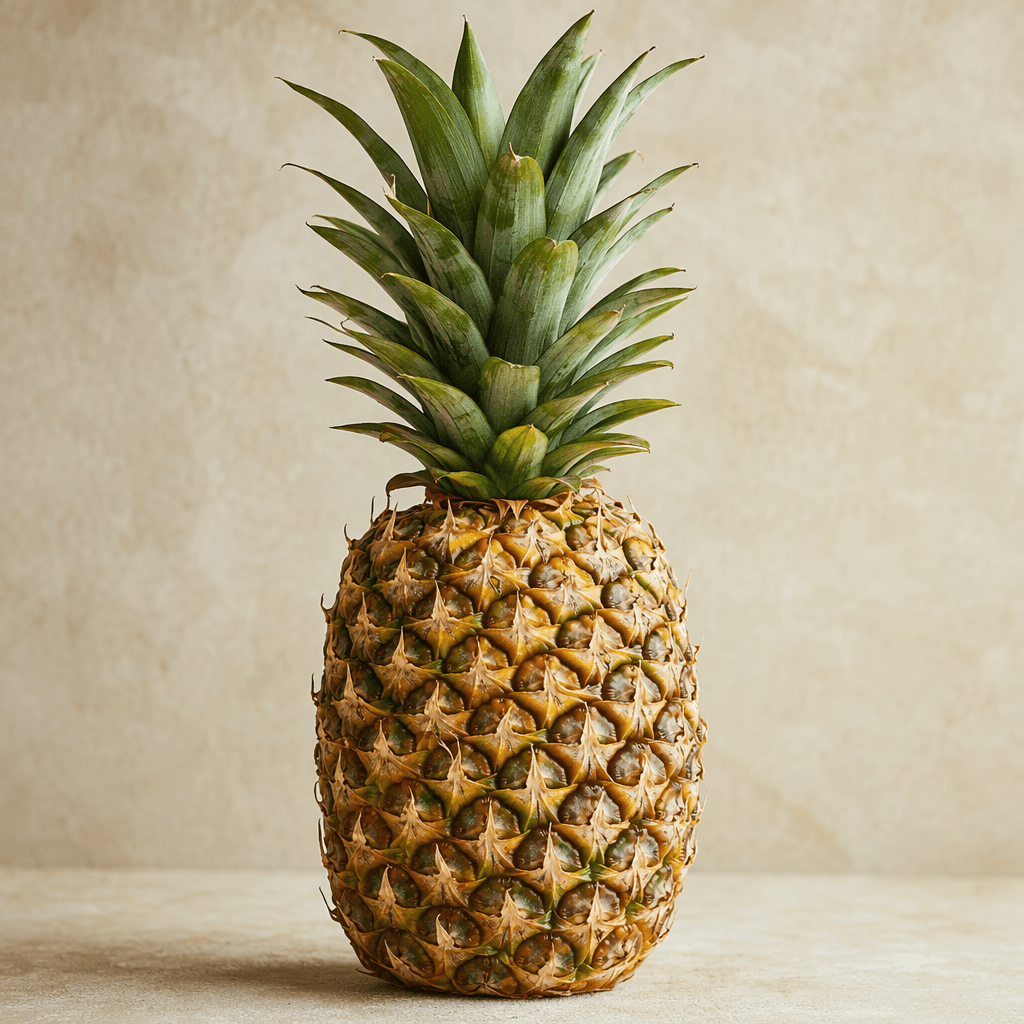
Pineapple Calories
Vitamin C, fiber, low calorie
In season: Spring · Summer · Autumn · Winter
CALORIES
GI
POTASSIUM
FIBER
Quick answer
1 slice (medium) of Pineapple (80 g) has 40 calories. That works out to 50 calories per 100 g. It contains 10.5 g of carbs, 0.4 g of protein, 0.1 g of fat and 1.1 g of fiber. Its 38.2 mg of Vitamin C covers 42% of the Daily Value. Its glycemic index is 59 (medium), so it raises blood sugar at a moderate pace.
What is Pineapple?
Pineapple is a tropical fruit native to South America, with juicy yellow flesh beneath its tough, patterned skin. Its sweet-tart flavour works well fresh, cut into chunks or slices, and it is also used in fruit salads, smoothies and desserts. In many places it is grilled or added to savoury dishes; its bright acidity pairs especially well with rich or spicy flavours.
Pineapple is mostly water, with natural sugars, vitamin C and some fibre, while remaining relatively low in calories. Choose fresh fruit rather than pineapple packed in syrup for a lighter option. It makes an easy snack on its own or pairs nicely with yoghurt, oats or other fruit.
Pineapple Nutrition Facts
Selected: 100 g
50
KCAL / 100G
Carbs
13.1g
· 5% DV
Protein
0.5g
· 1% DV
Fat
0.1g
· 0% DV
Fiber
1.4g
· 5% DV
DV is the share of the daily value covered, on a 2,000 kcal reference diet.
Calories come from: Carbs 95% · Protein 4% · Fat 1%
Pineapple Vitamins & Minerals
Vitamins
Vitamin C
47.8mg · 53% DV
B1
0.08mg · 7% DV
B6
0.11mg · 6% DV
Folate
18µg · 5% DV
Minerals
Manganese
1mg · 43% DV
Magnesium
12mg · 3% DV
Potassium ⭐
109mg · 3% DV
Calcium
13mg · 1% DV
How Nutritious Is Pineapple?
Nutrient density
High
How many vitamins, minerals and how much fiber this food carries per calorie. A high score means a lot of nutrition for few calories.
Satiety score
Medium
An EatBetter score computed from fiber, protein and calorie density. A high score means staying full longer on the same calories.
Both scores are calculated per 100 g and do not change with the selected portion. The satiety score is EatBetter's own calculation, not a clinical measure.
Pineapple Glycemic Index
GLYCEMIC INDEX
GLYCEMIC LOAD
Accounts for portion size — a more realistic measure than GI alone.
How to Burn Off Pineapple
To burn the 50 calories in 100 g:
🚶
Walking (5 km/h)
🏃
Running (8 km/h)
🚴
Cycling
🏊
Swimming
Times are calculated with the MET equation for a 70 kg adult. Actual burn varies with your weight, age and pace.
Is Pineapple Processed?
NOVA 1
Unprocessed
1. Unprocessed
2. Minimally Processed
3. Processed
4. Ultra-Processed
NOVA classifies foods into 4 groups by industrial processing. NOVA 1 (unprocessed) is the healthiest.
Does Pineapple Contain Allergens?
No known major allergens
Which Diets Is Pineapple Good For?
Vegan
✓ Suitable
Vegetarian
✓ Suitable
Gluten-Free
✓ Suitable
Dairy-Free
— Not suitable
Mediterranean
✓ Suitable
Paleo
— Not suitable
Whole30
— Not suitable
DASH
— Not suitable
Keto
— Not suitable
Low FODMAP
— Not suitable
Pineapple Fat Profile
SATURATED
0.01g
MONOUNSATURATED
0.01g
POLYUNSATURATED
0.02g
Omega 6:3 ratio 1:1
Below the ideal 4:1 — a good omega balance.
Compare Pineapple
Foods Similar to Pineapple
Frequently Asked Questions About Pineapple
How can you tell if a pineapple is ripe?
A ripe pineapple usually smells sweet at the base and gives slightly when pressed gently. A golden color can be a clue, but some ripe pineapples stay green; pulling a leaf from the crown is not a reliable ripeness test.
Can a pineapple ripen after you cut it?
No, a cut pineapple will not ripen or become sweeter. Once harvested, pineapple gains little sweetness, and cutting it does not change that; refrigerate cut pieces promptly and use them while they still smell fresh.
What is the easiest way to cut a pineapple?
Cut off the crown and base, stand the pineapple upright, and slice the peel away from top to bottom. Trim out the remaining brown eyes, then cut around the tough core to make wedges, chunks, or rings.
How long does cut pineapple last in the fridge?
Cut pineapple keeps for a few days in the refrigerator when stored in a covered container. Discard it if it develops a fermented smell, becomes unusually soft or slimy, or shows mold.
Can you freeze fresh pineapple?
Yes, pineapple freezes well for smoothies and cooked dishes. Remove the peel and core, cut the fruit into chunks, freeze the pieces in a single layer, then transfer them to a sealed freezer bag; thawed pineapple is softer than fresh.
Why does pineapple make your mouth tingle or feel sore?
Fresh pineapple contains bromelain, an enzyme that breaks down proteins, while its acidity can also irritate the mouth. The tingling is usually temporary; try a smaller serving or cooked pineapple, which has less active bromelain.
Is the core of a pineapple edible?
Yes, the pineapple core is edible, though it is tougher and more fibrous than the surrounding fruit. Slice it thinly, blend it into a smoothie, or remove it if you prefer a softer texture.
Can pineapple tenderize meat?
Yes, bromelain in fresh pineapple breaks down meat proteins and can tenderize meat in a marinade. Use it briefly: leaving meat in pineapple for too long can make the surface mushy.
Why won't fresh pineapple set in gelatin?
Fresh pineapple can stop gelatin from setting because bromelain breaks down the proteins that form gelatin’s structure. Heating the pineapple first deactivates the enzyme, and canned pineapple usually works because it has already been heat-treated.
Is canned pineapple as healthy as fresh pineapple?
Canned pineapple still provides fruit, but it is softer and its bromelain is largely deactivated by heat. Pineapple packed in syrup may contain added sugar; fruit packed in its own juice avoids that particular addition.
Have another question about Pineapple?
Ask the AI nutrition coach — calories, portions, alternatives and more, answered in seconds in the app.

Scan calories with your camera
Instant AI nutrition analysis

Nutrition data compiled from USDA FoodData Central and scientific sources.