

Ready & Packaged Foods
All →Vegetables & Legumes
All →Desserts & Confectionery
All →Meat & Protein
All →Grains & Bakery
All →Beverages
All →Milk & Dairy
All →

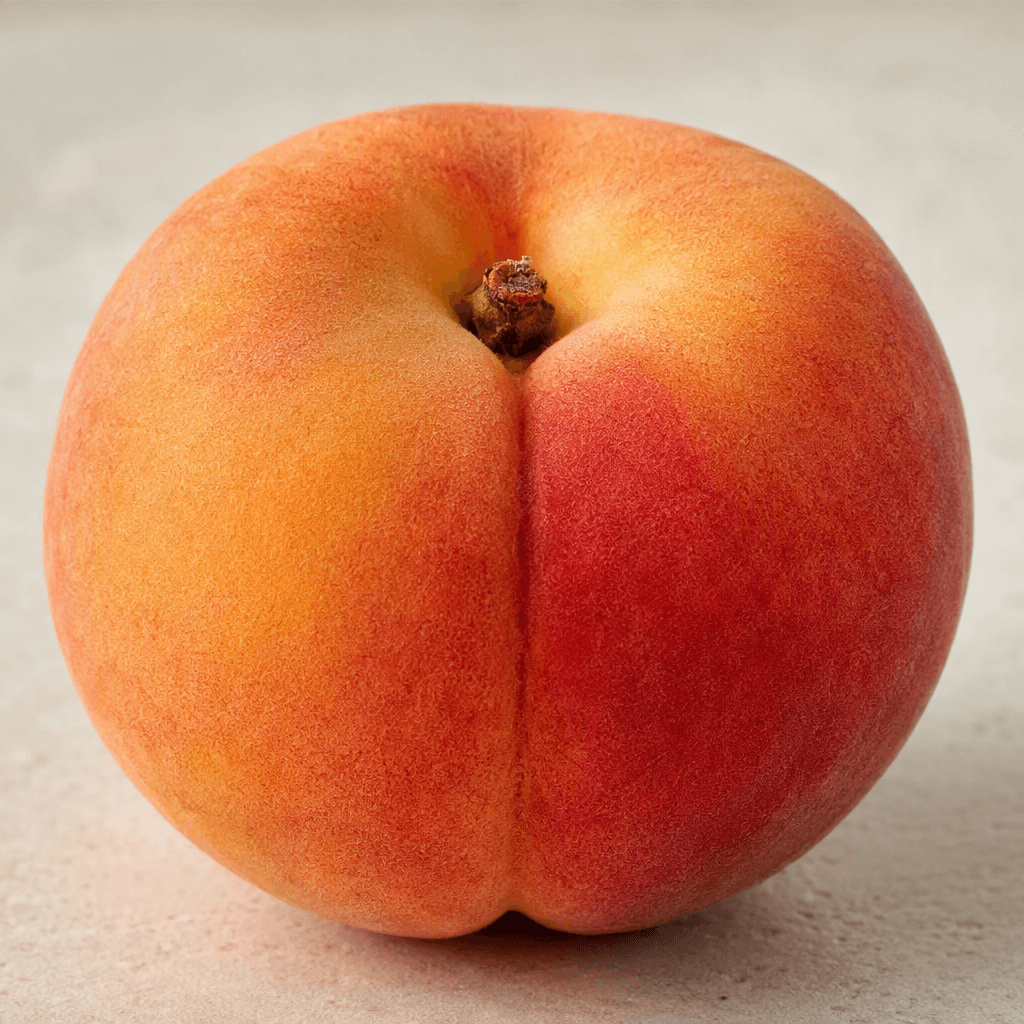
Peach Calories
Vitamin C, fiber, low calorie
In season: Summer
CALORIES
GI
POTASSIUM
FIBER
Quick answer
1 piece (medium) of Peach (150 g) has 59 calories. That works out to 39 calories per 100 g. It contains 14.3 g of carbs, 1.4 g of protein, 0.5 g of fat and 2.3 g of fiber. Its 9.9 mg of Vitamin C covers 11% of the Daily Value. Its glycemic index is 42 (low), so it raises blood sugar slowly.
What is Peach?
Peach is the juicy, stone-bearing fruit of a tree native to China, now grown in orchards around the world. Its soft skin is often fuzzy, and the flesh can be yellow or white; ripe fruit is fragrant, sweet and tender, with a firm pit at its centre. The skin is edible, though some people prefer to peel it.
Enjoy peaches fresh as a snack, sliced over yoghurt or cereal, or baked into pies and crumbles. They’re a light fruit with fibre and vitamin C, and their juiciness makes them especially refreshing in warm weather. For an easy dessert, pair peach slices with plain yoghurt; grilling them brings out their sweetness without needing much added sugar.
Peach Nutrition Facts
Selected: 100 g
39
KCAL / 100G
Carbs
9.5g
· 3% DV
Protein
0.9g
· 2% DV
Fat
0.3g
· 0% DV
Fiber
1.5g
· 5% DV
DV is the share of the daily value covered, on a 2,000 kcal reference diet.
Calories come from: Carbs 86% · Protein 8% · Fat 6%
Peach Vitamins & Minerals
Vitamins
Vitamin C
6.6mg · 7% DV
B3
0.81mg · 5% DV
Vitamin E
0.73mg · 5% DV
B5
0.15mg · 3% DV
Minerals
Potassium ⭐
190mg · 6% DV
Phosphorus
20mg · 3% DV
Magnesium
9mg · 2% DV
Calcium
6mg · 1% DV
How Nutritious Is Peach?
Nutrient density
High
How many vitamins, minerals and how much fiber this food carries per calorie. A high score means a lot of nutrition for few calories.
Satiety score
Medium
An EatBetter score computed from fiber, protein and calorie density. A high score means staying full longer on the same calories.
Both scores are calculated per 100 g and do not change with the selected portion. The satiety score is EatBetter's own calculation, not a clinical measure.
Peach Glycemic Index
GLYCEMIC INDEX
GLYCEMIC LOAD
Accounts for portion size — a more realistic measure than GI alone.
How to Burn Off Peach
To burn the 39 calories in 100 g:
🚶
Walking (5 km/h)
🏃
Running (8 km/h)
🚴
Cycling
🏊
Swimming
Times are calculated with the MET equation for a 70 kg adult. Actual burn varies with your weight, age and pace.
Is Peach Processed?
NOVA 1
Unprocessed
1. Unprocessed
2. Minimally Processed
3. Processed
4. Ultra-Processed
NOVA classifies foods into 4 groups by industrial processing. NOVA 1 (unprocessed) is the healthiest.
Does Peach Contain Allergens?
No known major allergens
Which Diets Is Peach Good For?
Vegan
✓ Suitable
Vegetarian
✓ Suitable
Gluten-Free
✓ Suitable
Dairy-Free
— Not suitable
Mediterranean
✓ Suitable
Paleo
— Not suitable
Whole30
— Not suitable
DASH
— Not suitable
Keto
— Not suitable
Low FODMAP
— Not suitable
Peach Fat Profile
SATURATED
0.02g
MONOUNSATURATED
0.09g
POLYUNSATURATED
0.09g
Compare Peach
Foods Similar to Peach
Frequently Asked Questions About Peach
How do you ripen peaches?
Ripen peaches at room temperature, out of direct sunlight. To speed things up, place them in a paper bag; check them daily and refrigerate once they yield slightly to gentle pressure and smell fragrant.
Should peaches be refrigerated?
Refrigerate ripe peaches to slow further ripening and help them keep longer. Leave firm, unripe peaches at room temperature first, since chilling them too soon can slow ripening and affect their texture.
Can you eat peach skin?
Yes, peach skin is edible, so you do not need to peel the fruit. Rinse and gently rub the peach under running water before eating it. If the fuzzy texture bothers you, peeling it is fine.
Can you freeze peaches?
Yes, peaches freeze well, though thawed fruit will be softer. Remove the pits, slice the peaches, and freeze the pieces spread out on a tray before transferring them to a sealed freezer container. Use thawed peaches in smoothies or cooked dishes.
How can you tell when a peach is ripe?
A ripe peach gives slightly when gently pressed and has a sweet, noticeable aroma near the stem. Avoid fruit with mold or deep bruises. Red coloring alone does not indicate ripeness; it varies by peach variety.
How do you remove the pit from a peach?
Cut the peach lengthwise along its natural crease, then twist the two halves in opposite directions. If the pit does not come away easily, slice around it with a small knife and lift it out rather than forcing the fruit.
What is the difference between a peach and a nectarine?
Peaches and nectarines are varieties of the same species; the main difference is that peaches have fuzzy skin and nectarines have smooth skin. Either can have white or yellow flesh, and sweetness varies by variety.
Can dogs eat peaches?
Yes, dogs can have a small amount of fresh peach flesh as an occasional treat. Remove the pit, leaves, and stem, and cut the fruit into pieces; the pit can cause choking and contains compounds that can release cyanide.
Are peach pits poisonous?
The hard peach pit should not be eaten or cracked open to consume its kernel. The kernel contains amygdalin, which can release cyanide in the body. Remove and discard the pit when preparing peaches.
Can people with diabetes eat peaches?
Yes, peaches can fit into a diabetes meal plan when the portion suits the individual. Whole peaches provide more fiber than peach juice. For guidance on portions and how peaches fit your eating plan, consult your clinician or dietitian.
Have another question about Peach?
Ask the AI nutrition coach — calories, portions, alternatives and more, answered in seconds in the app.

Scan calories with your camera
Instant AI nutrition analysis

Nutrition data compiled from USDA FoodData Central and scientific sources.