

Ready & Packaged Foods
All →Vegetables & Legumes
All →Desserts & Confectionery
All →Meat & Protein
All →Grains & Bakery
All →Beverages
All →Milk & Dairy
All →

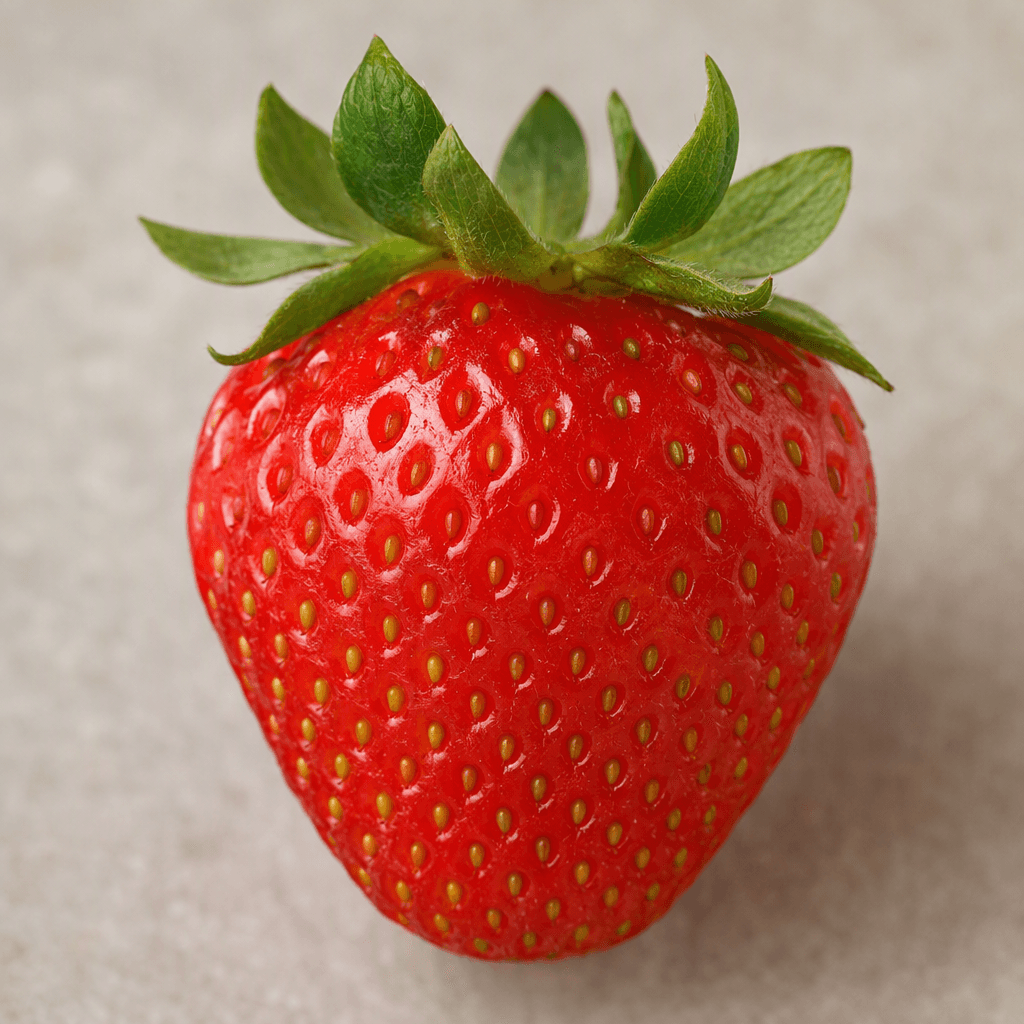
Strawberry Calories
Rich in vitamin C and fiber, low calorie, high in antioxidants
In season: Spring · Summer
CALORIES
GI
POTASSIUM
FIBER
Quick answer
5 piece (medium) of Strawberry (70 g) has 22 calories. That works out to 32 calories per 100 g. It contains 5.4 g of carbs, 0.5 g of protein, 0.2 g of fat and 1.4 g of fiber. Its 41.3 mg of Vitamin C covers 46% of the Daily Value. Its glycemic index is 40 (low), so it raises blood sugar slowly.
What is Strawberry?
Strawberry is a fragrant, soft-fleshed fruit whose tiny seeds sit on the outside and whose skin turns bright red when ripe. It is eaten fresh around the world and also used in jams, sauces, baking and desserts. In places where strawberries are in season, they’re often enjoyed simply at breakfast or as a snack; elsewhere, frozen berries make them easy to add year-round.
Their juicy texture and sweet-tart flavour work well with yoghurt, cereal, porridge or a little cream, and they can brighten a fruit salad. Strawberries are low in calories and provide fibre and vitamin C. For a light dessert, serve them sliced with plain yoghurt; choose berries that smell fragrant, and wash them just before eating so they stay fresh.
Strawberry Nutrition Facts
Selected: 100 g
32
KCAL / 100G
Carbs
7.7g
· 3% DV
Protein
0.7g
· 1% DV
Fat
0.3g
· 0% DV
Fiber
2g
· 7% DV
DV is the share of the daily value covered, on a 2,000 kcal reference diet.
Calories come from: Carbs 85% · Protein 8% · Fat 7%
Strawberry Vitamins & Minerals
Vitamins
Vitamin C
59mg · 66% DV
Folate
24µg · 6% DV
Biotin
1.5µg · 5% DV
B5
0.13mg · 3% DV
Minerals
Potassium ⭐
153mg · 5% DV
Magnesium
13mg · 3% DV
Phosphorus
24mg · 3% DV
Calcium
16mg · 2% DV
How Nutritious Is Strawberry?
Nutrient density
High
How many vitamins, minerals and how much fiber this food carries per calorie. A high score means a lot of nutrition for few calories.
Satiety score
Medium
An EatBetter score computed from fiber, protein and calorie density. A high score means staying full longer on the same calories.
Both scores are calculated per 100 g and do not change with the selected portion. The satiety score is EatBetter's own calculation, not a clinical measure.
Strawberry Glycemic Index
GLYCEMIC INDEX
GLYCEMIC LOAD
Accounts for portion size — a more realistic measure than GI alone.
How to Burn Off Strawberry
To burn the 32 calories in 100 g:
🚶
Walking (5 km/h)
🏃
Running (8 km/h)
🚴
Cycling
🏊
Swimming
Times are calculated with the MET equation for a 70 kg adult. Actual burn varies with your weight, age and pace.
Is Strawberry Processed?
NOVA 1
Unprocessed
1. Unprocessed
2. Minimally Processed
3. Processed
4. Ultra-Processed
NOVA classifies foods into 4 groups by industrial processing. NOVA 1 (unprocessed) is the healthiest.
Does Strawberry Contain Allergens?
No known major allergens
Which Diets Is Strawberry Good For?
Vegan
✓ Suitable
Vegetarian
✓ Suitable
Gluten-Free
✓ Suitable
Dairy-Free
— Not suitable
Mediterranean
✓ Suitable
Paleo
✓ Suitable
Whole30
— Not suitable
DASH
— Not suitable
Keto
— Not suitable
Low FODMAP
— Not suitable
Strawberry Fat Profile
SATURATED
0.02g
MONOUNSATURATED
0.04g
POLYUNSATURATED
0.09g
Omega 6:3 ratio 3:1
Below the ideal 4:1 — a good omega balance.
Compare Strawberry
Foods Similar to Strawberry
Frequently Asked Questions About Strawberry
How should you wash strawberries?
Rinse strawberries gently under cool running water just before eating, and leave the green tops on while washing. Dry them with a clean towel afterward, since damp berries spoil faster. Avoid soaking them, which can affect their texture.
How long do strawberries last in the fridge?
Strawberries usually keep best for a few days in the refrigerator. Store them unwashed in a breathable container, remove bruised or moldy berries, and wash only what you are ready to eat so extra moisture does not speed spoilage.
Can you freeze strawberries?
Yes, strawberries freeze well. Wash and dry them completely, remove the green tops, and freeze the berries in a single layer before transferring them to a sealed freezer container. They soften after thawing, so use them in smoothies, sauces, or baking.
How can you tell if a strawberry is ripe?
A ripe strawberry is evenly red, fragrant, and firm, with no pale or green areas near the top. Choose berries without bruises, leaking juice, or mold; strawberries do not continue to ripen after they are picked.
Can you eat strawberry leaves?
Yes, strawberry leaves are edible and are not usually harmful, though many people remove them because of their texture. Rinse the berries first, then twist or cut off the leafy tops before eating or using them in a recipe.
Are the seeds on strawberries edible?
Yes, the tiny seeds on strawberry skin are edible, and there is no need to remove them before eating. They are the plant’s true seeds, not a hard pit, and are generally easy to eat with the fruit.
Why do strawberries get moldy so quickly?
Strawberries mold quickly because their delicate skin bruises easily and moisture encourages mold growth. Keep them dry and refrigerated, and discard any moldy berry along with soft berries that have been in direct contact with it.
Should strawberries be kept in the fridge?
Yes, refrigerate strawberries if you are not eating them soon. Cold storage slows spoilage, but leave the berries unwashed and keep them in a container that allows airflow; bring a serving to room temperature shortly before eating for fuller flavor.
Can dogs eat strawberries?
Yes, most dogs can eat small pieces of plain strawberry as an occasional treat. Wash the fruit, remove the leafy tops, and cut it into bite-size pieces to reduce choking risk; avoid strawberries served with sugar, syrup, or chocolate.
Can people with diabetes eat strawberries?
Yes, people with diabetes can generally include strawberries in a balanced meal. Pairing fruit with a source of protein or fat may make it more filling; anyone adjusting diabetes medication or managing blood glucose should follow their clinician’s meal plan.
Have another question about Strawberry?
Ask the AI nutrition coach — calories, portions, alternatives and more, answered in seconds in the app.

Scan calories with your camera
Instant AI nutrition analysis

Nutrition data compiled from USDA FoodData Central and scientific sources.