

Ready & Packaged Foods
All →Vegetables & Legumes
All →Desserts & Confectionery
All →Meat & Protein
All →Grains & Bakery
All →Beverages
All →Milk & Dairy
All →

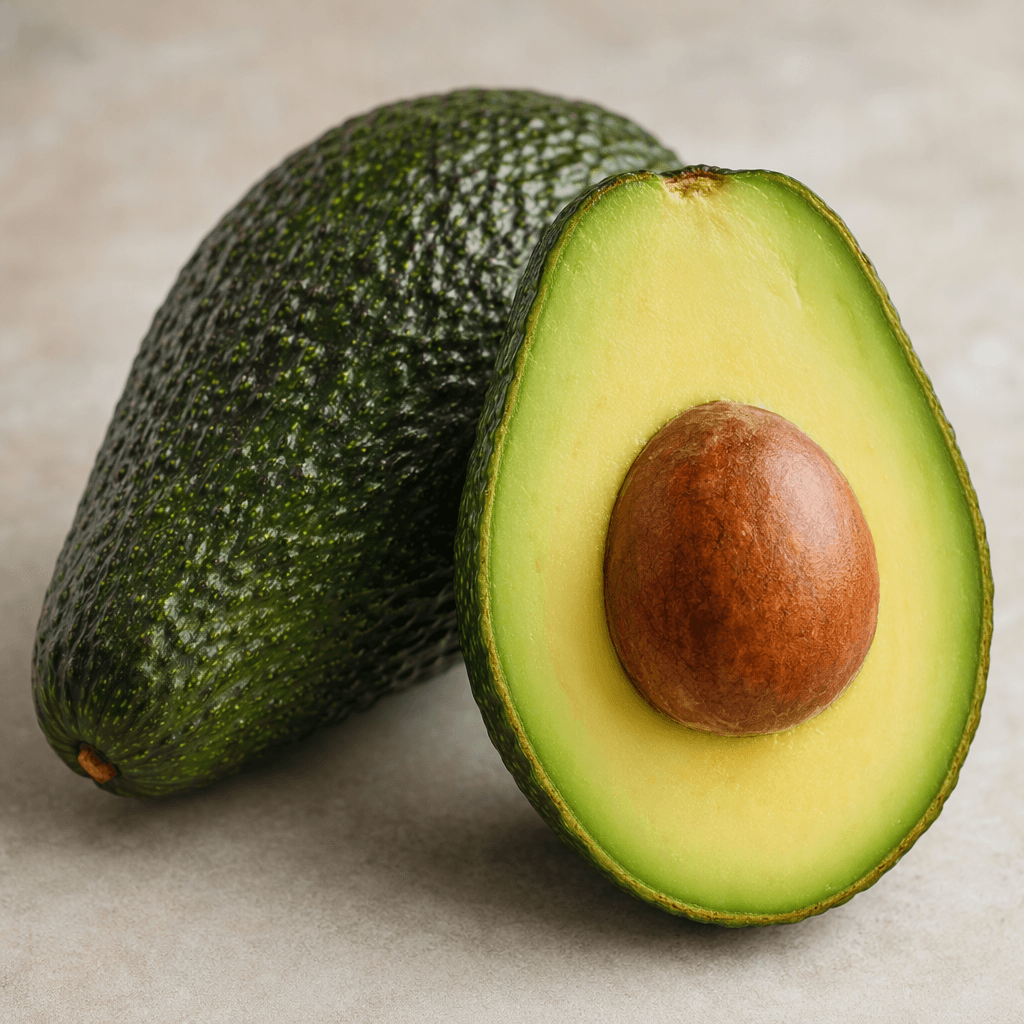
Avocado Calories
Rich in healthy fats, fiber, potassium, vitamin E and C
In season: Spring · Summer · Autumn · Winter
CALORIES
GI
POTASSIUM
FIBER
Quick answer
1 piece (medium) of Avocado (200 g) has 320 calories. That works out to 160 calories per 100 g. It contains 17 g of carbs, 4 g of protein, 29.4 g of fat and 13.4 g of fiber. Its 2.8 mg of B5 covers 56% of the Daily Value. Its glycemic index is 15 (low), so it raises blood sugar slowly.
What is Avocado?
Avocado is a fruit native to Mexico and Central America, with a large pit and soft, pale-green flesh inside its dark, textured skin. Its mild, buttery taste and creamy texture make it easy to mash or slice, and it is now grown in many warm regions around the world.
It is often spread on toast, tossed into salads, or blended into guacamole with lime, salt and other seasonings. In the UK, US and elsewhere, it appears at breakfast and in sandwiches as well as in dips; it also works well alongside eggs, beans or grilled fish. Avocado provides fibre and is rich in fat, so it is filling. Pair it with crisp vegetables and citrus for a fresh, balanced plate.
Avocado Nutrition Facts
Selected: 100 g
160
KCAL / 100G
Carbs
8.5g
· 3% DV
Protein
2g
· 4% DV
Fat
14.7g
· 19% DV
Fiber
6.7g
· 24% DV
DV is the share of the daily value covered, on a 2,000 kcal reference diet.
Calories come from: Carbs 20% · Protein 5% · Fat 75%
Avocado Vitamins & Minerals
Vitamins
B5
1.39mg · 28% DV
Folate
81µg · 20% DV
Vitamin K
21µg · 18% DV
B6
0.26mg · 15% DV
Minerals
Potassium ⭐
485mg · 14% DV
Zinc
1mg · 9% DV
Magnesium
29mg · 7% DV
Phosphorus
52mg · 7% DV
How Nutritious Is Avocado?
Nutrient density
Very high
How many vitamins, minerals and how much fiber this food carries per calorie. A high score means a lot of nutrition for few calories.
Satiety score
Medium
An EatBetter score computed from fiber, protein and calorie density. A high score means staying full longer on the same calories.
Both scores are calculated per 100 g and do not change with the selected portion. The satiety score is EatBetter's own calculation, not a clinical measure.
Avocado Glycemic Index
GLYCEMIC INDEX
GLYCEMIC LOAD
Accounts for portion size — a more realistic measure than GI alone.
How to Burn Off Avocado
To burn the 160 calories in 100 g:
🚶
Walking (5 km/h)
🏃
Running (8 km/h)
🚴
Cycling
🏊
Swimming
Times are calculated with the MET equation for a 70 kg adult. Actual burn varies with your weight, age and pace.
Is Avocado Processed?
NOVA 1
Unprocessed
1. Unprocessed
2. Minimally Processed
3. Processed
4. Ultra-Processed
NOVA classifies foods into 4 groups by industrial processing. NOVA 1 (unprocessed) is the healthiest.
Does Avocado Contain Allergens?
No known major allergens
Which Diets Is Avocado Good For?
Vegan
✓ Suitable
Vegetarian
✓ Suitable
Gluten-Free
✓ Suitable
Dairy-Free
— Not suitable
Mediterranean
✓ Suitable
Paleo
✓ Suitable
Whole30
— Not suitable
DASH
— Not suitable
Keto
✓ Suitable
Low FODMAP
— Not suitable
Avocado Fat Profile
SATURATED
2.13g
MONOUNSATURATED
9.8g
POLYUNSATURATED
1.82g
Omega 6:3 ratio 15.4:1
Above the ideal 4:1 (15.4:1).
Compare Avocado
Foods Similar to Avocado
Frequently Asked Questions About Avocado
How do you tell if an avocado is ripe?
A ripe avocado yields slightly to gentle pressure without feeling mushy. Check under the stem: green flesh usually means it is ready to eat, while brown flesh can signal overripeness. Avoid fruit with deep dents or very soft spots.
How can you ripen an avocado quickly?
To ripen an avocado faster, place it in a paper bag with a banana or apple at room temperature. These fruits release ethylene, which speeds ripening. Check it daily and refrigerate the avocado once it softens slightly.
How do you keep a cut avocado from turning brown?
Brush the exposed flesh with lemon or lime juice, then press plastic wrap directly against it or store it in an airtight container in the refrigerator. Browning happens when the flesh meets air; scrape off a thin discolored layer if the avocado still smells fresh.
Can you freeze avocado?
Yes, but thawed avocado is softer and works best in dips, smoothies, and sauces rather than salads. Mash the flesh with a little lemon or lime juice, seal it in a freezer-safe container, and thaw it in the refrigerator when needed.
Can you eat avocado skin?
Usually not; avocado skin is tough and often bitter, so most people remove it and eat the flesh. Skin thickness varies by variety, but washing the whole avocado before cutting is still important to keep dirt from the knife off the flesh.
Is the avocado pit edible?
No, the avocado pit is not normally eaten. It is hard and difficult to prepare, and there is not enough reliable evidence that eating it provides health benefits. Remove it carefully and discard it rather than adding it to food.
How do you cut an avocado safely?
Cut lengthwise around the avocado, twist the halves apart, and scoop out the pit with a spoon instead of striking it with a knife. Then score the flesh while it is still in the skin and scoop it out, or peel the halves first.
Can you eat an avocado that has brown spots inside?
Small brown spots in an avocado are often bruises or signs of over-ripening; you can cut them away if the rest looks and smells normal. Discard the fruit if it has mold, a sour or rancid smell, or widespread dark, mushy flesh.
Can dogs eat avocado?
A small amount of plain avocado flesh is unlikely to harm most dogs, but it is not a necessary treat. Keep the pit, skin, and leaves away from dogs because they can cause choking or digestive problems, and contact a veterinarian if a dog swallows a pit.
Does avocado go well in smoothies?
Yes, avocado blends smoothly into a creamy smoothie and pairs well with banana, berries, or leafy greens. Its mild flavor lets the other ingredients stand out. Add the flesh without the skin or pit, and blend soon after cutting to limit browning.
Have another question about Avocado?
Ask the AI nutrition coach — calories, portions, alternatives and more, answered in seconds in the app.

Scan calories with your camera
Instant AI nutrition analysis

Nutrition data compiled from USDA FoodData Central and scientific sources.