

Ready & Packaged Foods
All →Vegetables & Legumes
All →Desserts & Confectionery
All →Meat & Protein
All →Grains & Bakery
All →Beverages
All →Milk & Dairy
All →

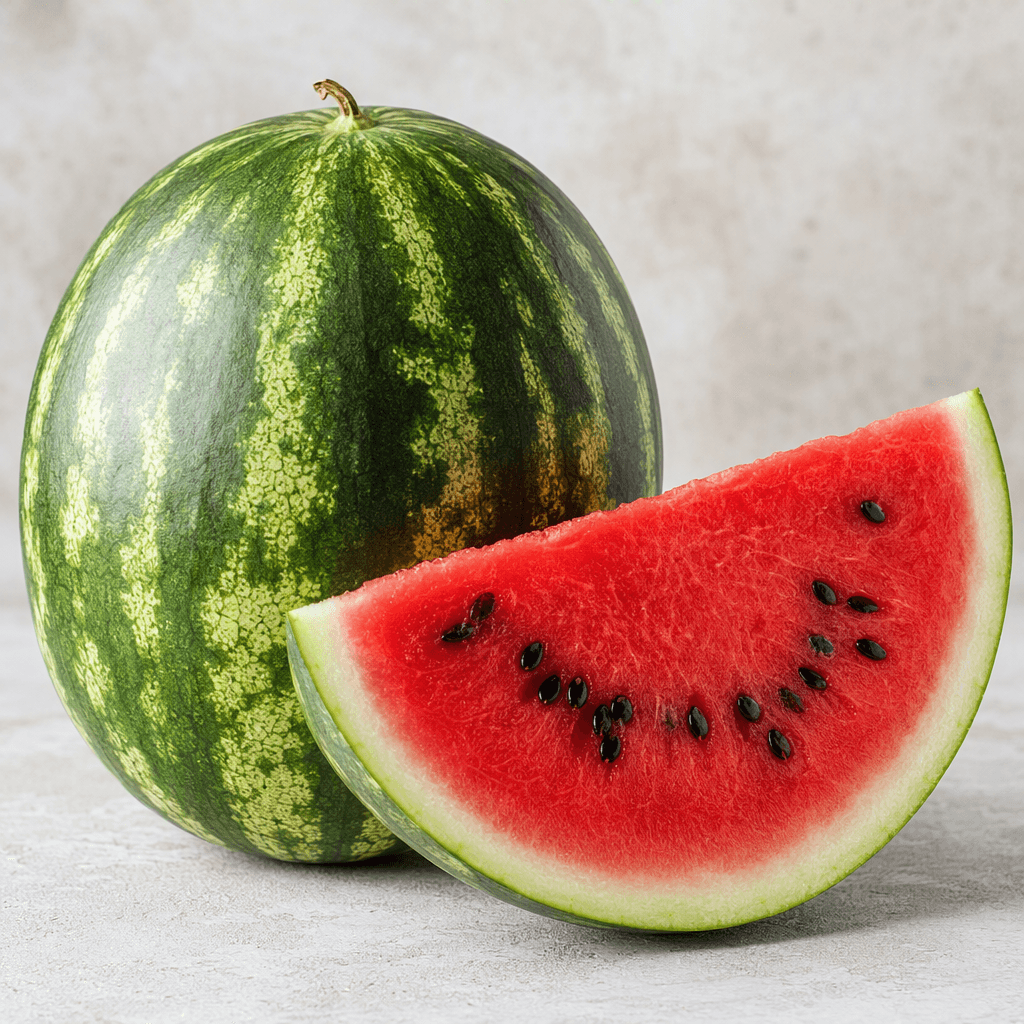
Watermelon Calories
High water content, low calorie, source of vitamin C
In season: Summer
CALORIES
GI
POTASSIUM
FIBER
Quick answer
1 slice (medium) of Watermelon (150 g) has 45 calories. That works out to 30 calories per 100 g. It contains 11.4 g of carbs, 0.9 g of protein, 0.3 g of fat and 0.6 g of fiber. Its 12.1 mg of Vitamin C covers 13% of the Daily Value. Its glycemic index is 72 (low), so it raises blood sugar slowly.
What is Watermelon?
Watermelon is a large, sweet summer fruit with origins in Africa. Its thick green rind encloses crisp, juicy flesh, usually red, and varieties may be seeded or seedless. Around the world, it is often served chilled in wedges at picnics and summer meals; it also works in fruit salads or alongside savoury foods. In Turkey, slices are a familiar warm-weather treat, sometimes paired with white cheese.
With plenty of water and a light, refreshing taste, watermelon makes an easy snack when the weather is hot. It provides vitamin C and has about 30 calories per 100 g. Serve it straight from the fridge, or pair it with yoghurt or cheese for a more filling snack.
Watermelon Nutrition Facts
Selected: 100 g
30
KCAL / 100G
Carbs
7.6g
· 3% DV
Protein
0.6g
· 1% DV
Fat
0.2g
· 0% DV
Fiber
0.4g
· 1% DV
DV is the share of the daily value covered, on a 2,000 kcal reference diet.
Calories come from: Carbs 88% · Protein 7% · Fat 5%
Watermelon Vitamins & Minerals
Vitamins
Vitamin C
8.1mg · 9% DV
B5
0.22mg · 4% DV
Vitamin A
28µg · 3% DV
B1
0.03mg · 3% DV
Minerals
Potassium ⭐
112mg · 3% DV
Magnesium
10mg · 2% DV
Phosphorus
11mg · 2% DV
Calcium
7mg · 1% DV
How Nutritious Is Watermelon?
Nutrient density
Medium
How many vitamins, minerals and how much fiber this food carries per calorie. A high score means a lot of nutrition for few calories.
Satiety score
Medium
An EatBetter score computed from fiber, protein and calorie density. A high score means staying full longer on the same calories.
Both scores are calculated per 100 g and do not change with the selected portion. The satiety score is EatBetter's own calculation, not a clinical measure.
Watermelon Glycemic Index
GLYCEMIC INDEX
GLYCEMIC LOAD
Accounts for portion size — a more realistic measure than GI alone.
How to Burn Off Watermelon
To burn the 30 calories in 100 g:
🚶
Walking (5 km/h)
🏃
Running (8 km/h)
🚴
Cycling
🏊
Swimming
Times are calculated with the MET equation for a 70 kg adult. Actual burn varies with your weight, age and pace.
Is Watermelon Processed?
NOVA 1
Unprocessed
1. Unprocessed
2. Minimally Processed
3. Processed
4. Ultra-Processed
NOVA classifies foods into 4 groups by industrial processing. NOVA 1 (unprocessed) is the healthiest.
Does Watermelon Contain Allergens?
No known major allergens
Which Diets Is Watermelon Good For?
Vegan
✓ Suitable
Vegetarian
✓ Suitable
Gluten-Free
✓ Suitable
Dairy-Free
— Not suitable
Mediterranean
✓ Suitable
Paleo
✓ Suitable
Whole30
— Not suitable
DASH
— Not suitable
Keto
— Not suitable
Low FODMAP
— Not suitable
Watermelon Fat Profile
SATURATED
0.02g
MONOUNSATURATED
0.04g
POLYUNSATURATED
0.05g
Omega 6:3 ratio 2:1
Below the ideal 4:1 — a good omega balance.
Compare Watermelon
Foods Similar to Watermelon
Frequently Asked Questions About Watermelon
How can you tell if a watermelon is ripe?
A ripe watermelon often has a creamy yellow patch where it rested on the ground and a matte rather than shiny rind. A deep, hollow sound when tapped can help, but use these signs together rather than relying on one.
Can dogs eat watermelon?
Yes, dogs can have small pieces of watermelon flesh as an occasional treat. Remove the seeds and rind first, since they can pose choking or digestive problems; introduce it in a small amount to see how your dog tolerates it.
Can you eat watermelon seeds?
Yes, watermelon seeds are edible. Whole raw seeds may pass through without being digested, while roasted seeds are easier to chew and enjoy as a snack. Keep whole seeds away from young children because they can be a choking hazard.
Can you eat watermelon rind?
Yes, the white part of watermelon rind is edible and can be pickled, stir-fried, or cooked in other dishes. Wash the whole watermelon before cutting it, and discard the tough outer green skin if you do not want to prepare it.
How should you store cut watermelon?
Store cut watermelon in a sealed container or wrap the exposed surface tightly and refrigerate it promptly. Avoid leaving it at room temperature for a long time, and discard it if it develops an unusual smell or texture.
Can you freeze watermelon?
Yes, watermelon freezes well for smoothies and chilled drinks, but it becomes soft and watery after thawing. Cut it into cubes before freezing and use the pieces straight from the freezer rather than expecting thawed watermelon to keep its fresh texture.
Is watermelon a fruit or a vegetable?
Watermelon is botanically a fruit because it develops from a flower and contains seeds. In everyday cooking it is treated as a fruit, though it belongs to the cucurbit family alongside vegetables such as squash and cucumber.
Does watermelon help you stay hydrated?
Yes, watermelon contributes to hydration because it contains a lot of water. It can be a refreshing way to add fluids, but it does not replace drinking water, especially during prolonged exercise or in hot weather.
Can people with diabetes eat watermelon?
Yes, people with diabetes can include watermelon while keeping the portion in line with their meal plan, since its carbohydrates can raise blood sugar. Pairing a portion with a balanced meal and checking your own glucose response can help guide choices.
Why does watermelon sometimes taste mealy?
Watermelon can turn mealy when it is overripe, has been stored too long, or has experienced damaging cold temperatures. Once the flesh loses its crisp texture, chilling it further will not restore it; use it blended if the flavor is still pleasant.
Have another question about Watermelon?
Ask the AI nutrition coach — calories, portions, alternatives and more, answered in seconds in the app.

Scan calories with your camera
Instant AI nutrition analysis

Nutrition data compiled from USDA FoodData Central and scientific sources.