

Ready & Packaged Foods
All →Vegetables & Legumes
All →Desserts & Confectionery
All →Meat & Protein
All →Grains & Bakery
All →Beverages
All →Milk & Dairy
All →

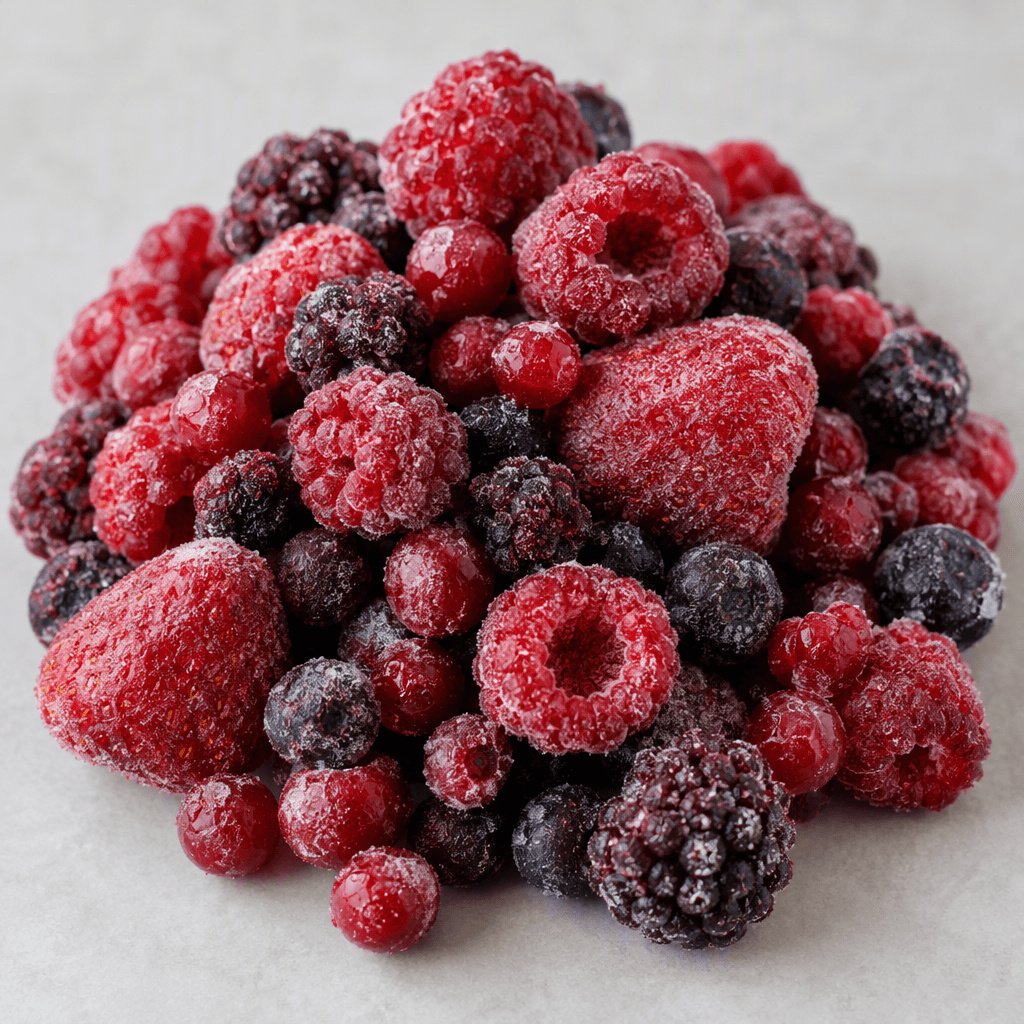
Frozen Red Berries Calories
Antioxidant-rich, low calorie, high vitamin C
In season: Spring · Summer · Autumn · Winter
CALORIES
GI
POTASSIUM
FIBER
Quick answer
1 cup (medium) of Frozen Red Berries (140 g) has 63 calories. That works out to 45 calories per 100 g. It contains 14 g of carbs, 1.4 g of protein, 0.4 g of fat and 5.6 g of fiber. Its 49 mg of Vitamin C covers 54% of the Daily Value. Its glycemic index is 40 (low), so it raises blood sugar slowly.
What is Frozen Red Berries?
Frozen red berries are a mix of berries—often strawberries, raspberries, redcurrants or similar fruit—that have been picked, sorted and frozen. The exact mix varies by product, making them a convenient way to keep seasonal fruit on hand throughout the year.
Once thawed, they tend to be softer and juicier than fresh berries; you can also blend them straight from frozen into smoothies or warm them gently for porridge, yoghurt and desserts. In many English-speaking kitchens, they are an easy addition to breakfast bowls, baking and sauces, or can be served with cream or ice cream as a simple dessert. At about 45 calories per 100 g, they are a light, fibre-containing fruit choice. Use them without added sugar for a tart topping, or thaw only partway when you want them to hold their shape.
Frozen Red Berries Nutrition Facts
Selected: 100 g
45
KCAL / 100G
Carbs
10g
· 4% DV
Protein
1g
· 2% DV
Fat
0.3g
· 0% DV
Fiber
4g
· 14% DV
DV is the share of the daily value covered, on a 2,000 kcal reference diet.
Calories come from: Carbs 86% · Protein 9% · Fat 5%
Frozen Red Berries Vitamins & Minerals
Vitamins
Vitamin C
35mg · 39% DV
Vitamin K
19µg · 16% DV
Folate
25µg · 6% DV
Vitamin E
0.7mg · 5% DV
Minerals
Iron
1mg · 6% DV
Magnesium
17mg · 4% DV
Phosphorus
29mg · 4% DV
Potassium ⭐
150mg · 4% DV
How Nutritious Is Frozen Red Berries?
Nutrient density
High
How many vitamins, minerals and how much fiber this food carries per calorie. A high score means a lot of nutrition for few calories.
Satiety score
Medium
An EatBetter score computed from fiber, protein and calorie density. A high score means staying full longer on the same calories.
Both scores are calculated per 100 g and do not change with the selected portion. The satiety score is EatBetter's own calculation, not a clinical measure.
Frozen Red Berries Glycemic Index
GLYCEMIC INDEX
GLYCEMIC LOAD
Accounts for portion size — a more realistic measure than GI alone.
How to Burn Off Frozen Red Berries
To burn the 45 calories in 100 g:
🚶
Walking (5 km/h)
🏃
Running (8 km/h)
🚴
Cycling
🏊
Swimming
Times are calculated with the MET equation for a 70 kg adult. Actual burn varies with your weight, age and pace.
Is Frozen Red Berries Processed?
NOVA 2
Minimally Processed
1. Unprocessed
2. Minimally Processed
3. Processed
4. Ultra-Processed
NOVA classifies foods into 4 groups by industrial processing. NOVA 1 (unprocessed) is the healthiest.
Does Frozen Red Berries Contain Allergens?
No known major allergens
Which Diets Is Frozen Red Berries Good For?
Vegan
✓ Suitable
Vegetarian
✓ Suitable
Gluten-Free
✓ Suitable
Dairy-Free
— Not suitable
Mediterranean
✓ Suitable
Paleo
✓ Suitable
Whole30
— Not suitable
DASH
— Not suitable
Keto
— Not suitable
Low FODMAP
— Not suitable
Frozen Red Berries Fat Profile
SATURATED
0.02g
MONOUNSATURATED
0.04g
POLYUNSATURATED
0.09g
Omega 6:3 ratio 2.7:1
Below the ideal 4:1 — a good omega balance.
Compare Frozen Red Berries
Foods Similar to Frozen Red Berries
Frequently Asked Questions About Frozen Red Berries
Are frozen red berries as nutritious as fresh berries?
Yes, frozen red berries can be just as nutritious as fresh berries. They are usually frozen soon after picking, which helps preserve nutrients; choose plain berries without added sugar when you want the fruit alone.
Can you eat frozen red berries straight from the freezer?
Yes, you can eat frozen red berries without thawing, though they may be very hard and intensely cold. Let them soften briefly first, especially for young children, and follow any preparation instructions on the package.
How do you thaw frozen red berries without making them mushy?
Thaw frozen red berries slowly in a covered container in the refrigerator. This limits mess and keeps them cooler than leaving them on the counter; drain excess juice if you need the berries to hold their shape in a recipe.
Can frozen red berries go straight into a smoothie?
Yes, add frozen red berries directly to a smoothie for a cold, thick texture. Blend them with enough liquid to keep the blades moving, and use a blender designed to handle frozen fruit.
Do frozen red berries need to be washed?
Usually not: commercially packaged frozen red berries are generally ready to use, and rinsing can make them soggy. Follow the package directions, and wash berries if they were sold loose or became contaminated after opening.
Can you bake with frozen red berries without thawing them first?
Yes, you can usually fold frozen red berries straight into cake, muffin, or pancake batter. Add them at the last moment to limit streaking, and expect a little extra moisture; a light coating of flour can help distribute them.
How do frozen red berries compare with fresh berries in recipes?
Frozen red berries are softer and release more juice after thawing, so they work especially well in smoothies, sauces, and cooked fillings. For garnishes or salads where berries need to keep their shape, fresh berries are usually a better choice.
Can frozen red berries be used in overnight oats?
Yes, stir frozen red berries into overnight oats before chilling. They thaw in the refrigerator and tint the oats with their juice; add them on top instead if you want to keep the color from spreading through the whole jar.
How long do frozen red berries keep in the freezer?
Frozen red berries remain safe while continuously kept frozen, but their flavor and texture decline over time. Keep the package sealed, follow its date guidance, and use them sooner if you notice extensive ice crystals or freezer-burned patches.
Can you make a berry sauce from frozen red berries?
Yes, simmer frozen red berries in a small saucepan until they soften and release their juice. Mash them for a smooth topping or leave them whole; their own liquid usually provides enough moisture to start cooking.
Have another question about Frozen Red Berries?
Ask the AI nutrition coach — calories, portions, alternatives and more, answered in seconds in the app.

Scan calories with your camera
Instant AI nutrition analysis

Nutrition data compiled from USDA FoodData Central and scientific sources.