

Ready & Packaged Foods
All →Vegetables & Legumes
All →Desserts & Confectionery
All →Meat & Protein
All →Grains & Bakery
All →Beverages
All →Milk & Dairy
All →

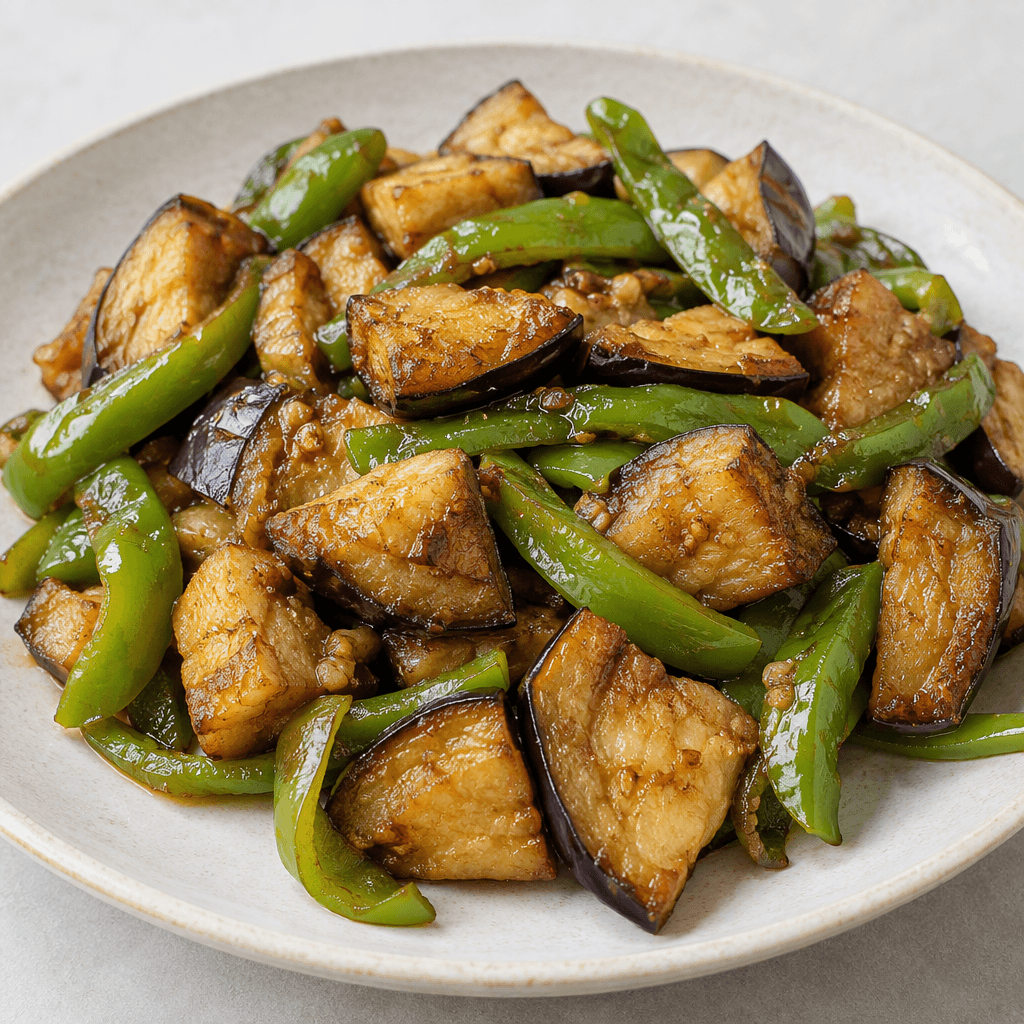
Fried eggplant and pepper Calories
Fried eggplant and pepper
In season: Summer · Autumn
CALORIES
GI
POTASSIUM
FIBER
Quick answer
1 serving (medium) of Fried eggplant and pepper (120 g) has 174 calories. That works out to 145 calories per 100 g. It contains 11.4 g of carbs, 2 g of protein, 13.4 g of fat and 4.3 g of fiber. Its 21.6 mg of Vitamin C covers 24% of the Daily Value. Its glycemic index is 35 (low), so it raises blood sugar slowly.
Fried eggplant and pepper Nutrition Facts
Selected: 100 g
145
KCAL / 100G
Carbs
9.5g
· 3% DV
Protein
1.7g
· 3% DV
Fat
11.2g
· 14% DV
Fiber
3.6g
· 13% DV
DV is the share of the daily value covered, on a 2,000 kcal reference diet.
Calories come from: Carbs 26% · Protein 5% · Fat 69%
Fried eggplant and pepper Vitamins & Minerals
Vitamins
Vitamin C
18mg · 20% DV
Vitamin K
14µg · 12% DV
Vitamin E
1.1mg · 7% DV
Vitamin A
45µg · 5% DV
Minerals
Iron
1mg · 6% DV
Potassium ⭐
210mg · 6% DV
Magnesium
13mg · 3% DV
Phosphorus
22mg · 3% DV
How Nutritious Is Fried eggplant and pepper?
Nutrient density
Medium
How many vitamins, minerals and how much fiber this food carries per calorie. A high score means a lot of nutrition for few calories.
Satiety score
Medium
An EatBetter score computed from fiber, protein and calorie density. A high score means staying full longer on the same calories.
Both scores are calculated per 100 g and do not change with the selected portion. The satiety score is EatBetter's own calculation, not a clinical measure.
Fried eggplant and pepper Glycemic Index
GLYCEMIC INDEX
GLYCEMIC LOAD
Accounts for portion size — a more realistic measure than GI alone.
How to Burn Off Fried eggplant and pepper
To burn the 145 calories in 100 g:
🚶
Walking (5 km/h)
🏃
Running (8 km/h)
🚴
Cycling
🏊
Swimming
Times are calculated with the MET equation for a 70 kg adult. Actual burn varies with your weight, age and pace.
Is Fried eggplant and pepper Processed?
NOVA 3
Processed
1. Unprocessed
2. Minimally Processed
3. Processed
4. Ultra-Processed
NOVA classifies foods into 4 groups by industrial processing. NOVA 1 (unprocessed) is the healthiest.
Does Fried eggplant and pepper Contain Allergens?
No known major allergens
Which Diets Is Fried eggplant and pepper Good For?
Vegan
✓ Suitable
Vegetarian
✓ Suitable
Gluten-Free
✓ Suitable
Dairy-Free
— Not suitable
Mediterranean
✓ Suitable
Paleo
— Not suitable
Whole30
— Not suitable
DASH
— Not suitable
Keto
— Not suitable
Low FODMAP
— Not suitable
Fried eggplant and pepper Fat Profile
SATURATED
1.7g
MONOUNSATURATED
7.1g
POLYUNSATURATED
2g
Omega 6:3 ratio 56.7:1
Above the ideal 4:1 (56.7:1).
Compare Fried eggplant and pepper
Foods Similar to Fried eggplant and pepper
Frequently Asked Questions About Fried eggplant and pepper
Why does fried eggplant and pepper absorb so much oil?
Eggplant has a porous, sponge-like structure that readily soaks up oil. Using slightly thicker slices, salting briefly, and frying in properly heated oil can help reduce oil absorption.
How can I make fried eggplant and pepper less greasy after cooking?
Drain it on paper towels right after frying to remove surface oil. A short rest in a hot oven can also help keep the outside from feeling overly oily.
How long does fried eggplant and pepper keep in the fridge?
Once cooled and stored in a sealed container, it is best eaten within 2 to 3 days. Do not leave it at room temperature for long periods.
Can fried eggplant and pepper be frozen?
Yes, but the texture usually becomes softer after thawing. Freeze it in portions and reheat in the oven or a pan for better texture than microwaving alone.
What goes well with fried eggplant and pepper?
It pairs well with yogurt-based sauces, tomato dishes, grilled meats, or legumes. Adding a protein-rich side can make the meal more balanced and filling.
Is fried eggplant and pepper a good pre-workout food?
Because it is fried and relatively higher in fat, it may sit heavily for some people before intense exercise. It is often better tolerated as part of a later meal than right before training.
Is it okay to eat fried eggplant and pepper at night?
Yes, but fried foods can feel heavy late in the evening, especially for people prone to reflux or indigestion. A modest portion with lighter sides is usually easier to tolerate.
How can I reduce bitterness in fried eggplant and pepper?
Lightly salting the eggplant before cooking and then patting it dry can help with bitterness. Choosing sweet peppers instead of hot or more pungent varieties also gives a milder flavor.
Is fried eggplant and pepper unhealthy?
It is not automatically unhealthy, but frying increases the fat content compared with roasting or grilling. How often you eat it and what you serve it with matters more than labeling it simply good or bad.
Who should be careful with fried eggplant and pepper?
People who are sensitive to fatty foods, reflux, or indigestion may tolerate it poorly. If it is prepared with a lot of salt, those watching their sodium intake should also be mindful.
Have another question about Fried eggplant and pepper?
Ask the AI nutrition coach — calories, portions, alternatives and more, answered in seconds in the app.

Scan calories with your camera
Instant AI nutrition analysis

Nutrition data compiled from USDA FoodData Central and scientific sources.