

Ready & Packaged Foods
All →Vegetables & Legumes
All →Desserts & Confectionery
All →Meat & Protein
All →Grains & Bakery
All →Beverages
All →Milk & Dairy
All →

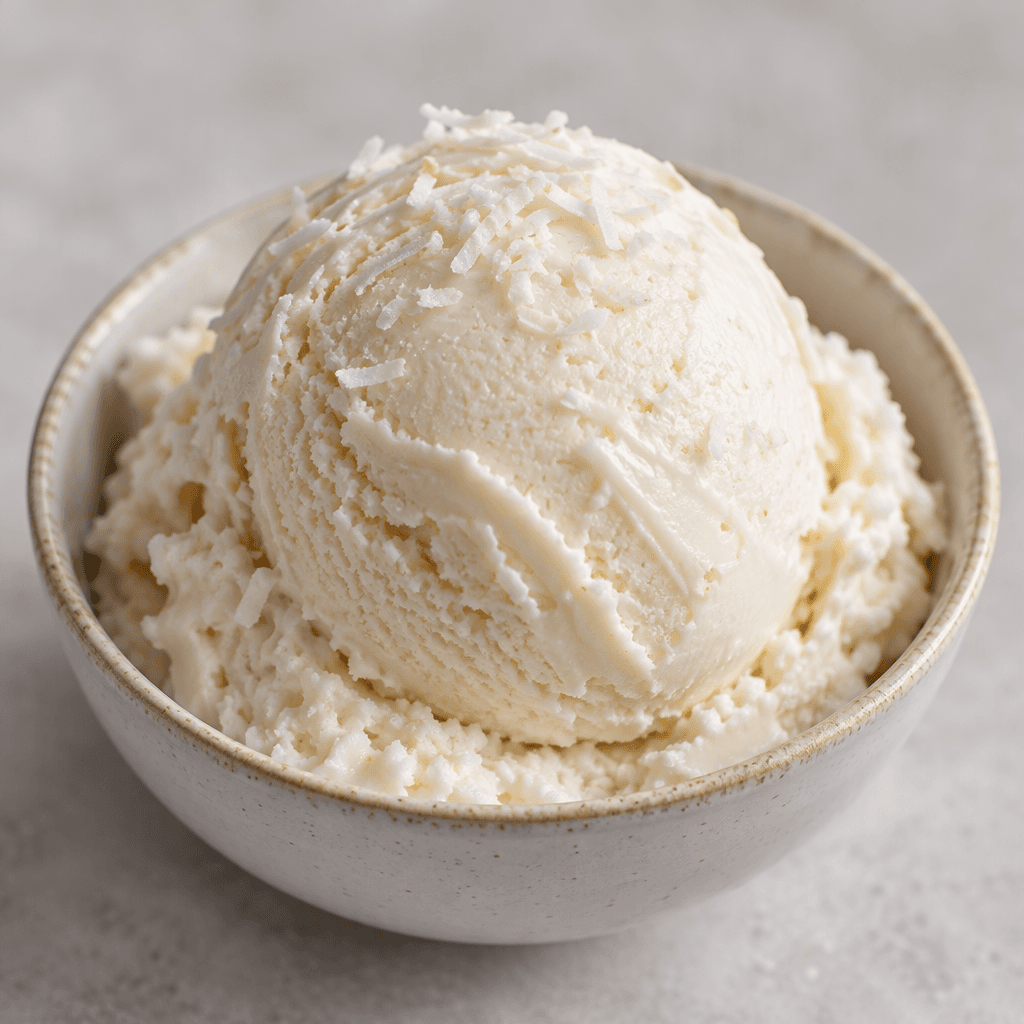
Coconut protein ice cream Calories
High-protein coconut-flavored frozen dessert
CALORIES
GI
POTASSIUM
FIBER
Quick answer
100 g of Coconut protein ice cream has 308 calories. It contains 31 g of carbs, 5.8 g of protein, 18 g of fat and 2 g of fiber. Its 135 mg of Phosphorus covers 19% of the Daily Value. Its glycemic index is 42 (low), so it raises blood sugar slowly.
What is Coconut protein ice cream?
Coconut protein ice cream is a modern take on frozen ice cream, combining coconut flavour with added protein. Recipes vary, but it is generally made from a creamy base, sweetened and frozen; it is not a traditional dish tied to one place of origin.
Its cool, smooth texture and sweet coconut taste make it an easy dessert on warm days, served by itself or alongside fresh fruit. It also works as a small after-dinner treat or a snack straight from the freezer. Although it contains protein, it remains a fairly energy-dense dessert: a 100 g serving has 308 calories and 5.75 g of protein. For a lighter serving, keep the portion modest and add berries or sliced fruit.
Coconut protein ice cream Nutrition Facts
Selected: 100 g
308
KCAL / 100G
Carbs
31g
· 11% DV
Protein
5.8g
· 12% DV
Fat
18g
· 23% DV
Fiber
2g
· 7% DV
DV is the share of the daily value covered, on a 2,000 kcal reference diet.
Calories come from: Carbs 40% · Protein 8% · Fat 52%
Coconut protein ice cream Vitamins & Minerals
Vitamins
B12
0.35µg · 15% DV
B2
0.18mg · 14% DV
B5
0.35mg · 7% DV
Biotin
1.8µg · 6% DV
Minerals
Phosphorus
135mg · 19% DV
Calcium
110mg · 11% DV
Zinc
1mg · 9% DV
Selenium
4.5µg · 8% DV
How Nutritious Is Coconut protein ice cream?
Nutrient density
Medium
How many vitamins, minerals and how much fiber this food carries per calorie. A high score means a lot of nutrition for few calories.
Satiety score
Low
An EatBetter score computed from fiber, protein and calorie density. A high score means staying full longer on the same calories.
Both scores are calculated per 100 g and do not change with the selected portion. The satiety score is EatBetter's own calculation, not a clinical measure.
Coconut protein ice cream Glycemic Index
GLYCEMIC INDEX
GLYCEMIC LOAD
Accounts for portion size — a more realistic measure than GI alone.
How to Burn Off Coconut protein ice cream
To burn the 308 calories in 100 g:
🚶
Walking (5 km/h)
🏃
Running (8 km/h)
🚴
Cycling
🏊
Swimming
Times are calculated with the MET equation for a 70 kg adult. Actual burn varies with your weight, age and pace.
Is Coconut protein ice cream Processed?
NOVA 4
Ultra-Processed
1. Unprocessed
2. Minimally Processed
3. Processed
4. Ultra-Processed
NOVA classifies foods into 4 groups by industrial processing. NOVA 1 (unprocessed) is the healthiest.
Does Coconut protein ice cream Contain Allergens?
Contains these allergens:
Which Diets Is Coconut protein ice cream Good For?
Vegan
— Not suitable
Vegetarian
✓ Suitable
Gluten-Free
✓ Suitable
Dairy-Free
— Not suitable
Mediterranean
— Not suitable
Paleo
— Not suitable
Whole30
— Not suitable
DASH
— Not suitable
Keto
— Not suitable
Low FODMAP
— Not suitable
Coconut protein ice cream Fat Profile
SATURATED
6g
MONOUNSATURATED
1g
POLYUNSATURATED
0.3g
Omega 6:3 ratio 7.3:1
Above the ideal 4:1 (7.3:1).
Compare Coconut protein ice cream
Foods Similar to Coconut protein ice cream
Frequently Asked Questions About Coconut protein ice cream
Is coconut protein ice cream actually high in protein?
Not necessarily: the name alone does not guarantee a high-protein serving. This coconut protein ice cream provides 5.75 g of protein per 100 g, so it may offer less protein than people expect from a product marketed as protein ice cream.
Can you make coconut protein ice cream without an ice cream machine?
Yes. Blend a coconut base with your chosen protein powder, freeze it in a shallow container, and stir it periodically as it sets. The stirring breaks up ice crystals and gives homemade coconut protein ice cream a smoother texture.
Why does coconut protein ice cream taste chalky?
Coconut protein ice cream can taste chalky when the protein powder is difficult to dissolve or its flavor competes with the coconut. Blending the base thoroughly before freezing and using a protein powder that mixes smoothly can help.
Can coconut protein ice cream be used in a smoothie?
Yes, coconut protein ice cream can be blended into a smoothie with fruit and milk or a milk alternative. Since it is already sweetened in some formulations, taste the mixture before adding extra sweetener.
Does coconut protein ice cream contain real coconut or just coconut flavor?
It may contain real coconut, coconut milk, coconut oil, coconut flavoring, or a combination; the name does not specify which. Recipes vary, so the ingredient list is the way to tell whether a particular version includes coconut itself.
Why does coconut protein ice cream get icy after freezing?
Coconut protein ice cream can turn icy when moisture forms large crystals, especially after it softens and freezes again. Keep it consistently frozen, limit how long it sits out, and let a firm portion soften briefly before serving.
What protein powder works best in homemade coconut protein ice cream?
A protein powder that blends smoothly and has a mild flavor works best in homemade coconut protein ice cream. Whey, casein, or plant-based powders can all be used, but each absorbs liquid differently and may change the final texture.
Can coconut protein ice cream replace a post-workout protein shake?
Usually not as a one-for-one replacement: this coconut protein ice cream has 5.75 g of protein per 100 g. It can be part of a post-workout snack, but compare its serving with the amount of protein you intended to get from a shake.
How long can coconut protein ice cream sit out before serving?
Only let coconut protein ice cream soften until it is scoopable, then serve it promptly. Leaving it out until it melts and putting it back in the freezer can create an icy texture and repeated thawing is not a safe storage practice.
What toppings go well with coconut protein ice cream?
Mango, pineapple, toasted coconut, and chopped nuts pair well with coconut protein ice cream. Fresh fruit adds a bright contrast to its creamy coconut flavor, while a small crunchy topping gives it texture without overwhelming the base.
Have another question about Coconut protein ice cream?
Ask the AI nutrition coach — calories, portions, alternatives and more, answered in seconds in the app.

Scan calories with your camera
Instant AI nutrition analysis

Nutrition data compiled from USDA FoodData Central and scientific sources.