

Ready & Packaged Foods
All →Vegetables & Legumes
All →Desserts & Confectionery
All →Meat & Protein
All →Grains & Bakery
All →Beverages
All →Milk & Dairy
All →

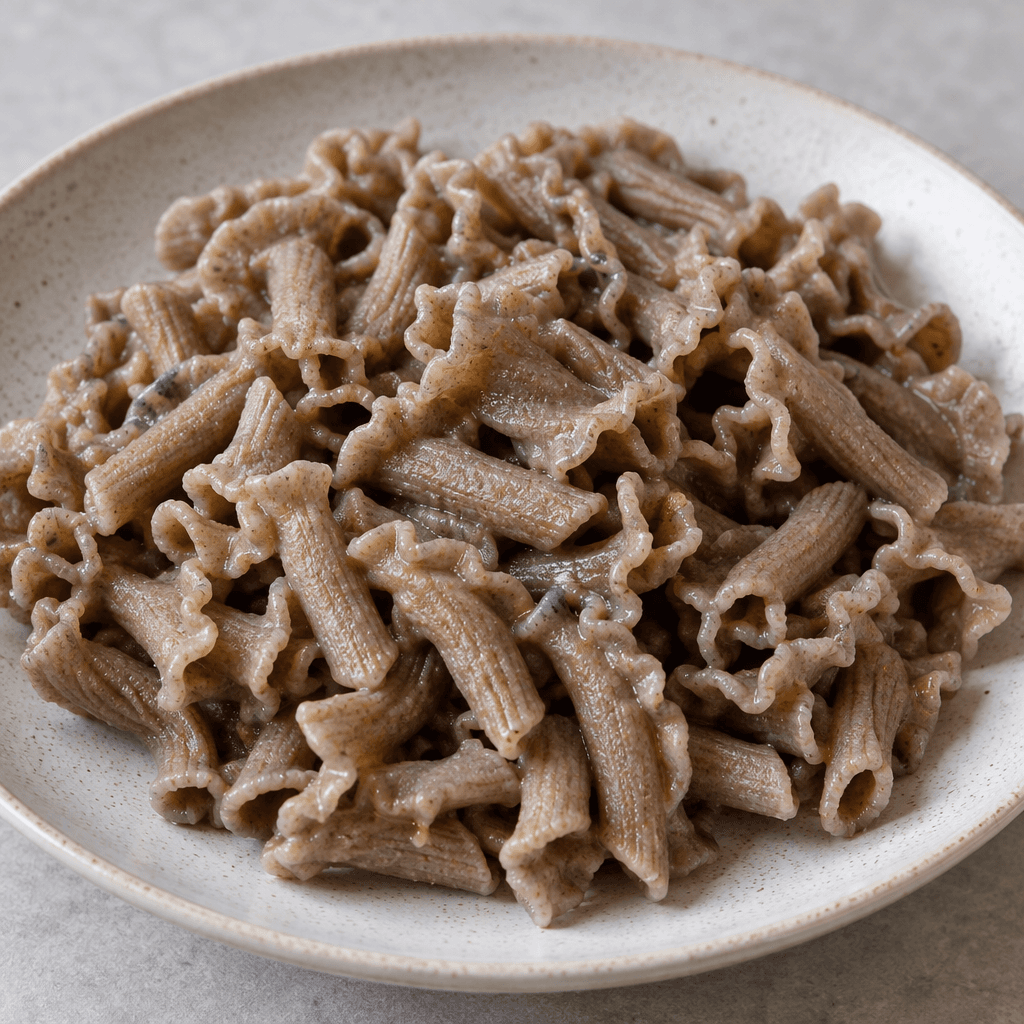
Buckwheat Pasta (Cooked) Calories
Gluten-free, high fiber, mineral-rich, low fat
In season: Spring · Summer · Autumn · Winter
CALORIES
GI
POTASSIUM
FIBER
Quick answer
1 cup (medium) of Buckwheat Pasta (Cooked) (140 g) has 154 calories. That works out to 110 calories per 100 g. It contains 31.5 g of carbs, 5.9 g of protein, 0.8 g of fat and 3.8 g of fiber. Its 0.3 mg of Copper covers 31% of the Daily Value. Its glycemic index is 45 (low), so it raises blood sugar slowly.
What is Buckwheat Pasta (Cooked)?
Cooked buckwheat pasta is pasta made with flour from buckwheat, a seed-like grain with a naturally earthy, slightly nutty flavour. It is not the same as wheat pasta, and recipes can vary in how much buckwheat they use. Once cooked, it is tender with a pleasantly firm bite, and its robust taste works well with savoury sauces.
Buckwheat noodles have a long place in East Asian food traditions, including Japanese soba; this pasta can also be served much like other pasta, with vegetables, herbs or a simple tomato sauce. It provides fibre and is low in fat, with 4.2 g of protein per 100 g. Pair it with vegetables and beans for a more filling meal, and check the packet if you need a reliably gluten-free product.
Buckwheat Pasta (Cooked) Nutrition Facts
Selected: 100 g
110
KCAL / 100G
Carbs
22.5g
· 8% DV
Protein
4.2g
· 8% DV
Fat
0.6g
· 1% DV
Fiber
2.7g
· 10% DV
DV is the share of the daily value covered, on a 2,000 kcal reference diet.
Calories come from: Carbs 80% · Protein 15% · Fat 5%
Buckwheat Pasta (Cooked) Vitamins & Minerals
Vitamins
B3
1.1mg · 7% DV
Biotin
1.5µg · 5% DV
B5
0.2mg · 4% DV
B1
0.04mg · 3% DV
Minerals
Manganese
1mg · 43% DV
Zinc
1mg · 9% DV
Phosphorus
60mg · 9% DV
Magnesium
32mg · 8% DV
How Nutritious Is Buckwheat Pasta (Cooked)?
Nutrient density
High
How many vitamins, minerals and how much fiber this food carries per calorie. A high score means a lot of nutrition for few calories.
Satiety score
Medium
An EatBetter score computed from fiber, protein and calorie density. A high score means staying full longer on the same calories.
Both scores are calculated per 100 g and do not change with the selected portion. The satiety score is EatBetter's own calculation, not a clinical measure.
Buckwheat Pasta (Cooked) Glycemic Index
GLYCEMIC INDEX
GLYCEMIC LOAD
Accounts for portion size — a more realistic measure than GI alone.
How to Burn Off Buckwheat Pasta (Cooked)
To burn the 110 calories in 100 g:
🚶
Walking (5 km/h)
🏃
Running (8 km/h)
🚴
Cycling
🏊
Swimming
Times are calculated with the MET equation for a 70 kg adult. Actual burn varies with your weight, age and pace.
Is Buckwheat Pasta (Cooked) Processed?
NOVA 2
Minimally Processed
1. Unprocessed
2. Minimally Processed
3. Processed
4. Ultra-Processed
NOVA classifies foods into 4 groups by industrial processing. NOVA 1 (unprocessed) is the healthiest.
Does Buckwheat Pasta (Cooked) Contain Allergens?
No known major allergens
Which Diets Is Buckwheat Pasta (Cooked) Good For?
Vegan
✓ Suitable
Vegetarian
✓ Suitable
Gluten-Free
✓ Suitable
Dairy-Free
— Not suitable
Mediterranean
✓ Suitable
Paleo
— Not suitable
Whole30
— Not suitable
DASH
— Not suitable
Keto
— Not suitable
Low FODMAP
— Not suitable
Buckwheat Pasta (Cooked) Fat Profile
SATURATED
0.12g
MONOUNSATURATED
0.08g
POLYUNSATURATED
0.18g
Omega 6:3 ratio 6.5:1
Above the ideal 4:1 (6.5:1).
Compare Buckwheat Pasta (Cooked)
Foods Similar to Buckwheat Pasta (Cooked)
Frequently Asked Questions About Buckwheat Pasta (Cooked)
What is buckwheat pasta made from?
Buckwheat pasta is made with buckwheat flour, though some products combine it with other flours or ingredients. Despite its name, buckwheat is not a type of wheat; recipes and textures vary between products.
What does buckwheat pasta taste like?
Buckwheat pasta usually has a more pronounced, earthy and slightly nutty flavor than conventional wheat pasta. Its texture can be more tender or crumbly, so robust sauces and gentle mixing work well.
How do you stop buckwheat pasta from breaking apart?
Avoid overcooking buckwheat pasta and stir it gently, especially after it is cooked. If reheating leftovers, add a little water or sauce and warm them slowly rather than tossing them vigorously.
Is buckwheat pasta the same as soba?
No. Soba is a Japanese noodle, often made with buckwheat flour, while buckwheat pasta can come in many pasta shapes and recipes. Some soba also contains wheat flour, so the terms are not interchangeable.
What sauce goes well with buckwheat pasta?
Tomato, mushroom, garlic and olive-oil sauces pair well with buckwheat pasta’s earthy flavor. A creamy sauce also works, but keep it light enough that it does not overwhelm the pasta’s distinctive taste.
Can you use cooked buckwheat pasta in a pasta salad?
Yes, cooked buckwheat pasta works in a cold pasta salad. Let it cool, then fold in vegetables, herbs and dressing gently; its more delicate texture can break if you toss it roughly.
How should you reheat cooked buckwheat pasta?
Reheat cooked buckwheat pasta in a covered pan over low heat with a splash of water or sauce. You can also microwave it covered, stirring partway through so it warms evenly without drying out.
Can cooked buckwheat pasta be frozen?
Yes, cooked buckwheat pasta can be frozen, although thawing may make it softer or more fragile. Freeze it in a sealed container, then warm it gently with sauce rather than stirring it hard.
Why is buckwheat pasta darker than regular pasta?
Buckwheat flour naturally gives pasta a darker color than many wheat-flour pastas. The shade varies with the flour and recipe, so a darker appearance by itself does not mean the pasta has spoiled.
Is buckwheat pasta healthier than regular pasta?
Buckwheat pasta can offer a different mix of nutrients and a more pronounced flavor, but it is not automatically healthier for everyone. Compare the ingredients and choose the type that fits your meals and needs.
Have another question about Buckwheat Pasta (Cooked)?
Ask the AI nutrition coach — calories, portions, alternatives and more, answered in seconds in the app.

Scan calories with your camera
Instant AI nutrition analysis

Nutrition data compiled from USDA FoodData Central and scientific sources.