


Low-Calorie Snacks: Filling Options for Between Meals
Find practical low-calorie snack ideas using fruit, yogurt, eggs, cottage cheese, vegetables and other real foods with easy portion guidance.
EatBetter · October 1, 2026 · 5 min read
Contents
A snack does not need to be ultra-small to stay relatively low in calories. Choosing foods with protein, fiber, water or a combination of these can make a snack feel more substantial.
Quick answer: Fruit, plain yogurt, low-fat cottage cheese, boiled eggs, vegetables, edamame and simple combinations of these foods can all work as lower-calorie snacks. The best snack is one that fits your hunger level, daily intake and overall nutrition.
Stop guessing your portions 📲
Photograph your meal and let EatBetter break down calories and macros in seconds.


What makes a good low-calorie snack?
A practical snack usually does at least one of these things:
- adds protein
- adds fiber
- adds fruit or vegetables
- helps bridge a long gap between meals
- fits your calorie needs without replacing a full meal unintentionally
The exact calorie target is personal. "Under 200 calories" is a convenient example, not a universal rule.
10 lower-calorie snack ideas
1. Strawberries with plain yogurt
Strawberry
Natural & Other Foods · 32 kcal / 100g
View →
Plain Yogurt
Milk & Dairy · 61 kcal / 100g
View →
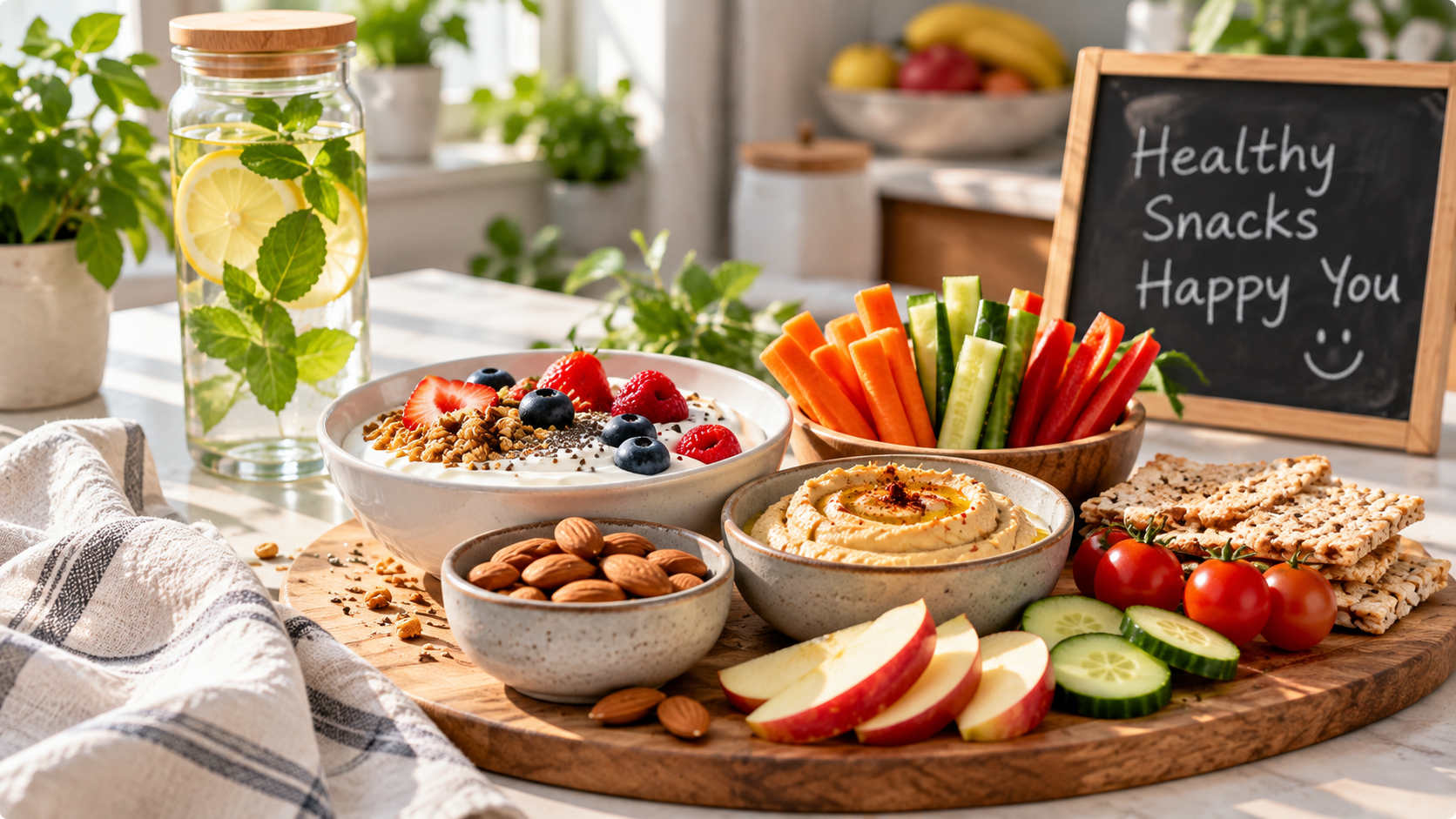
A bowl of strawberries with plain yogurt gives you fruit volume plus some protein.
To keep the snack predictable:
- use unsweetened yogurt
- measure granola, honey or nut butter if adding them
- choose a portion based on your actual hunger
2. Apple with a small amount of cottage cheese
Apple
Natural & Other Foods · 52 kcal / 100g
View →
Cottage Cheese (Low Fat)
Milk & Dairy · 80 kcal / 100g
View →
Apple provides fiber and volume, while cottage cheese adds protein.
This can be more substantial than eating fruit alone.
3. Cucumber and yogurt dip
Cucumber
Vegetables & Legumes · 15 kcal / 100g
View →
Use sliced cucumber with plain yogurt, herbs and spices.
This creates a high-volume snack with relatively few calories, particularly if the dip is based mostly on yogurt rather than oil or mayonnaise.
4. A boiled egg with vegetables
Boiled Egg
Meat & Protein · 155 kcal / 100g
View →
A boiled egg is easy to portion and portable.
Pair it with:
- cucumber
- cherry tomatoes
- bell pepper
- leafy greens
for more volume.
5. Low-fat cottage cheese with tomatoes
Cottage Cheese (Low Fat)
Milk & Dairy · 80 kcal / 100g
View →
Cottage cheese can work as a savory snack with tomato, cucumber and black pepper.
Check sodium if that is relevant to your diet, because cottage cheese products can vary.
6. Edamame
Edamame
Vegetables & Legumes · 121 kcal / 100g
View →
Edamame contains both protein and fiber.
It is more calorie-dense than cucumber or strawberries, but the protein-fiber combination can make it a useful snack.
7. Plain yogurt with berries
This is one of the easiest repeatable snacks.
Use:
- plain yogurt
- strawberries or blueberries
- cinnamon if desired
Be careful with calorie-dense toppings such as large amounts of nuts, seeds or granola.
8. Green lentil salad cup
Green Lentils (Boiled)
Vegetables & Legumes · 116 kcal / 100g
View →
A small bowl of lentils with cucumber, tomato, herbs and lemon can work as a savory snack or mini-meal.
Because lentils provide both fiber and protein, the snack may be more substantial than vegetables alone.
9. Tuna and cucumber
Tuna
Fish · 132 kcal / 100g
View →
Tuna provides a large amount of protein for relatively few calories.
A small portion with cucumber or salad greens can be a practical high-protein snack.
Choose preparation carefully because mayonnaise and oil can substantially increase the calorie total.
10. Watermelon bowl
Watermelon
Natural & Other Foods · 30 kcal / 100g
View →
Watermelon is high in water and relatively low in calories per 100 g.
It can be useful when you want a larger, refreshing portion, though it contains much less protein and fiber than options such as yogurt, cottage cheese or lentils.
How to keep snacks under control without obsessing over calories
Start with the main food
Choose one clear base:
- fruit
- yogurt
- egg
- cottage cheese
- vegetables
- legumes
Then decide whether you actually need extras.
Measure calorie-dense toppings
Foods such as:
- nuts
- nut butter
- granola
- olive oil
- cheese
- hummus
can be nutritious, but small portions can add a lot of calories.
Watch drinks
A snack can become much higher in calories when paired with:
- sweetened coffee
- juice
- sugary soft drinks
- large smoothies
CDC lists water, unsweetened tea, plain coffee and sparkling water as low- or no-calorie beverage options.
Should you snack if you are not hungry?
Not necessarily.
Some people feel better with snacks between meals; others prefer larger meals and fewer eating occasions.
The purpose of a snack is not to follow a rule. It should solve a practical need such as hunger, timing or convenience.
Use EatBetter to build your own snack
Instead of relying on fixed snack lists, search the foods you already enjoy and compare:
- portion calories
- protein
- fiber
- fat
- carbohydrates
Stop guessing your portions 📲
Photograph your meal and let EatBetter break down calories and macros in seconds.
You can then create combinations that fit your preferences.
Explore related EatBetter pages
Sources
- CDC — Tips for Increasing Vegetables and Fruits in Your Diet: https://www.cdc.gov/healthy-weight-growth/healthy-eating/fruits-vegetables.html
- CDC — About Water and Healthier Drinks: https://www.cdc.gov/healthy-weight-growth/water-healthy-drinks/index.html
- FDA — Serving Size on the Nutrition Facts Label: https://www.fda.gov/food/nutrition-facts-label/serving-size-nutrition-facts-label
- EatBetter — Food Guide: https://www.eatbetter.app/en
Note: This article is for general educational purposes and is not a substitute for individualized medical or nutrition advice.
Frequently asked questions
What are some snacks under 200 calories?
Fruit with plain yogurt, a boiled egg with vegetables, low-fat cottage cheese with cucumber, edamame, lentil salad or a measured portion of tuna with vegetables can all fit under 200 calories depending on the portion.
Is fruit a good low-calorie snack?
Whole fruit can be a useful snack because it provides water, fiber, vitamins and minerals. Pairing it with protein can make the snack more substantial.
Are nuts a low-calorie snack?
Nuts are nutrient-dense but also calorie-dense. They can fit into a snack, but portion size matters.
What low-calorie snack has the most protein?
Lean tuna, chicken, high-protein cottage cheese and some yogurts can provide a high amount of protein for relatively few calories.
Do I need snacks to lose weight?
No. Snacking is optional. Total energy intake and your overall eating pattern matter more than the number of times you eat.
