

Ready & Packaged Foods
All →Vegetables & Legumes
All →Desserts & Confectionery
All →Meat & Protein
All →Grains & Bakery
All →Beverages
All →Milk & Dairy
All →

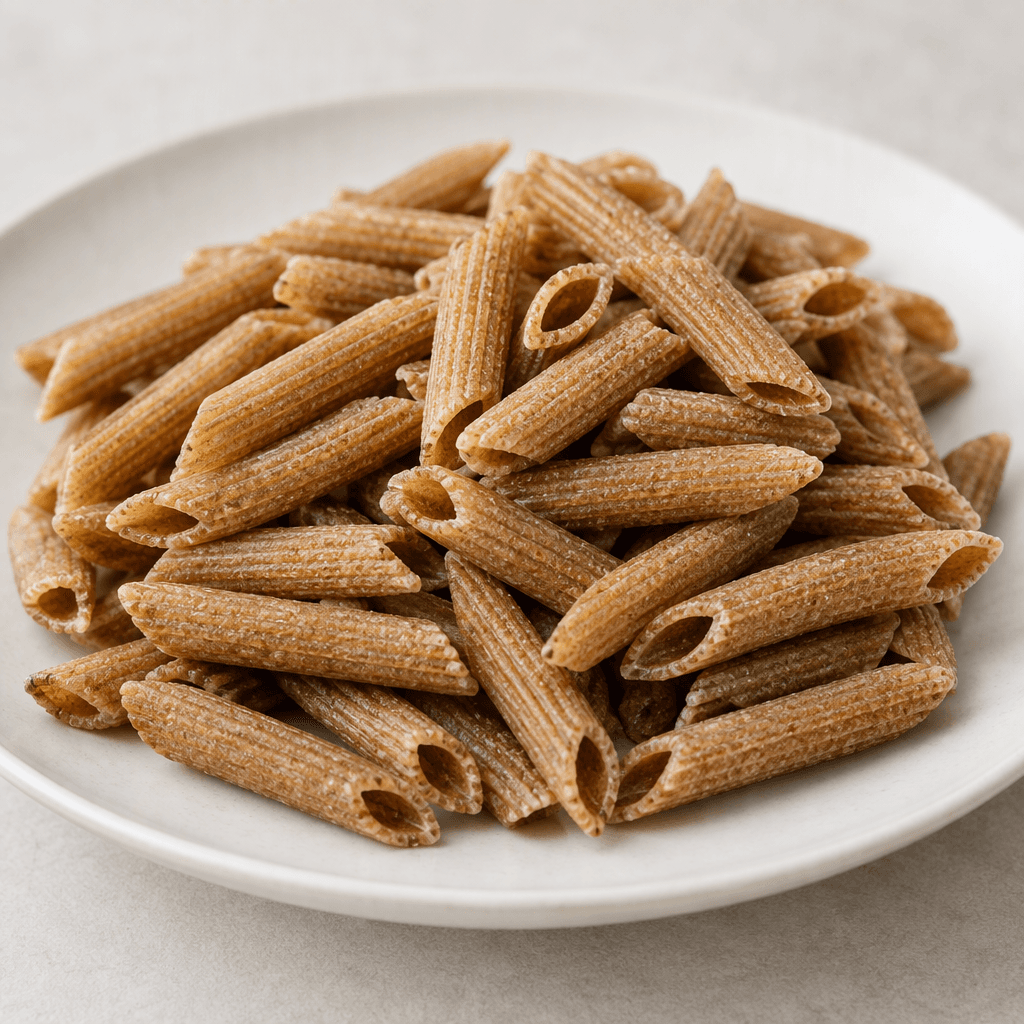
Whole wheat penne pasta Calories
Whole grain, high fiber, complex carbohydrate
In season: Spring · Summer · Autumn · Winter
CALORIES
GI
POTASSIUM
FIBER
Quick answer
1 cup (medium) of Whole wheat penne pasta (70 g) has 231 calories. That works out to 330 calories per 100 g. It contains 46.9 g of carbs, 8.4 g of protein, 1.8 g of fat and 4.9 g of fiber. Its 1.5 mg of Manganese covers 64% of the Daily Value. Its glycemic index is 45 (medium), so it raises blood sugar at a moderate pace.
What is Whole wheat penne pasta?
Whole wheat penne pasta is an Italian pasta shape made with whole wheat flour: short, hollow tubes with ends cut on the diagonal. Its slightly rough surface catches sauce, while the whole-grain flour gives it a nuttier flavour and a firmer, heartier bite than regular penne.
In Italy and in kitchens around the world, it is commonly served hot with tomato, vegetable or meat sauces, and works well in chilled pasta salads too. It provides complex carbohydrates and fibre, with 7 g of fibre per 100 g. Pair it with vegetables and a tomato-based sauce for a satisfying meal that feels lighter than one made with a rich, creamy sauce.
Whole wheat penne pasta Nutrition Facts
Selected: 100 g
330
KCAL / 100G
Carbs
67g
· 24% DV
Protein
12g
· 24% DV
Fat
2.5g
· 3% DV
Fiber
7g
· 25% DV
DV is the share of the daily value covered, on a 2,000 kcal reference diet.
Calories come from: Carbs 79% · Protein 14% · Fat 7%
Whole wheat penne pasta Vitamins & Minerals
Vitamins
B1
0.35mg · 29% DV
B3
4.2mg · 26% DV
B5
0.9mg · 18% DV
B6
0.18mg · 11% DV
Minerals
Manganese
2mg · 87% DV
Selenium
40µg · 73% DV
Phosphorus
270mg · 39% DV
Magnesium
70mg · 17% DV
How Nutritious Is Whole wheat penne pasta?
Nutrient density
Medium
How many vitamins, minerals and how much fiber this food carries per calorie. A high score means a lot of nutrition for few calories.
Satiety score
Medium
An EatBetter score computed from fiber, protein and calorie density. A high score means staying full longer on the same calories.
Both scores are calculated per 100 g and do not change with the selected portion. The satiety score is EatBetter's own calculation, not a clinical measure.
Whole wheat penne pasta Glycemic Index
GLYCEMIC INDEX
GLYCEMIC LOAD
Accounts for portion size — a more realistic measure than GI alone.
How to Burn Off Whole wheat penne pasta
To burn the 330 calories in 100 g:
🚶
Walking (5 km/h)
🏃
Running (8 km/h)
🚴
Cycling
🏊
Swimming
Times are calculated with the MET equation for a 70 kg adult. Actual burn varies with your weight, age and pace.
Is Whole wheat penne pasta Processed?
NOVA 3
Processed
1. Unprocessed
2. Minimally Processed
3. Processed
4. Ultra-Processed
NOVA classifies foods into 4 groups by industrial processing. NOVA 1 (unprocessed) is the healthiest.
Does Whole wheat penne pasta Contain Allergens?
Contains these allergens:
Which Diets Is Whole wheat penne pasta Good For?
Vegan
✓ Suitable
Vegetarian
✓ Suitable
Gluten-Free
— Not suitable
Dairy-Free
— Not suitable
Mediterranean
✓ Suitable
Paleo
— Not suitable
Whole30
— Not suitable
DASH
— Not suitable
Keto
— Not suitable
Low FODMAP
— Not suitable
Whole wheat penne pasta Fat Profile
SATURATED
0.5g
MONOUNSATURATED
0.3g
POLYUNSATURATED
1g
Omega 6:3 ratio 26.7:1
Above the ideal 4:1 (26.7:1).
Compare Whole wheat penne pasta
Foods Similar to Whole wheat penne pasta
Frequently Asked Questions About Whole wheat penne pasta
How do you cook whole wheat penne pasta?
Cook whole wheat penne pasta in plenty of boiling salted water, stirring occasionally so the tubes do not stick. Taste it near the end of the package’s suggested cooking time, then reserve a little pasta water before draining to help the sauce cling.
Is whole wheat penne pasta healthier than regular penne?
Whole wheat penne pasta retains the bran and germ of the wheat, so it generally provides more fiber than regular penne. It is still a processed pasta product, but its whole-grain flour gives it a heartier texture and a more pronounced wheat flavor.
What sauces go best with whole wheat penne pasta?
Tomato sauce, pesto, and olive-oil-based vegetable sauces pair well with whole wheat penne pasta. Its ridged surface helps sauce cling, while the hollow tubes catch small pieces of vegetables, beans, or meat.
Can you substitute whole wheat penne pasta for regular penne in a recipe?
Yes, whole wheat penne pasta can usually replace regular penne in the same amount. Expect a firmer bite and earthier flavor; taste the dish before adding extra seasoning, since the stronger wheat taste can change how the sauce comes across.
How do you keep whole wheat penne pasta from getting mushy?
Avoid overcooking whole wheat penne pasta and drain it as soon as it reaches the texture you want. If it will finish cooking in a hot sauce or bake in the oven, take it off the heat while it is still slightly firm.
Is whole wheat penne pasta good for weight loss?
Whole wheat penne pasta can make a meal more filling because its fiber helps slow digestion. Pair a moderate serving with vegetables and a protein source, rather than relying on a large bowl of pasta alone to keep you satisfied.
Can people with diabetes eat whole wheat penne pasta?
Yes, people with diabetes can include whole wheat penne pasta, but portion size and the rest of the meal affect blood glucose. Pairing it with vegetables and protein can make a more balanced meal; ask your clinician or dietitian for personal guidance.
Can you use whole wheat penne pasta for baked pasta?
Yes, whole wheat penne pasta works well in baked pasta dishes because its tubes hold sauce. Drain it before it is fully tender, since it will continue cooking in the oven and can otherwise turn soft.
Can you freeze cooked whole wheat penne pasta?
Yes, cooked whole wheat penne pasta can be frozen, preferably with sauce to help protect it from drying out. Cool it promptly, pack it in an airtight freezer-safe container, and thaw it in the refrigerator before reheating.
How long does cooked whole wheat penne pasta last in the fridge?
Cooked whole wheat penne pasta keeps for about three to four days in a covered container in the refrigerator. Refrigerate it promptly after the meal, and reheat leftovers until steaming hot; add a splash of water if they seem dry.
Have another question about Whole wheat penne pasta?
Ask the AI nutrition coach — calories, portions, alternatives and more, answered in seconds in the app.

Scan calories with your camera
Instant AI nutrition analysis

Nutrition data compiled from USDA FoodData Central and scientific sources.