

Ready & Packaged Foods
All →Vegetables & Legumes
All →Desserts & Confectionery
All →Meat & Protein
All →Grains & Bakery
All →Beverages
All →Milk & Dairy
All →

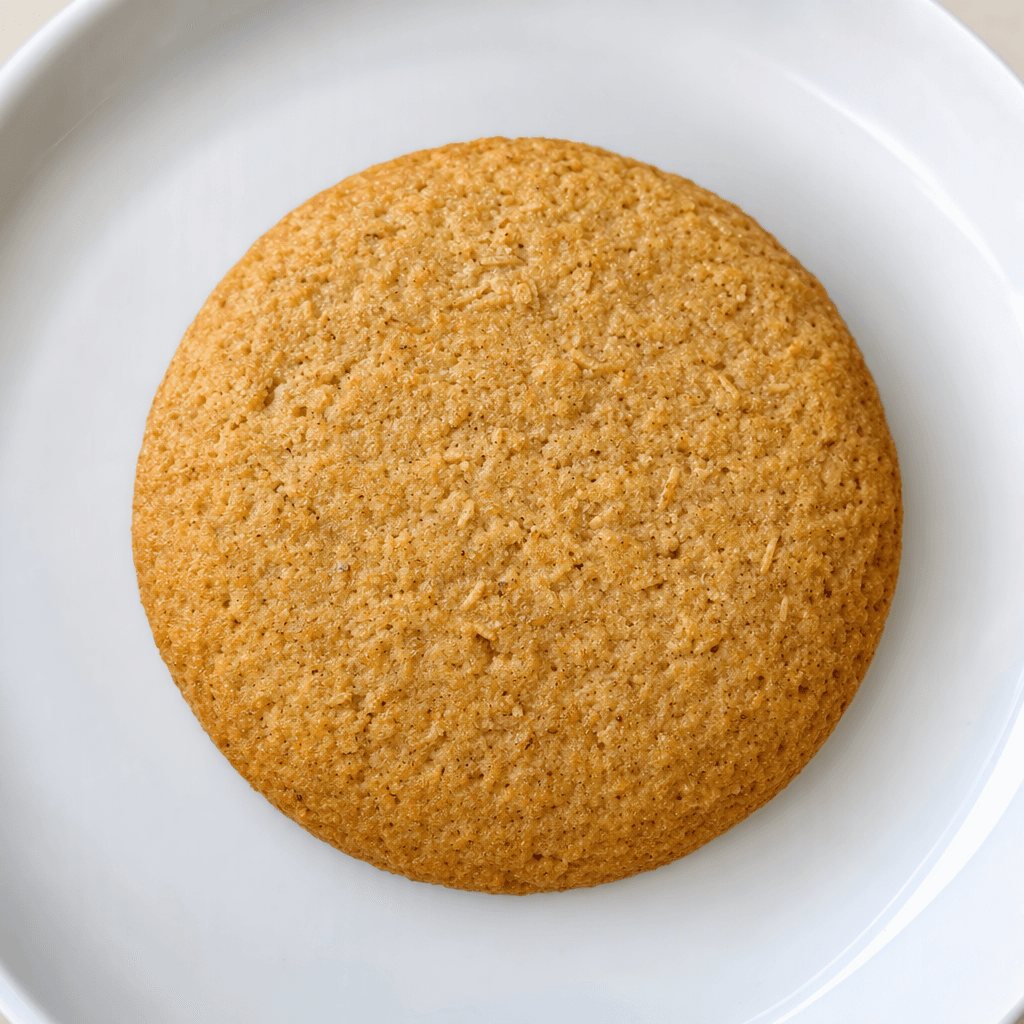
Whole Wheat Diet Cookie Calories
Whole wheat, low sugar, high fiber diet cookie
CALORIES
GI
POTASSIUM
FIBER
Quick answer
1 piece (medium) of Whole Wheat Diet Cookie (20 g) has 78 calories. That works out to 390 calories per 100 g. It contains 13 g of carbs, 1.7 g of protein, 2 g of fat and 1.4 g of fiber. Its 0.3 mg of Manganese covers 12% of the Daily Value. Its glycemic index is 45 (medium), so it raises blood sugar at a moderate pace.
What is Whole Wheat Diet Cookie?
A whole wheat diet cookie is a baked snack made mainly with whole wheat flour and typically less sugar than a standard cookie. It has a gently nutty, grainy flavour and a firmer, heartier bite than many refined-flour biscuits. Depending on where you live, you might have one with tea or coffee, pack it for a snack, or serve it alongside fruit. Whole wheat gives it more fibre than a conventional cookie, though it is still a sweet baked treat rather than a meal replacement. Keep portions in mind, and pair it with plain yoghurt or fresh fruit for a more satisfying snack.
Whole Wheat Diet Cookie Nutrition Facts
Selected: 100 g
390
KCAL / 100G
Carbs
65g
· 24% DV
Protein
8.5g
· 17% DV
Fat
10g
· 13% DV
Fiber
7g
· 25% DV
DV is the share of the daily value covered, on a 2,000 kcal reference diet.
Calories come from: Carbs 68% · Protein 9% · Fat 23%
Whole Wheat Diet Cookie Vitamins & Minerals
Vitamins
B1
0.22mg · 18% DV
B3
2.1mg · 13% DV
Biotin
3µg · 10% DV
B2
0.12mg · 9% DV
Minerals
Manganese
1mg · 43% DV
Phosphorus
120mg · 17% DV
Magnesium
65mg · 15% DV
Selenium
7µg · 13% DV
How Nutritious Is Whole Wheat Diet Cookie?
Nutrient density
Medium
How many vitamins, minerals and how much fiber this food carries per calorie. A high score means a lot of nutrition for few calories.
Satiety score
Medium
An EatBetter score computed from fiber, protein and calorie density. A high score means staying full longer on the same calories.
Both scores are calculated per 100 g and do not change with the selected portion. The satiety score is EatBetter's own calculation, not a clinical measure.
Whole Wheat Diet Cookie Glycemic Index
GLYCEMIC INDEX
GLYCEMIC LOAD
Accounts for portion size — a more realistic measure than GI alone.
How to Burn Off Whole Wheat Diet Cookie
To burn the 390 calories in 100 g:
🚶
Walking (5 km/h)
🏃
Running (8 km/h)
🚴
Cycling
🏊
Swimming
Times are calculated with the MET equation for a 70 kg adult. Actual burn varies with your weight, age and pace.
Is Whole Wheat Diet Cookie Processed?
NOVA 3
Processed
1. Unprocessed
2. Minimally Processed
3. Processed
4. Ultra-Processed
NOVA classifies foods into 4 groups by industrial processing. NOVA 1 (unprocessed) is the healthiest.
Does Whole Wheat Diet Cookie Contain Allergens?
Contains these allergens:
Which Diets Is Whole Wheat Diet Cookie Good For?
Vegan
— Not suitable
Vegetarian
✓ Suitable
Gluten-Free
— Not suitable
Dairy-Free
— Not suitable
Mediterranean
— Not suitable
Paleo
— Not suitable
Whole30
— Not suitable
DASH
— Not suitable
Keto
— Not suitable
Low FODMAP
— Not suitable
Whole Wheat Diet Cookie Fat Profile
SATURATED
1.8g
MONOUNSATURATED
3.2g
POLYUNSATURATED
2.3g
Omega 6:3 ratio 23.3:1
Above the ideal 4:1 (23.3:1).
Compare Whole Wheat Diet Cookie
Foods Similar to Whole Wheat Diet Cookie
Frequently Asked Questions About Whole Wheat Diet Cookie
Are whole wheat diet cookies actually healthy?
They can be a better choice than cookies made mainly with refined flour because whole wheat provides more fiber, but they are still cookies. Sugar and fat can vary by recipe, so treat them as a snack rather than a health food or meal replacement.
Can people with diabetes eat whole wheat diet cookies?
Some people with diabetes can fit a whole wheat diet cookie into their meal plan, but the word “diet” does not mean it has no effect on blood glucose. Check its carbohydrate content and ask your clinician or dietitian how it fits your individual plan.
Are whole wheat diet cookies sugar-free?
No, whole wheat diet cookies are not necessarily sugar-free. Some contain less sugar than conventional cookies, while others use sweeteners such as honey or syrup. The name alone does not tell you which sweetener—or how much—is used.
Do whole wheat diet cookies help with weight loss?
No, whole wheat diet cookies do not cause weight loss by themselves. Their fiber may make them more filling than some low-fiber cookies, but eating extra snacks can still work against a weight-loss goal. Have one as part of a planned snack, not instead of a balanced diet.
Why do whole wheat diet cookies turn out dry or crumbly?
Whole wheat flour absorbs more moisture than refined flour, which can leave whole wheat diet cookies dry or crumbly. Too much flour or baking them for too long can make the problem worse; measure carefully and take them out before they become firm.
How do you make whole wheat diet cookies at home?
To make whole wheat diet cookies, combine whole wheat flour with a modest amount of fat and your preferred sweetener, then bake just until set. Add moisture gradually if the dough feels too dry; different whole wheat flours absorb liquid differently.
What sweeteners are used in whole wheat diet cookies?
Whole wheat diet cookies may be sweetened with sugar, honey, syrup, or a non-sugar sweetener, depending on the recipe. Some products combine sweeteners, so the name “diet cookie” does not identify the ingredients; read the ingredient list if you need to avoid a particular one.
How should you store whole wheat diet cookies?
Store whole wheat diet cookies in an airtight container in a cool, dry place after they have completely cooled. Keeping them sealed helps prevent them from going stale or absorbing moisture; homemade cookies may keep for less time if their recipe contains perishable ingredients.
Can a whole wheat diet cookie replace breakfast?
No, a whole wheat diet cookie is not a complete breakfast. It can be part of a quick breakfast, but pair it with a protein-rich food such as yogurt or eggs and some fruit for a more substantial meal.
What goes well with a whole wheat diet cookie for a snack?
A whole wheat diet cookie pairs well with plain yogurt, fruit, or a glass of milk for a more filling snack. These additions provide variety and make the snack more substantial than eating the cookie on its own.
Have another question about Whole Wheat Diet Cookie?
Ask the AI nutrition coach — calories, portions, alternatives and more, answered in seconds in the app.

Scan calories with your camera
Instant AI nutrition analysis

Nutrition data compiled from USDA FoodData Central and scientific sources.