

Ready & Packaged Foods
All →Vegetables & Legumes
All →Desserts & Confectionery
All →Meat & Protein
All →Grains & Bakery
All →Beverages
All →Milk & Dairy
All →

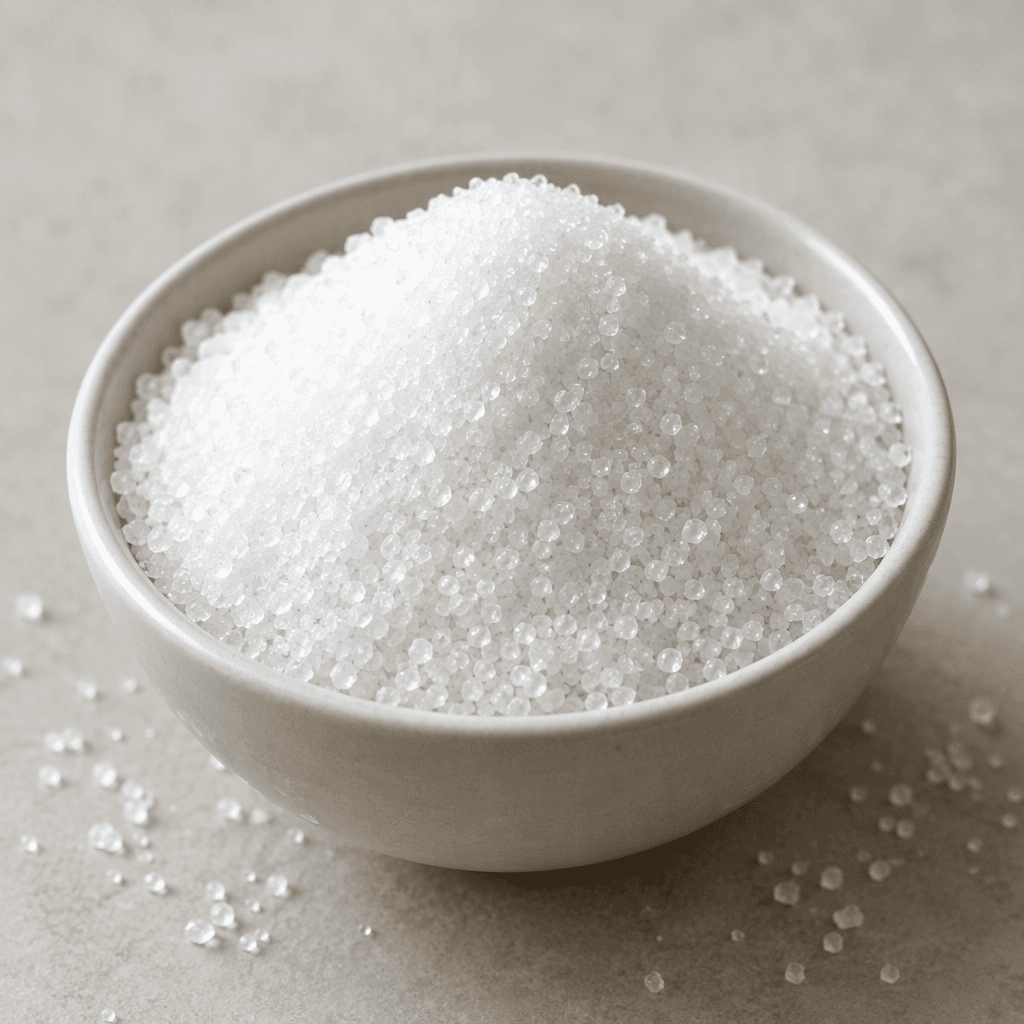
White sugar Calories
Refined carbohydrate, quick energy, low nutrient value
CALORIES
GI
POTASSIUM
FIBER
Quick answer
1 tablespoon (medium) of White sugar (12 g) has 46 calories. That works out to 387 calories per 100 g. It contains 12 g of carbs, 0 g of protein, 0 g of fat and 0 g of fiber. Its glycemic index is 65 (high), so it raises blood sugar quickly.
What is White sugar?
White sugar is made by crystallising sucrose extracted from sugar cane or sugar beet. Its clean, sweet taste and quick-dissolving crystals make it a familiar addition to tea, coffee, baking and desserts in many parts of the world. It also helps give cakes and biscuits their characteristic texture, so changing the amount can affect a recipe as well as its sweetness. Nutritionally, it is almost entirely carbohydrate and provides no protein, fat or fibre. A medium tablespoon is about 12 g, which makes measuring rather than pouring freely a practical way to keep track. For a less sweet result, try reducing the amount in drinks or pairing desserts with fresh fruit.
White sugar Nutrition Facts
Selected: 100 g
387
KCAL / 100G
Carbs
100g
· 36% DV
Protein
0g
· 0% DV
Fat
0g
· 0% DV
Fiber
0g
· 0% DV
DV is the share of the daily value covered, on a 2,000 kcal reference diet.
Calories come from: Carbs 100% · Protein 0% · Fat 0%
White sugar Vitamins & Minerals
Vitamins
Vitamin A
0µg · 0% DV
B1
0mg · 0% DV
B2
0mg · 0% DV
B3
0mg · 0% DV
Minerals
Calcium
1mg · 0% DV
Iron
0mg · 0% DV
Magnesium
0mg · 0% DV
Zinc
0mg · 0% DV
How Nutritious Is White sugar?
Nutrient density
Low
How many vitamins, minerals and how much fiber this food carries per calorie. A high score means a lot of nutrition for few calories.
Satiety score
Low
An EatBetter score computed from fiber, protein and calorie density. A high score means staying full longer on the same calories.
Both scores are calculated per 100 g and do not change with the selected portion. The satiety score is EatBetter's own calculation, not a clinical measure.
White sugar Glycemic Index
GLYCEMIC INDEX
GLYCEMIC LOAD
Accounts for portion size — a more realistic measure than GI alone.
How to Burn Off White sugar
To burn the 387 calories in 100 g:
🚶
Walking (5 km/h)
🏃
Running (8 km/h)
🚴
Cycling
🏊
Swimming
Times are calculated with the MET equation for a 70 kg adult. Actual burn varies with your weight, age and pace.
Is White sugar Processed?
NOVA 4
Ultra-Processed
1. Unprocessed
2. Minimally Processed
3. Processed
4. Ultra-Processed
NOVA classifies foods into 4 groups by industrial processing. NOVA 1 (unprocessed) is the healthiest.
Does White sugar Contain Allergens?
No known major allergens
Which Diets Is White sugar Good For?
Vegan
✓ Suitable
Vegetarian
✓ Suitable
Gluten-Free
✓ Suitable
Dairy-Free
— Not suitable
Mediterranean
✓ Suitable
Paleo
✓ Suitable
Whole30
— Not suitable
DASH
— Not suitable
Keto
— Not suitable
Low FODMAP
— Not suitable
White sugar Fat Profile
SATURATED
0g
MONOUNSATURATED
0g
POLYUNSATURATED
0g
Compare White sugar
Foods Similar to White sugar
Frequently Asked Questions About White sugar
Is white sugar bad for you?
Eating a lot of white sugar can be harmful because it adds energy without meaningful vitamins or minerals. Frequent exposure also contributes to tooth decay, especially when sugary foods and drinks are consumed throughout the day.
What is the difference between white sugar and brown sugar?
White sugar has had most of its molasses removed, while brown sugar contains molasses or has molasses added back. That gives brown sugar more moisture and a deeper flavour, but both are mainly sucrose.
How is white sugar made?
White sugar is made from sugar cane or sugar beets. Their juice is extracted, purified and concentrated, then crystallized; further refining removes most of the molasses and colour to produce white crystals.
Does white sugar expire?
White sugar does not usually spoil when kept dry and clean because it contains too little moisture for most microbes to grow. Discard it if it has been contaminated or develops an unusual smell or appearance.
Can you replace white sugar in baking?
Yes, but the best substitute depends on the recipe. Honey and syrups add moisture and can change browning, while brown sugar changes flavour and texture; replacing granulated sugar may also affect how a cake or cookie turns out.
Can people with diabetes eat white sugar?
People with diabetes can include white sugar, but it raises blood glucose and needs to be counted as part of the meal's carbohydrates. A doctor or dietitian can help tailor portions and timing to an individual's treatment plan.
Does white sugar cause tooth decay?
Yes, white sugar can contribute to tooth decay. Mouth bacteria use sugars to produce acids that damage tooth enamel, so frequent sipping of sweetened drinks or snacking on sugary foods gives teeth repeated exposure.
Can white sugar be used to make caramel?
Yes, white sugar melts and caramelizes when heated, developing a golden colour and characteristic flavour. Watch it closely as it darkens, since overheated caramel turns bitter; melted sugar is also hot enough to cause serious burns.
Why does white sugar clump, and is it still usable?
White sugar clumps when it absorbs moisture, but dry clumps are usually still usable if the sugar has no signs of contamination. Break them up with a clean, dry utensil and store the sugar in an airtight container.
Is white sugar made from sugar beets different from cane sugar?
Once refined, beet sugar and cane sugar are both mostly sucrose and generally work the same way in everyday cooking. Their source differs, but the white crystals usually have no meaningful difference in flavour for home use.
Have another question about White sugar?
Ask the AI nutrition coach — calories, portions, alternatives and more, answered in seconds in the app.

Scan calories with your camera
Instant AI nutrition analysis

Nutrition data compiled from USDA FoodData Central and scientific sources.