

Ready & Packaged Foods
All →Vegetables & Legumes
All →Desserts & Confectionery
All →Meat & Protein
All →Grains & Bakery
All →Beverages
All →Milk & Dairy
All →

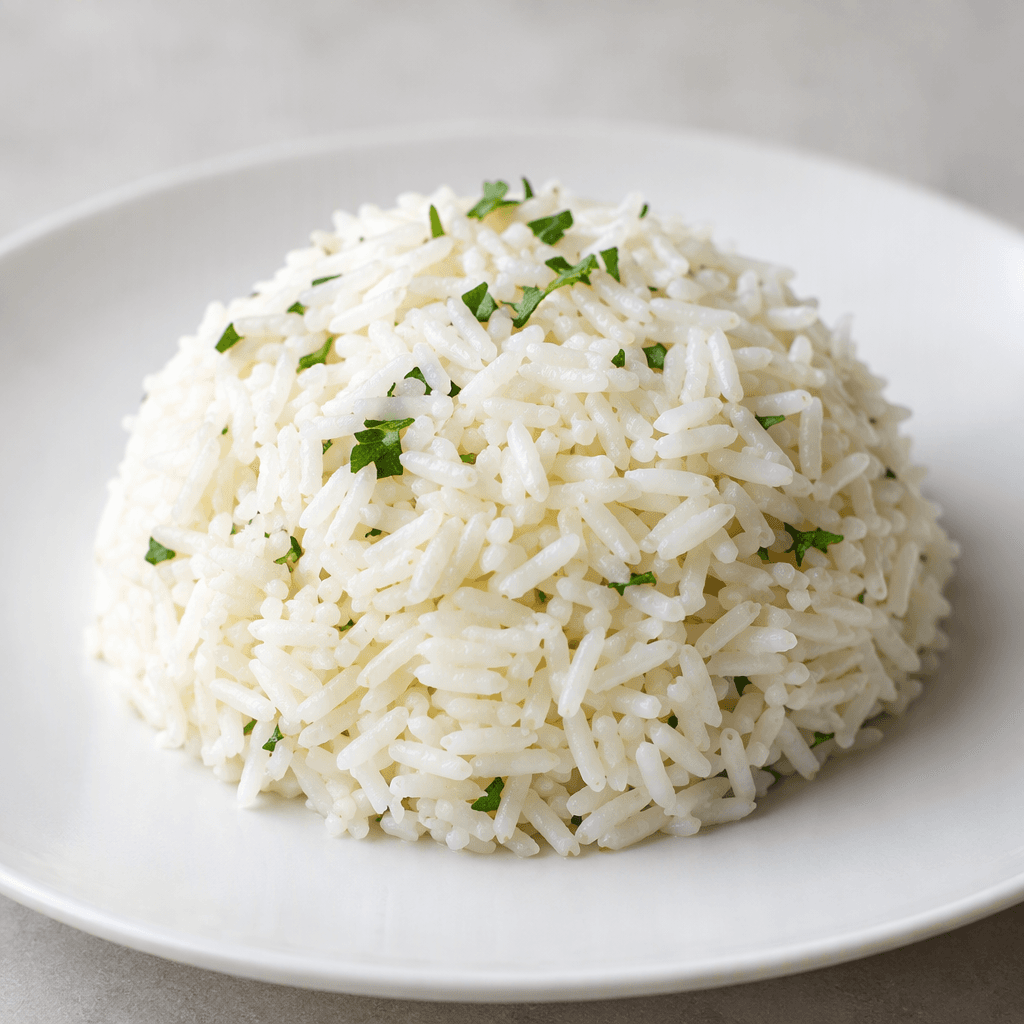
White Rice Pilaf Calories
Classic white rice pilaf, cooked with light oil
In season: Spring · Summer · Autumn · Winter
CALORIES
GI
POTASSIUM
FIBER
Quick answer
1 cup (medium) of White Rice Pilaf (200 g) has 260 calories. That works out to 130 calories per 100 g. It contains 55.6 g of carbs, 4.8 g of protein, 3 g of fat and 0.6 g of fiber. Its 0.6 mg of Manganese covers 26% of the Daily Value. Its glycemic index is 70 (high), so it raises blood sugar quickly.
What is White Rice Pilaf?
White Rice Pilaf is made by cooking white rice, often after briefly toasting it in a little oil, until the grains are tender and separate. In Turkey it is a familiar home-style side, served with dishes such as beans, chickpeas, stews or grilled meats; recipes vary from household to household.
Its mild flavour and fluffy, slightly glossy texture make it easy to pair with richly seasoned mains. Yogurt or a crisp salad is also a common companion. The pilaf gets most of its energy from carbohydrates, while offering little fibre or protein on its own. For a more balanced plate, serve it with vegetables and a protein-rich dish, or keep the added oil modest if you prefer a lighter version.
White Rice Pilaf Nutrition Facts
Selected: 100 g
130
KCAL / 100G
Carbs
27.8g
· 10% DV
Protein
2.4g
· 5% DV
Fat
1.5g
· 2% DV
Fiber
0.3g
· 1% DV
DV is the share of the daily value covered, on a 2,000 kcal reference diet.
Calories come from: Carbs 83% · Protein 7% · Fat 10%
White Rice Pilaf Vitamins & Minerals
Vitamins
B3
0.4mg · 3% DV
B5
0.13mg · 3% DV
B6
0.05mg · 3% DV
B1
0.02mg · 2% DV
Minerals
Selenium
7µg · 13% DV
Phosphorus
30mg · 4% DV
Calcium
5mg · 1% DV
Magnesium
6mg · 1% DV
How Nutritious Is White Rice Pilaf?
Nutrient density
Low
How many vitamins, minerals and how much fiber this food carries per calorie. A high score means a lot of nutrition for few calories.
Satiety score
Low
An EatBetter score computed from fiber, protein and calorie density. A high score means staying full longer on the same calories.
Both scores are calculated per 100 g and do not change with the selected portion. The satiety score is EatBetter's own calculation, not a clinical measure.
White Rice Pilaf Glycemic Index
GLYCEMIC INDEX
GLYCEMIC LOAD
Accounts for portion size — a more realistic measure than GI alone.
How to Burn Off White Rice Pilaf
To burn the 130 calories in 100 g:
🚶
Walking (5 km/h)
🏃
Running (8 km/h)
🚴
Cycling
🏊
Swimming
Times are calculated with the MET equation for a 70 kg adult. Actual burn varies with your weight, age and pace.
Is White Rice Pilaf Processed?
NOVA 2
Minimally Processed
1. Unprocessed
2. Minimally Processed
3. Processed
4. Ultra-Processed
NOVA classifies foods into 4 groups by industrial processing. NOVA 1 (unprocessed) is the healthiest.
Does White Rice Pilaf Contain Allergens?
No known major allergens
Which Diets Is White Rice Pilaf Good For?
Vegan
✓ Suitable
Vegetarian
✓ Suitable
Gluten-Free
✓ Suitable
Dairy-Free
— Not suitable
Mediterranean
✓ Suitable
Paleo
— Not suitable
Whole30
— Not suitable
DASH
— Not suitable
Keto
— Not suitable
Low FODMAP
— Not suitable
White Rice Pilaf Fat Profile
SATURATED
0.3g
MONOUNSATURATED
0.5g
POLYUNSATURATED
0.6g
Omega 6:3 ratio 18:1
Above the ideal 4:1 (18:1).
Compare White Rice Pilaf
Foods Similar to White Rice Pilaf
Frequently Asked Questions About White Rice Pilaf
How do you make White Rice Pilaf fluffy instead of sticky?
Rinse the rice until the water runs mostly clear, drain it well, and toast it briefly in oil before adding hot liquid. Cook covered without stirring, then let the pilaf rest off the heat so the grains finish steaming separately.
What is the difference between White Rice Pilaf and plain rice?
White Rice Pilaf is usually made by briefly toasting rice in oil before simmering it in water or broth. Plain rice is typically cooked directly in water, so pilaf has a distinct toasted flavor and a less sticky texture.
Which rice is best for White Rice Pilaf?
Long-grain rice is a reliable choice for White Rice Pilaf because its grains tend to stay separate after cooking. Medium-grain varieties can also work, but may need a little more care to avoid a softer, stickier result.
Should you rinse rice before making White Rice Pilaf?
Yes, rinsing rice before making White Rice Pilaf removes surface starch that can make the grains clump. Drain it thoroughly before toasting; rice that has been soaked may need less cooking liquid.
What is the water-to-rice ratio for White Rice Pilaf?
A common starting point for White Rice Pilaf is about one and a half parts water to one part long-grain rice. The right amount can vary with the rice variety and whether it was soaked, so adjust for those factors.
Why does White Rice Pilaf turn mushy?
White Rice Pilaf usually turns mushy because it has too much liquid, is stirred during cooking, or simmers for too long. Measure the liquid carefully, keep the lid on, and let the rice cook gently until it has absorbed the water.
Can you add vermicelli to White Rice Pilaf?
Yes, vermicelli is a common addition to White Rice Pilaf. Break it into short pieces and toast it in oil until golden before adding the rice and cooking liquid; watch closely because it can brown quickly.
How long does White Rice Pilaf keep in the fridge?
White Rice Pilaf keeps for three to four days in the refrigerator when cooled promptly and stored in a sealed container. Refrigerate it within two hours of cooking, and reheat only the portion you plan to eat.
Can you freeze White Rice Pilaf?
Yes, White Rice Pilaf freezes well. Cool it promptly, pack it in airtight meal-sized portions, and thaw it in the refrigerator or reheat it straight from frozen until steaming hot throughout.
What goes well with White Rice Pilaf?
White Rice Pilaf pairs well with grilled meat or chicken, stews, beans, and roasted vegetables. Its mild, toasted flavor also works alongside saucy dishes, where the rice can soak up the cooking juices.
Have another question about White Rice Pilaf?
Ask the AI nutrition coach — calories, portions, alternatives and more, answered in seconds in the app.

Scan calories with your camera
Instant AI nutrition analysis

Nutrition data compiled from USDA FoodData Central and scientific sources.