

Ready & Packaged Foods
All →Vegetables & Legumes
All →Desserts & Confectionery
All →Meat & Protein
All →Grains & Bakery
All →Beverages
All →Milk & Dairy
All →

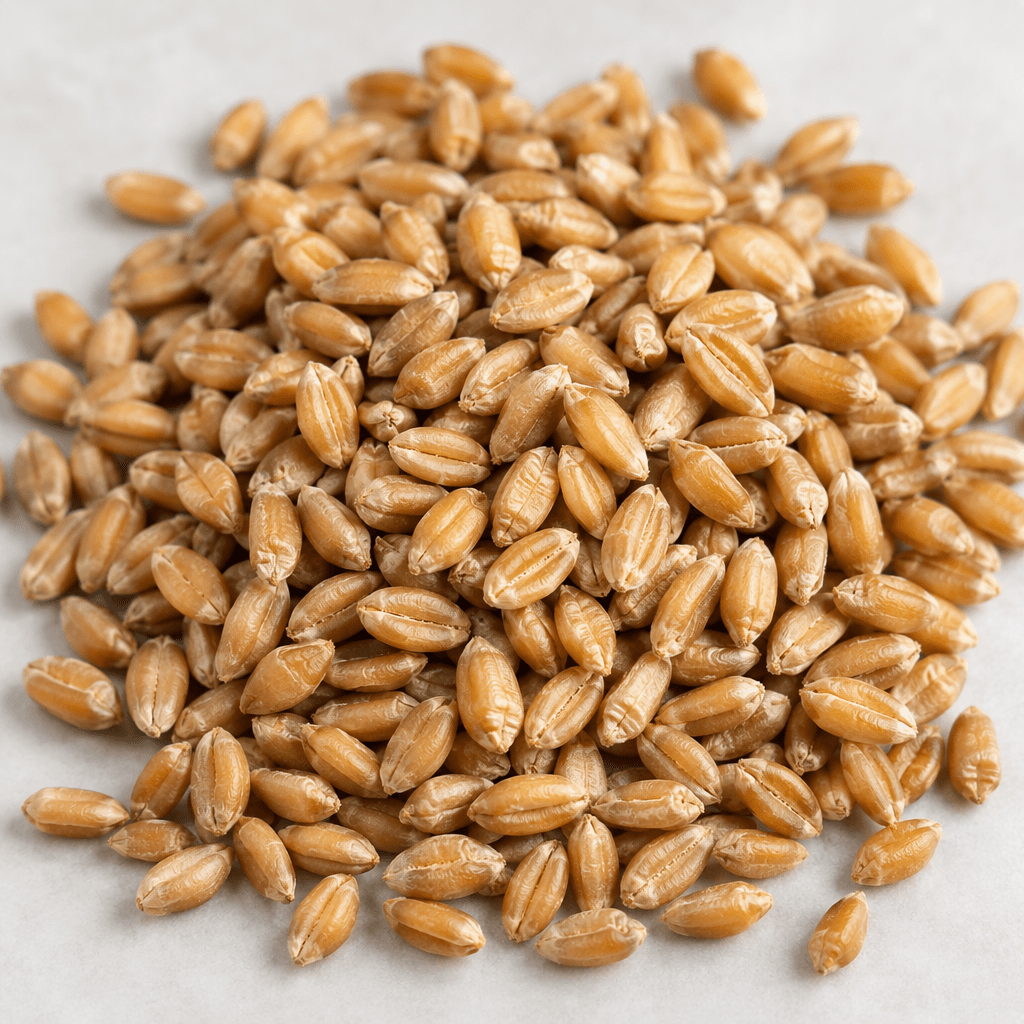
Wheat Calories
Whole grain, source of fiber and B vitamins
In season: Summer · Autumn
CALORIES
GI
POTASSIUM
FIBER
Quick answer
1 cup (medium) of Wheat (120 g) has 392 calories. That works out to 327 calories per 100 g. It contains 85.2 g of carbs, 15.1 g of protein, 1.8 g of fat and 14.6 g of fiber. Its 4.6 mg of Manganese covers 198% of the Daily Value. Its glycemic index is 41 (medium), so it raises blood sugar at a moderate pace.
What is Wheat?
Wheat is a cereal grain grown in heads of stalks and eaten whole or milled into flour. It is a staple ingredient worldwide: whole kernels are simmered in dishes such as grain bowls and soups, while flour is used for breads, noodles, pasta and many baked goods. The type of wheat and how it is milled affect its texture and use.
Cooked kernels are pleasantly chewy, with a mild, nutty flavour; they work well with vegetables, herbs, beans or a savoury broth. Wheat is mainly a source of carbohydrates, while whole-grain forms also provide fibre and B vitamins. Choose intact kernels when you want a more substantial grain side, and soak them beforehand if you’d like to shorten the cooking time.
Wheat Nutrition Facts
Selected: 100 g
327
KCAL / 100G
Carbs
71g
· 26% DV
Protein
12.6g
· 25% DV
Fat
1.5g
· 2% DV
Fiber
12.2g
· 44% DV
DV is the share of the daily value covered, on a 2,000 kcal reference diet.
Calories come from: Carbs 82% · Protein 14% · Fat 4%
Wheat Vitamins & Minerals
Vitamins
B3
6.4mg · 40% DV
B1
0.41mg · 34% DV
B5
0.95mg · 19% DV
B6
0.3mg · 18% DV
Minerals
Manganese
4mg · 174% DV
Selenium
70µg · 127% DV
Phosphorus
288mg · 41% DV
Magnesium
126mg · 30% DV
How Nutritious Is Wheat?
Nutrient density
High
How many vitamins, minerals and how much fiber this food carries per calorie. A high score means a lot of nutrition for few calories.
Satiety score
Medium
An EatBetter score computed from fiber, protein and calorie density. A high score means staying full longer on the same calories.
Both scores are calculated per 100 g and do not change with the selected portion. The satiety score is EatBetter's own calculation, not a clinical measure.
Wheat Glycemic Index
GLYCEMIC INDEX
GLYCEMIC LOAD
Accounts for portion size — a more realistic measure than GI alone.
How to Burn Off Wheat
To burn the 327 calories in 100 g:
🚶
Walking (5 km/h)
🏃
Running (8 km/h)
🚴
Cycling
🏊
Swimming
Times are calculated with the MET equation for a 70 kg adult. Actual burn varies with your weight, age and pace.
Is Wheat Processed?
NOVA 1
Unprocessed
1. Unprocessed
2. Minimally Processed
3. Processed
4. Ultra-Processed
NOVA classifies foods into 4 groups by industrial processing. NOVA 1 (unprocessed) is the healthiest.
Does Wheat Contain Allergens?
Contains these allergens:
Which Diets Is Wheat Good For?
Vegan
✓ Suitable
Vegetarian
✓ Suitable
Gluten-Free
— Not suitable
Dairy-Free
— Not suitable
Mediterranean
✓ Suitable
Paleo
✓ Suitable
Whole30
— Not suitable
DASH
— Not suitable
Keto
— Not suitable
Low FODMAP
— Not suitable
Wheat Fat Profile
SATURATED
0.27g
MONOUNSATURATED
0.18g
POLYUNSATURATED
0.72g
Omega 6:3 ratio 9.6:1
Above the ideal 4:1 (9.6:1).
Compare Wheat
Foods Similar to Wheat
Frequently Asked Questions About Wheat
How do you cook wheat berries?
Rinse wheat berries, then simmer them in plenty of water until tender; drain off any excess. Soaking them first can shorten the cooking time. The exact time varies with the wheat variety and how long the grains have been stored.
Do wheat berries need to be soaked before cooking?
No, wheat berries do not have to be soaked, but soaking helps them cook faster and more evenly. Cover them with water before cooking, then drain and rinse. If you skip soaking, simmer them until the centers are fully tender.
What are wheat berries?
Wheat berries are whole, unprocessed wheat kernels, including the bran, germ, and endosperm. They are not berries in the fruit sense. Cooked wheat berries have a chewy texture and can be added to grain bowls, salads, soups, and pilafs.
What is the difference between wheat berries and bulgur?
Wheat berries are whole wheat kernels, while bulgur is wheat that has typically been parboiled, dried, and cracked. Bulgur cooks much faster because it has already been partly cooked and broken into smaller pieces.
How should you store wheat berries?
Keep dry wheat berries in an airtight container in a cool, dry, dark place. Moisture and heat can encourage spoilage or insects. For longer storage, a sealed container in the freezer can help protect the grains from pests and rancid flavors.
How long do cooked wheat berries last in the fridge?
Cooked wheat berries generally keep for three to four days in a covered container in the refrigerator. Cool them promptly rather than leaving them out for hours. Discard them if they develop an off smell, slimy texture, or visible mold.
Can you freeze cooked wheat berries?
Yes, cooked wheat berries freeze well. Cool them, portion them into airtight containers, and freeze; thaw in the refrigerator or stir them straight into soups and stews. Their texture may soften slightly after thawing, but they remain useful in cooked dishes.
Can you eat wheat berries raw?
Dry wheat berries are very hard and are not practical to eat raw. Cook them until tender before eating. Sprouted wheat is sometimes eaten raw, but it needs clean preparation and careful handling because raw sprouts can carry harmful bacteria.
Are wheat berries the same as whole wheat?
Wheat berries are one form of whole wheat: they are intact wheat kernels with all three parts of the grain. “Whole wheat” can also describe flour and other foods made using the whole kernel, so the terms are related but not interchangeable.
Does wheat cause weight gain?
Wheat does not automatically cause weight gain; overall eating habits and energy balance matter more than one food. Cooked wheat berries can add a chewy, filling grain to meals, especially when served with vegetables and a source of protein.
Have another question about Wheat?
Ask the AI nutrition coach — calories, portions, alternatives and more, answered in seconds in the app.

Scan calories with your camera
Instant AI nutrition analysis

Nutrition data compiled from USDA FoodData Central and scientific sources.