

Ready & Packaged Foods
All →Vegetables & Legumes
All →Desserts & Confectionery
All →Meat & Protein
All →Grains & Bakery
All →Beverages
All →Milk & Dairy
All →

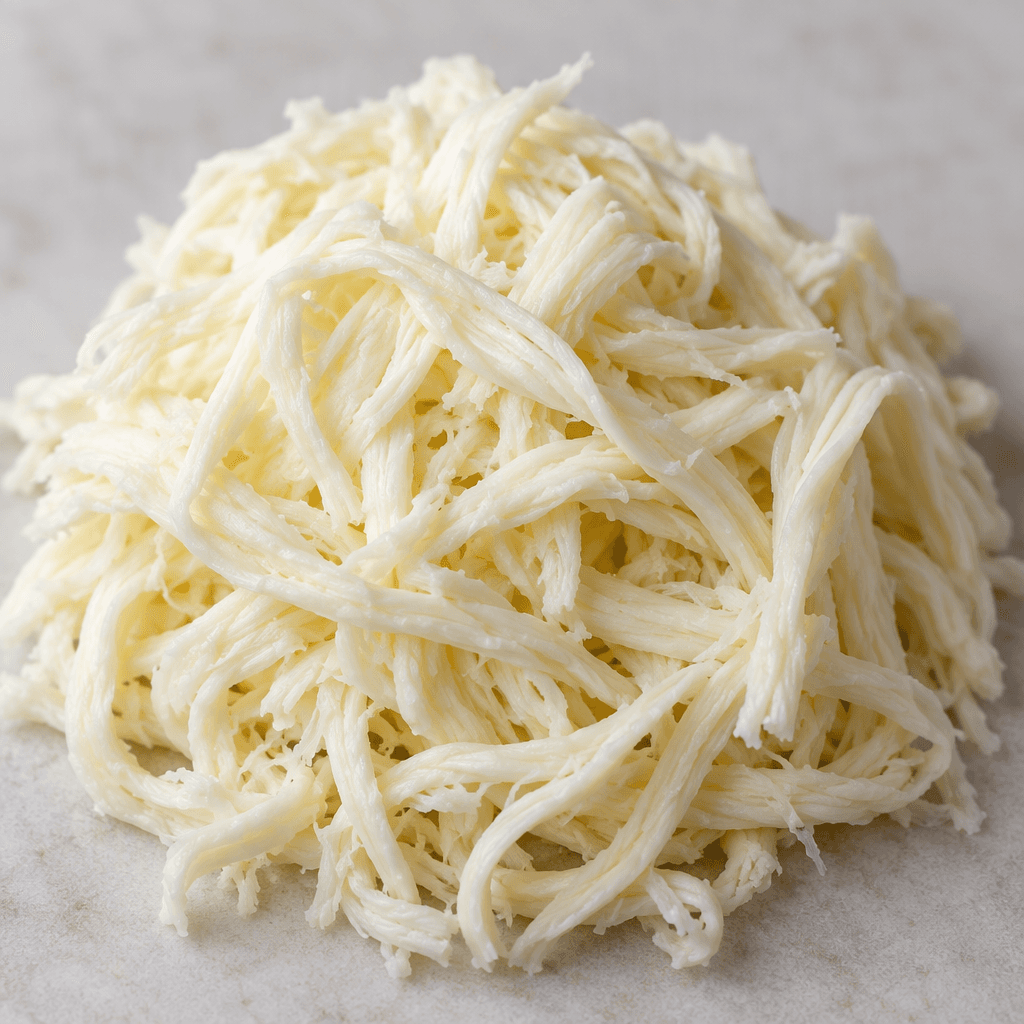
Unsalted civil cheese Calories
Unsalted, traditional Erzurum civil cheese, low sodium, high protein
In season: Spring · Summer · Autumn · Winter
CALORIES
GI
POTASSIUM
FIBER
Quick answer
1 slice (medium) of Unsalted civil cheese (30 g) has 87 calories. That works out to 290 calories per 100 g. It contains 0.6 g of carbs, 8.1 g of protein, 5.7 g of fat and 0 g of fiber. Its 210 mg of Calcium covers 21% of the Daily Value. Its glycemic index is 0 (low), so it raises blood sugar slowly.
What is Unsalted civil cheese?
Unsalted civil cheese is a traditional cheese associated with Erzurum in eastern Turkey. Its curd is heated and stretched, then separated into fine, stringy strands; leaving out the salt lets its gently tangy dairy flavour come through without the usual salty edge.
In Turkey, it is often served at breakfast with bread, tomatoes, cucumbers and fresh herbs, and it can also be tucked into börek or gözleme. Its strands soften well in hot dishes, so taste before seasoning and add salt only if needed. It is protein-rich and low in carbohydrates, with 27 g of protein per 100 g. For a lighter plate, pair a modest portion with plenty of vegetables rather than adding more cheese or rich accompaniments.
Unsalted civil cheese Nutrition Facts
Selected: 100 g
290
KCAL / 100G
Carbs
2g
· 1% DV
Protein
27g
· 54% DV
Fat
19g
· 24% DV
Fiber
0g
· 0% DV
DV is the share of the daily value covered, on a 2,000 kcal reference diet.
Calories come from: Carbs 3% · Protein 38% · Fat 59%
Unsalted civil cheese Vitamins & Minerals
Vitamins
B12
1.5µg · 63% DV
B2
0.35mg · 27% DV
Vitamin A
220µg · 24% DV
B5
0.4mg · 8% DV
Minerals
Phosphorus
500mg · 71% DV
Calcium
700mg · 70% DV
Zinc
3mg · 27% DV
Selenium
8µg · 15% DV
How Nutritious Is Unsalted civil cheese?
Nutrient density
High
How many vitamins, minerals and how much fiber this food carries per calorie. A high score means a lot of nutrition for few calories.
Satiety score
Medium
An EatBetter score computed from fiber, protein and calorie density. A high score means staying full longer on the same calories.
Both scores are calculated per 100 g and do not change with the selected portion. The satiety score is EatBetter's own calculation, not a clinical measure.
Unsalted civil cheese Glycemic Index
GLYCEMIC INDEX
GLYCEMIC LOAD
Accounts for portion size — a more realistic measure than GI alone.
How to Burn Off Unsalted civil cheese
To burn the 290 calories in 100 g:
🚶
Walking (5 km/h)
🏃
Running (8 km/h)
🚴
Cycling
🏊
Swimming
Times are calculated with the MET equation for a 70 kg adult. Actual burn varies with your weight, age and pace.
Is Unsalted civil cheese Processed?
NOVA 2
Minimally Processed
1. Unprocessed
2. Minimally Processed
3. Processed
4. Ultra-Processed
NOVA classifies foods into 4 groups by industrial processing. NOVA 1 (unprocessed) is the healthiest.
Does Unsalted civil cheese Contain Allergens?
Contains these allergens:
Which Diets Is Unsalted civil cheese Good For?
Vegan
— Not suitable
Vegetarian
✓ Suitable
Gluten-Free
— Not suitable
Dairy-Free
— Not suitable
Mediterranean
✓ Suitable
Paleo
— Not suitable
Whole30
— Not suitable
DASH
— Not suitable
Keto
— Not suitable
Low FODMAP
— Not suitable
Unsalted civil cheese Fat Profile
SATURATED
12.5g
MONOUNSATURATED
5.2g
POLYUNSATURATED
0.4g
Omega 6:3 ratio 3.1:1
Below the ideal 4:1 — a good omega balance.
Compare Unsalted civil cheese
Foods Similar to Unsalted civil cheese
Frequently Asked Questions About Unsalted civil cheese
What is unsalted civil cheese?
Unsalted civil cheese is a traditional, stringy cheese associated with Erzurum in eastern Turkey. It is made by heating and stretching curds into thin strands; the unsalted version is minimally processed and has no added salt, though the milk naturally contains some sodium.
How is unsalted civil cheese traditionally made?
Traditionally, milk is turned into curds, which are heated and worked until they separate into long, fine strands. Producers may vary the details, but unsalted civil cheese is made without adding salt during cheesemaking, leaving a mild, milky flavor.
Is unsalted civil cheese the same as string cheese?
Not exactly. Unsalted civil cheese is stringy and can be pulled into strands, but it is a regional Turkish cheese with its own production tradition and flavor. “String cheese” is a broader term that can refer to different cheeses and products.
What does unsalted civil cheese taste like?
Unsalted civil cheese tastes mild, milky, and sometimes gently tangy, without the pronounced saltiness of many cheeses. Its delicate flavor pairs well with fresh vegetables, bread, and olives; adding salty accompaniments can make the meal taste more seasoned without salting the cheese itself.
How do you serve unsalted civil cheese?
Serve unsalted civil cheese by pulling it into strands and eating it with bread, vegetables, or olives. It works well on a breakfast plate and can also be crumbled or torn into salads and warm dishes, where its mild flavor balances stronger ingredients.
Does unsalted civil cheese melt or stretch when heated?
Unsalted civil cheese softens when heated and its strands loosen, but it may not melt into a smooth, uniform layer like some melting cheeses. Use it when you want a soft, stringy texture, rather than a completely creamy sauce.
Can you grill unsalted civil cheese?
Yes, you can grill unsalted civil cheese, but its thin strands may soften quickly and fall apart. Keep the cheese together in a small bundle or use a grill-safe pan, and watch it closely so it warms and browns lightly without drying out.
Can unsalted civil cheese replace feta in a salad?
Yes, unsalted civil cheese can replace feta when you want a milder, stringier topping. Tear it into short strands rather than expecting feta’s crumbly texture, and season the salad to taste because the cheese itself contributes little added salt.
Does unsalted civil cheese contain no sodium at all?
No. “Unsalted” means salt is not added during preparation; it does not mean the cheese is sodium-free, because milk naturally contains sodium. Its sodium content is generally lower than that of salted versions, but the exact amount varies by producer.
How should you store unsalted civil cheese, and can you freeze it?
Keep unsalted civil cheese sealed in the refrigerator and follow the package’s storage instructions. It can be frozen in airtight portions, but thawing may change its moisture and stringy texture, so use thawed cheese in cooked dishes where that change matters less.
Have another question about Unsalted civil cheese?
Ask the AI nutrition coach — calories, portions, alternatives and more, answered in seconds in the app.

Scan calories with your camera
Instant AI nutrition analysis

Nutrition data compiled from USDA FoodData Central and scientific sources.