

Ready & Packaged Foods
All →Vegetables & Legumes
All →Desserts & Confectionery
All →Meat & Protein
All →Grains & Bakery
All →Beverages
All →Milk & Dairy
All →

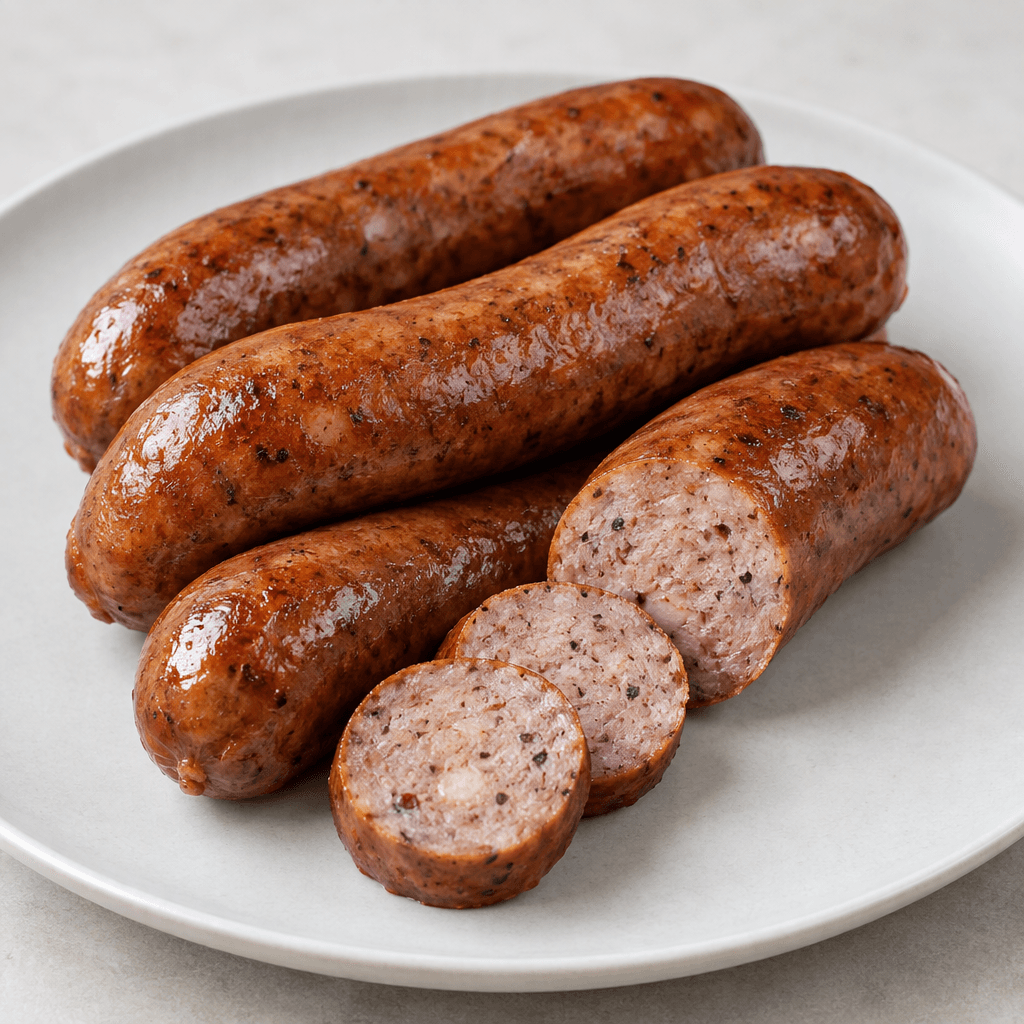
Turkey Sausage Calories
Lean, protein source, breakfast favorite
CALORIES
GI
POTASSIUM
FIBER
Quick answer
1 piece (medium) of Turkey Sausage (50 g) has 70 calories. That works out to 140 calories per 100 g. It contains 1 g of carbs, 8 g of protein, 4 g of fat and 0 g of fiber. Its 0.6 µg of B12 covers 25% of the Daily Value. Its glycemic index is 0 (low), so it raises blood sugar slowly.
What is Turkey Sausage?
Turkey Sausage is made from ground turkey seasoned and shaped into sausage links. It is often sold ready to cook, making it a convenient option for breakfast or a quick meal.
Pan-frying gives the links a browned outside while the finely ground interior stays tender and compact. In the United States, they are commonly served alongside eggs, toast or potatoes; elsewhere, they can be used much like other breakfast sausages or sliced into sandwiches. With 16 g of protein per 100 g, it is a protein-forward choice, though the fat content is worth keeping in mind. Cook it with little added oil and pair it with vegetables for a lighter plate.
Turkey Sausage Nutrition Facts
Selected: 100 g
140
KCAL / 100G
Carbs
2g
· 1% DV
Protein
16g
· 32% DV
Fat
8g
· 10% DV
Fiber
0g
· 0% DV
DV is the share of the daily value covered, on a 2,000 kcal reference diet.
Calories come from: Carbs 6% · Protein 44% · Fat 50%
Turkey Sausage Vitamins & Minerals
Vitamins
B12
1.2µg · 50% DV
B1
0.35mg · 29% DV
B6
0.45mg · 26% DV
B3
3.8mg · 24% DV
Minerals
Sodium
800mg · 35% DV
Selenium
14µg · 25% DV
Phosphorus
160mg · 23% DV
Zinc
2mg · 18% DV
How Nutritious Is Turkey Sausage?
Nutrient density
Medium
How many vitamins, minerals and how much fiber this food carries per calorie. A high score means a lot of nutrition for few calories.
Satiety score
Medium
An EatBetter score computed from fiber, protein and calorie density. A high score means staying full longer on the same calories.
Both scores are calculated per 100 g and do not change with the selected portion. The satiety score is EatBetter's own calculation, not a clinical measure.
Turkey Sausage Glycemic Index
GLYCEMIC INDEX
GLYCEMIC LOAD
Accounts for portion size — a more realistic measure than GI alone.
How to Burn Off Turkey Sausage
To burn the 140 calories in 100 g:
🚶
Walking (5 km/h)
🏃
Running (8 km/h)
🚴
Cycling
🏊
Swimming
Times are calculated with the MET equation for a 70 kg adult. Actual burn varies with your weight, age and pace.
Is Turkey Sausage Processed?
NOVA 3
Processed
1. Unprocessed
2. Minimally Processed
3. Processed
4. Ultra-Processed
NOVA classifies foods into 4 groups by industrial processing. NOVA 1 (unprocessed) is the healthiest.
Does Turkey Sausage Contain Allergens?
No known major allergens
Which Diets Is Turkey Sausage Good For?
Vegan
— Not suitable
Vegetarian
— Not suitable
Gluten-Free
✓ Suitable
Dairy-Free
— Not suitable
Mediterranean
✓ Suitable
Paleo
✓ Suitable
Whole30
— Not suitable
DASH
— Not suitable
Keto
✓ Suitable
Low FODMAP
— Not suitable
Turkey Sausage Fat Profile
SATURATED
2.2g
MONOUNSATURATED
3.2g
POLYUNSATURATED
1.1g
Omega 6:3 ratio 5.6:1
Above the ideal 4:1 (5.6:1).
Compare Turkey Sausage
Foods Similar to Turkey Sausage
Frequently Asked Questions About Turkey Sausage
Is turkey sausage healthier than pork sausage?
Turkey sausage is often leaner than pork sausage, but that does not automatically make every product a healthier choice. Both can be high in sodium, and recipes vary. Compare the ingredient lists and pair either sausage with vegetables or other minimally processed foods.
Is turkey sausage already cooked?
Not always: turkey sausage is sold both raw and fully cooked. Raw links need to be cooked all the way through, while precooked ones only need reheating. Check the package instructions before eating or serving it.
How do you cook turkey sausage without drying it out?
Cook turkey sausage over medium heat and turn it regularly so it heats through without charring. Avoid cutting into raw links before cooking, which can let juices escape. For raw sausage, make sure the center is fully cooked before serving.
What is turkey sausage made from?
Turkey sausage is made primarily from ground turkey, usually mixed with seasonings and salt. Some versions also contain added fat, starch, or other ingredients to shape the texture. The exact recipe varies by product, so read its ingredients if you need to avoid something specific.
Can you grill turkey sausage?
Yes, turkey sausage can be grilled. Use moderate heat and turn the links often to prevent the casing from splitting or the outside from burning before the middle is cooked. Keep raw sausage and cooked food on separate plates and utensils.
Can you freeze turkey sausage?
Yes, you can freeze turkey sausage. Seal it well to limit freezer burn, and thaw it in the refrigerator rather than on the counter. Freeze opened links in portions so you can take out only what you plan to use.
How long does opened turkey sausage last in the fridge?
Raw turkey sausage generally keeps for 1–2 days in the refrigerator; cooked sausage keeps for about 3–4 days. Store it covered and chilled, and discard it if it has been left at room temperature for too long.
Do you remove the casing from turkey sausage?
Usually, no: the casing on turkey sausage is meant to stay on during cooking and can be eaten. Some products use a peelable outer wrap instead, so follow the package directions if the casing is identified as inedible.
Does turkey sausage taste like pork sausage?
Turkey sausage can have a similar savory, seasoned flavor, but it is often milder and may feel less rich than pork sausage. The seasoning and fat content make a big difference, so the taste varies considerably between recipes and brands.
Can you use turkey sausage in pasta?
Yes, turkey sausage works well in pasta. Cook it thoroughly, crumble or slice it, then add it to tomato sauce with vegetables such as peppers or spinach. Season the sauce before adding extra salt, since sausage can already be salty.
Have another question about Turkey Sausage?
Ask the AI nutrition coach — calories, portions, alternatives and more, answered in seconds in the app.

Scan calories with your camera
Instant AI nutrition analysis

Nutrition data compiled from USDA FoodData Central and scientific sources.