

Ready & Packaged Foods
All →Vegetables & Legumes
All →Desserts & Confectionery
All →Meat & Protein
All →Grains & Bakery
All →Beverages
All →Milk & Dairy
All →

Tuna (Low Fat) Calories
High protein, low fat, source of omega-3
In season: Spring · Summer · Autumn · Winter
CALORIES
GI
POTASSIUM
FIBER
Quick answer
100 g of Tuna (Low Fat) has 110 calories. It contains 0 g of carbs, 24.5 g of protein, 1 g of fat and 0 g of fiber. Its 70 µg of Selenium covers 127% of the Daily Value. Its glycemic index is 0 (low), so it raises blood sugar slowly.
What is Tuna (Low Fat)?
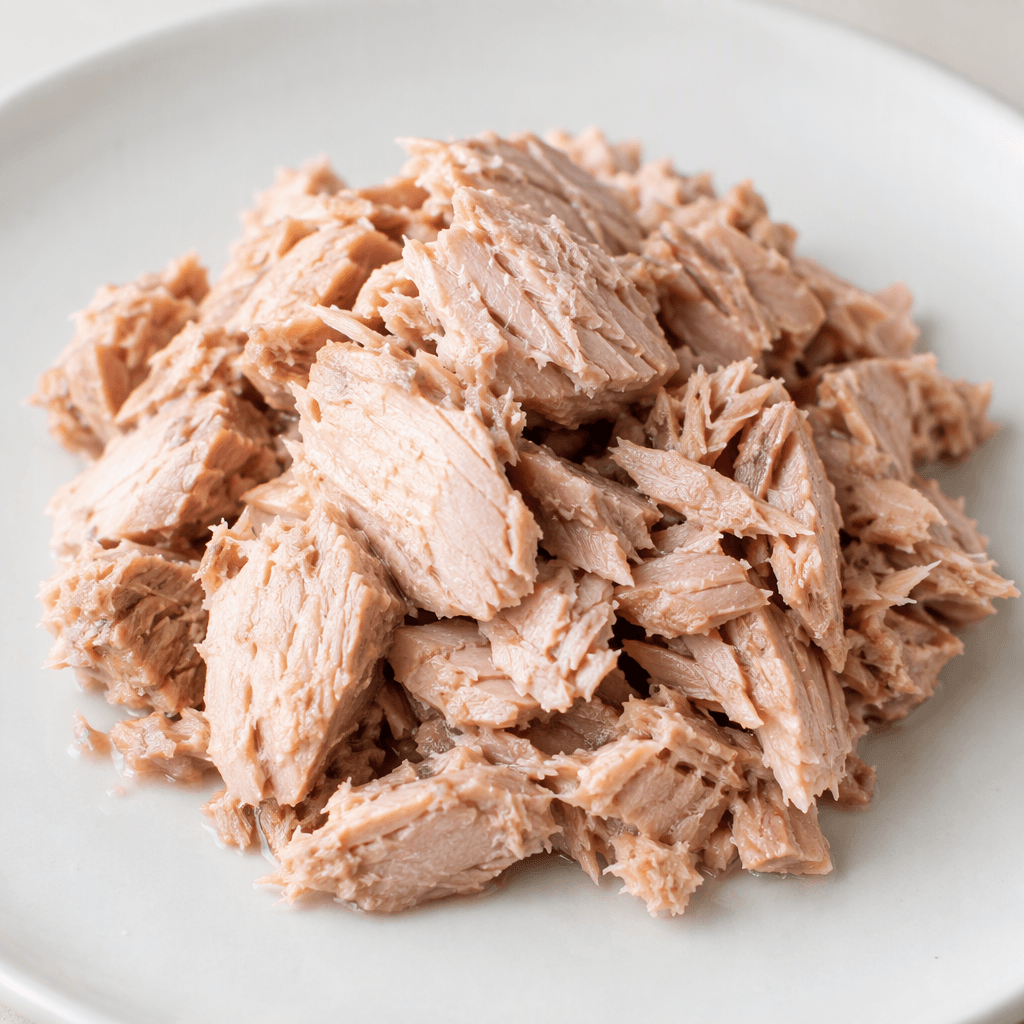
Low-fat tuna is tuna flesh with little fat, sold fresh or preserved in a can. Its colour ranges from pale pink to beige, and the flakes are moist and compact when cooked. The flavour is mild but distinctly savoury, making it easy to use in both simple meals and more strongly seasoned dishes.
Across the Mediterranean and beyond, it is commonly added to salads, sandwiches, pasta and grain bowls; canned tuna is especially handy for quick lunches. It provides plenty of protein with very little fat, so it works well in a filling, lighter meal. Pair it with crisp vegetables, lemon and herbs, or add a small amount of olive oil for a softer, richer finish.
Tuna (Low Fat) Nutrition Facts
Selected: 100 g
110
KCAL / 100G
Carbs
0g
· 0% DV
Protein
24.5g
· 49% DV
Fat
1g
· 1% DV
Fiber
0g
· 0% DV
DV is the share of the daily value covered, on a 2,000 kcal reference diet.
Calories come from: Carbs 0% · Protein 92% · Fat 8%
Tuna (Low Fat) Vitamins & Minerals
Vitamins
B3
18.5mg · 116% DV
B12
2.2µg · 92% DV
B6
0.8mg · 47% DV
Vitamin D
5µg · 25% DV
Minerals
Selenium
70µg · 127% DV
Iodine
50µg · 33% DV
Phosphorus
210mg · 30% DV
Zinc
1mg · 9% DV
How Nutritious Is Tuna (Low Fat)?
Nutrient density
Very high
How many vitamins, minerals and how much fiber this food carries per calorie. A high score means a lot of nutrition for few calories.
Satiety score
Medium
An EatBetter score computed from fiber, protein and calorie density. A high score means staying full longer on the same calories.
Both scores are calculated per 100 g and do not change with the selected portion. The satiety score is EatBetter's own calculation, not a clinical measure.
Tuna (Low Fat) Glycemic Index
GLYCEMIC INDEX
GLYCEMIC LOAD
Accounts for portion size — a more realistic measure than GI alone.
How to Burn Off Tuna (Low Fat)
To burn the 110 calories in 100 g:
🚶
Walking (5 km/h)
🏃
Running (8 km/h)
🚴
Cycling
🏊
Swimming
Times are calculated with the MET equation for a 70 kg adult. Actual burn varies with your weight, age and pace.
Is Tuna (Low Fat) Processed?
NOVA 2
Minimally Processed
1. Unprocessed
2. Minimally Processed
3. Processed
4. Ultra-Processed
NOVA classifies foods into 4 groups by industrial processing. NOVA 1 (unprocessed) is the healthiest.
Does Tuna (Low Fat) Contain Allergens?
Contains these allergens:
Which Diets Is Tuna (Low Fat) Good For?
Vegan
— Not suitable
Vegetarian
— Not suitable
Gluten-Free
✓ Suitable
Dairy-Free
— Not suitable
Mediterranean
✓ Suitable
Paleo
✓ Suitable
Whole30
— Not suitable
DASH
— Not suitable
Keto
✓ Suitable
Low FODMAP
— Not suitable
Tuna (Low Fat) Fat Profile
SATURATED
0.2g
MONOUNSATURATED
0.2g
POLYUNSATURATED
0.5g
Omega 6:3 ratio 0:1
Below the ideal 4:1 — a good omega balance.
Compare Tuna (Low Fat)
Foods Similar to Tuna (Low Fat)
Frequently Asked Questions About Tuna (Low Fat)
Is low-fat tuna healthy to eat?
Yes, low-fat tuna is a lean source of protein, and tuna can provide omega-3 fats. Its omega-3 content varies by species and product, so include other seafood and a variety of foods rather than relying on tuna alone.
Does low-fat tuna contain mercury?
Yes, low-fat tuna can contain mercury, and levels vary by species and fish size. People who eat tuna often should vary their seafood choices; pregnant people and children should follow current local advice on tuna portions.
Can you eat low-fat tuna raw?
Yes, but only if the low-fat tuna has been handled and prepared for raw consumption. Ordinary fresh tuna is not automatically safe to eat raw, and cooking it reduces the risk of foodborne illness.
How do you cook low-fat tuna without drying it out?
Cook low-fat tuna quickly over high heat and remove it once the center is just opaque, or still slightly pink if you prefer it less done. Because the meat is lean, prolonged cooking can make it tough and dry.
What is the difference between low-fat tuna and canned tuna?
Low-fat tuna describes tuna with little fat, while canned tuna is cooked and preserved in a sealed can. Canned tuna may be packed in water or oil, which changes its texture and the amount of fat in the finished product.
Is low-fat tuna safe during pregnancy?
Low-fat tuna can be eaten during pregnancy, but the suitable amount depends on the tuna species because mercury levels differ. Follow current local seafood guidance, and ask your clinician if you have a specific pregnancy-related concern.
Can low-fat tuna help with weight loss?
Low-fat tuna can fit into a weight-loss meal because its protein may help you feel full. The preparation matters: creamy sauces, oil, and large portions of accompanying foods can make the meal much more energy-dense.
How long does cooked low-fat tuna keep in the fridge?
Refrigerate cooked low-fat tuna promptly in a covered container and use it within a few days. Discard it if it has been left out for an extended period or develops an unusual smell, texture, or appearance.
Can you freeze low-fat tuna?
Yes, you can freeze low-fat tuna in an airtight, freezer-safe package. Thaw it in the refrigerator rather than on the counter, and avoid refreezing it after thawing because repeated temperature changes can reduce quality and safety.
What goes well with low-fat tuna?
Low-fat tuna pairs well with lemon, leafy greens, beans, tomatoes, and potatoes. Add it to a salad or serve it with cooked vegetables and grains; a modest amount of dressing helps preserve the tuna’s flavor.
Have another question about Tuna (Low Fat)?
Ask the AI nutrition coach — calories, portions, alternatives and more, answered in seconds in the app.

Scan calories with your camera
Instant AI nutrition analysis

Nutrition data compiled from USDA FoodData Central and scientific sources.