

Ready & Packaged Foods
All →Vegetables & Legumes
All →Desserts & Confectionery
All →Meat & Protein
All →Grains & Bakery
All →Beverages
All →Milk & Dairy
All →

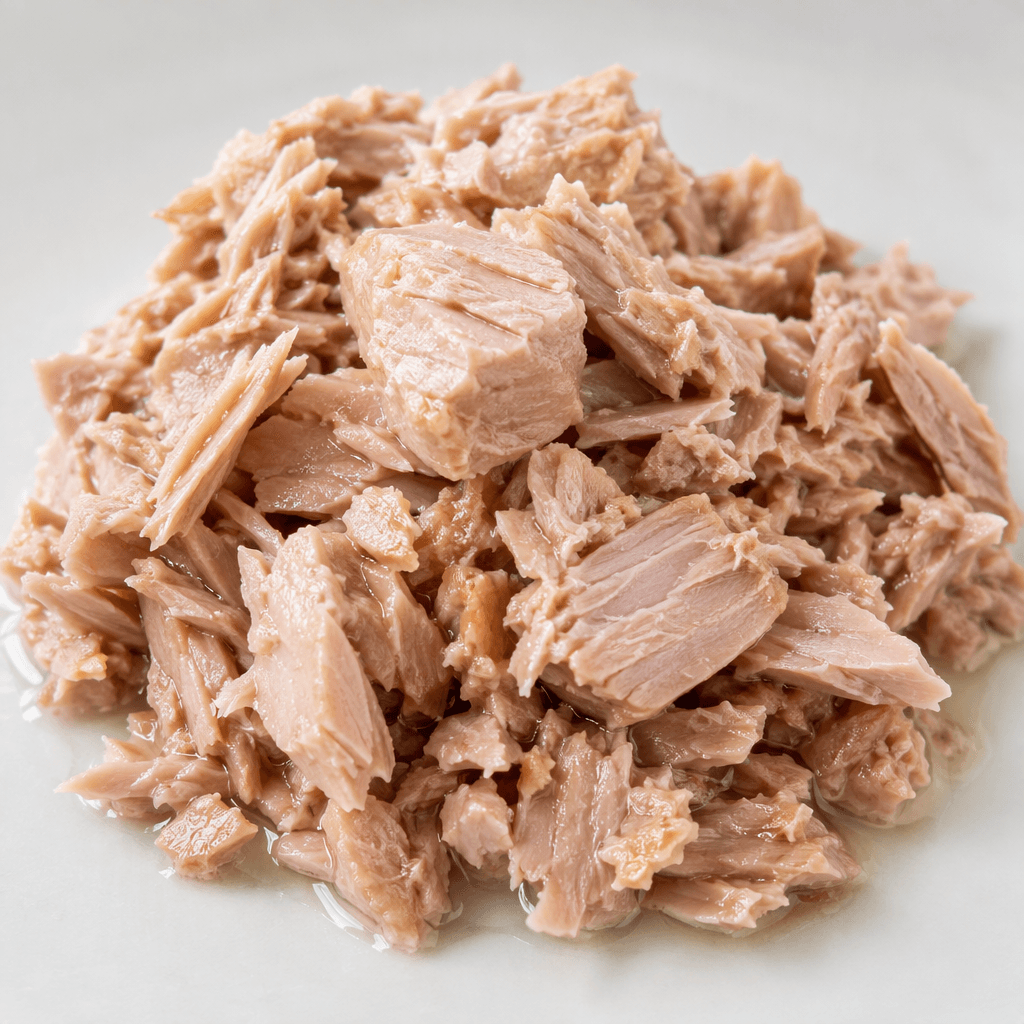
Tuna (Dardanel economy pack) Calories
High protein, low carb, contains omega-3
In season: Spring · Summer · Autumn · Winter
CALORIES · 100 G
GI
POTASSIUM · 100 G
FIBER · 100 G
Quick answer
1 can (medium) of Tuna (Dardanel economy pack) (160 g) has 232 calories. That works out to 145 calories per 100 g. It contains 0 g of carbs, 40.8 g of protein, 6.7 g of fat and 0 g of fiber. Its 104 µg of Selenium covers 189% of the Daily Value. Its glycemic index is 0 (low), so it raises blood sugar slowly.
Tuna (Dardanel economy pack) Nutrition Facts
Selected: 1 can (medium) · 160 g
232
KCAL / 160G
Carbs
0g
· 0% DV
Protein
40.8g
· 82% DV
Fat
6.7g
· 9% DV
Fiber
0g
· 0% DV
DV is the share of the daily value covered, on a 2,000 kcal reference diet.
Calories come from: Carbs 0% · Protein 73% · Fat 27%
Tuna (Dardanel economy pack) nutrition facts table · 1 can (medium) (160 g)
| Nutrient | Amount | % DV |
|---|---|---|
| Calories | 232 kcal | |
| Total fat | 6.7 g | 9% |
| Saturated fat | 1.76 g | 9% |
| Trans fat | 0 g | |
| Sodium | 512 mg | 22% |
| Total carbohydrate | 0 g | 0% |
| Fiber | 0 g | 0% |
| Protein | 40.8 g | 82% |
Calories: Calories measure energy. Average daily need is 2,000 kcal. Excess calories are stored as fat, too few cause weight loss.
Carbs: Your body's primary energy source. The brain runs exclusively on carbs. Daily need: 275g.
Protein: Essential for muscle repair and cell growth. Daily need: 50g. Keeps you full and boosts metabolism.
Fat: Needed for hormone production and vitamin absorption. Daily need: 78g. Limit saturated fats, choose unsaturated.
Fiber: Critical for digestive health and satiety. Daily need: 28g. Stabilizes blood sugar, lowers cholesterol.

Log this food in EatBetter
100,000+ people use it
- Get your daily calorie target
- Snap your meal, log it in seconds
- See every vitamin and mineral

📸 Scan the code to get the app free.

How Many Calories in 1 Can of Tuna (Dardanel economy pack)?
| Serving | Amount | Calories |
|---|---|---|
| 1 can (medium) | 160 g | 232 kcal |
| 2 tablespoon (medium) | 30 g | 44 kcal |
| 1 piece (small) | 50 g | 73 kcal |
| 1 can (small) | 80 g | 116 kcal |
| 100 g | 100 g | 145 kcal |
| 1 serving (medium) | 100 g | 145 kcal |
| 1 can (large) | 240 g | 348 kcal |
| 1 pack (jumbo) | 320 g | 464 kcal |
Calculated from 145 calories per 100 g.
Frequently Asked Questions About Tuna (Dardanel economy pack)
Is Dardanel economy-pack tuna ready to eat straight from the can?
Yes. Canned tuna is cooked during processing, so Dardanel economy-pack tuna can be eaten straight from the can. Drain it if you prefer, then add it to a sandwich, salad or cooked dish without cooking it again.
How long does Dardanel economy-pack tuna last after opening?
Transfer leftover tuna from the can to a covered food-safe container and refrigerate it promptly. Use it within a short time, and discard it if it has been left out for hours or develops an unusual smell or appearance.
Should you drain Dardanel economy-pack tuna before eating it?
Only if you want to. Draining removes excess packing liquid and gives the tuna a drier texture, which can work better in sandwiches or salads. The packing liquid can vary, so check the can if you need to know what it contains.
Can you cook Dardanel economy-pack tuna in a hot dish?
Yes. Stir it into pasta, a casserole or another hot dish near the end of cooking. Since canned tuna is already cooked, prolonged heating can make it dry and break it into smaller pieces.
Is it safe to eat Dardanel economy-pack tuna every day?
It is better not to rely on tuna every day, because tuna can contribute to mercury exposure and levels vary by species. Rotate it with other fish and protein foods, and follow local advice on tuna consumption, especially for children.
Can you freeze Dardanel economy-pack tuna after opening?
Yes. Put the leftover tuna in an airtight freezer-safe container before freezing. Its texture may become drier or more crumbly after thawing, so it is often better in a cooked dish than served plain or in a salad.
Can you rinse Dardanel economy-pack tuna to reduce its saltiness?
You can, but rinsing is usually unnecessary and may make the tuna break apart. Draining the packing liquid is a gentler first step; if you do rinse it, use clean water and drain it well before serving.
Can you eat Dardanel economy-pack tuna during pregnancy?
Yes, in suitable portions, but tuna contains mercury and the amount varies by type. Follow your local pregnancy guidance on fish and tuna, and ask your healthcare professional for advice if you are unsure how much is appropriate.
Why does Dardanel economy-pack tuna sometimes taste dry?
Canned tuna can taste dry because it is cooked during processing and may lose moisture, especially if it is heated again. Drain it only as much as needed and mix it with a dressing, yogurt or another moist ingredient when serving.
What can you make with Dardanel economy-pack tuna besides a sandwich?
Use it in pasta, a green salad, a baked potato or a savory pie filling. Add the tuna near the end when making a hot dish, since it is already cooked and needs only to warm through.
Tuna (Dardanel economy pack) Vitamins & Minerals
Vitamins
B12
3.52µg · 147% DV
B3
13.76mg · 86% DV
B6
0.8mg · 47% DV
B5
1.12mg · 22% DV
Minerals
Selenium
104µg · 189% DV
Iodine
80µg · 53% DV
Phosphorus
352mg · 50% DV
Sodium
512mg · 22% DV
Potassium ⭐
416mg · 12% DV
Tuna (Dardanel economy pack) Glycemic Index
GLYCEMIC INDEX
GLYCEMIC LOAD
Accounts for portion size — a more realistic measure than GI alone.
How to Burn Off Tuna (Dardanel economy pack)
To burn the 232 calories in 1 can (medium) (160 g):
🚶
Walking (5 km/h)
🏃
Running (8 km/h)
🚴
Cycling
🏊
Swimming
Times are calculated with the MET equation for a 70 kg adult. Actual burn varies with your weight, age and pace.
What is Tuna (Dardanel economy pack)?
Tuna (Dardanel economy pack) is a canned tuna product, ready to use once opened. It makes a convenient addition to a quick meal, whether you serve it on its own or mix it into another dish; drain it first if you prefer less of the packing liquid.
Its flavour is savoury and fairly mild, with soft flakes that break apart easily. Tuna is commonly served in sandwiches, salads and pasta dishes, and pairs well with lemon, herbs, crisp vegetables or beans. It is high in protein, with 25.5 g per 100 g, and contains no carbohydrates. For a lighter tuna salad, use lemon and a little olive oil in place of a mayonnaise-heavy dressing.
How Nutritious Is Tuna (Dardanel economy pack)?
Nutrient density
High
How many vitamins, minerals and how much fiber this food carries per calorie. A high score means a lot of nutrition for few calories.
Satiety score
Medium
An EatBetter score computed from fiber, protein and calorie density. A high score means staying full longer on the same calories.
Both scores are calculated per 100 g and do not change with the selected portion. The satiety score is EatBetter's own calculation, not a clinical measure.
Is Tuna (Dardanel economy pack) Processed?
NOVA 3
Processed
1. Unprocessed
2. Minimally Processed
3. Processed
4. Ultra-Processed
NOVA classifies foods into 4 groups by industrial processing. NOVA 1 (unprocessed) is the healthiest.
Does Tuna (Dardanel economy pack) Contain Allergens?
Contains these allergens:
Which Diets Is Tuna (Dardanel economy pack) Good For?
Vegan
— Not suitable
Vegetarian
— Not suitable
Gluten-Free
✓ Suitable
Dairy-Free
— Not suitable
Mediterranean
✓ Suitable
Paleo
✓ Suitable
Whole30
— Not suitable
DASH
— Not suitable
Keto
✓ Suitable
Low FODMAP
— Not suitable
Tuna (Dardanel economy pack) Fat Profile
SATURATED
1.76g
MONOUNSATURATED
2.56g
POLYUNSATURATED
1.92g
Omega 6:3 ratio 0:1
Below the ideal 4:1 — a good omega balance.
Compare Tuna (Dardanel economy pack)
Foods Similar to Tuna (Dardanel economy pack)
Have another question about Tuna (Dardanel economy pack)?
Ask the AI nutrition coach — calories, portions, alternatives and more, answered in seconds in the app.

Scan calories with your camera
Instant AI nutrition analysis

Nutrition data compiled from USDA FoodData Central and scientific sources.