

Ready & Packaged Foods
All →Vegetables & Legumes
All →Desserts & Confectionery
All →Meat & Protein
All →Grains & Bakery
All →Beverages
All →Milk & Dairy
All →

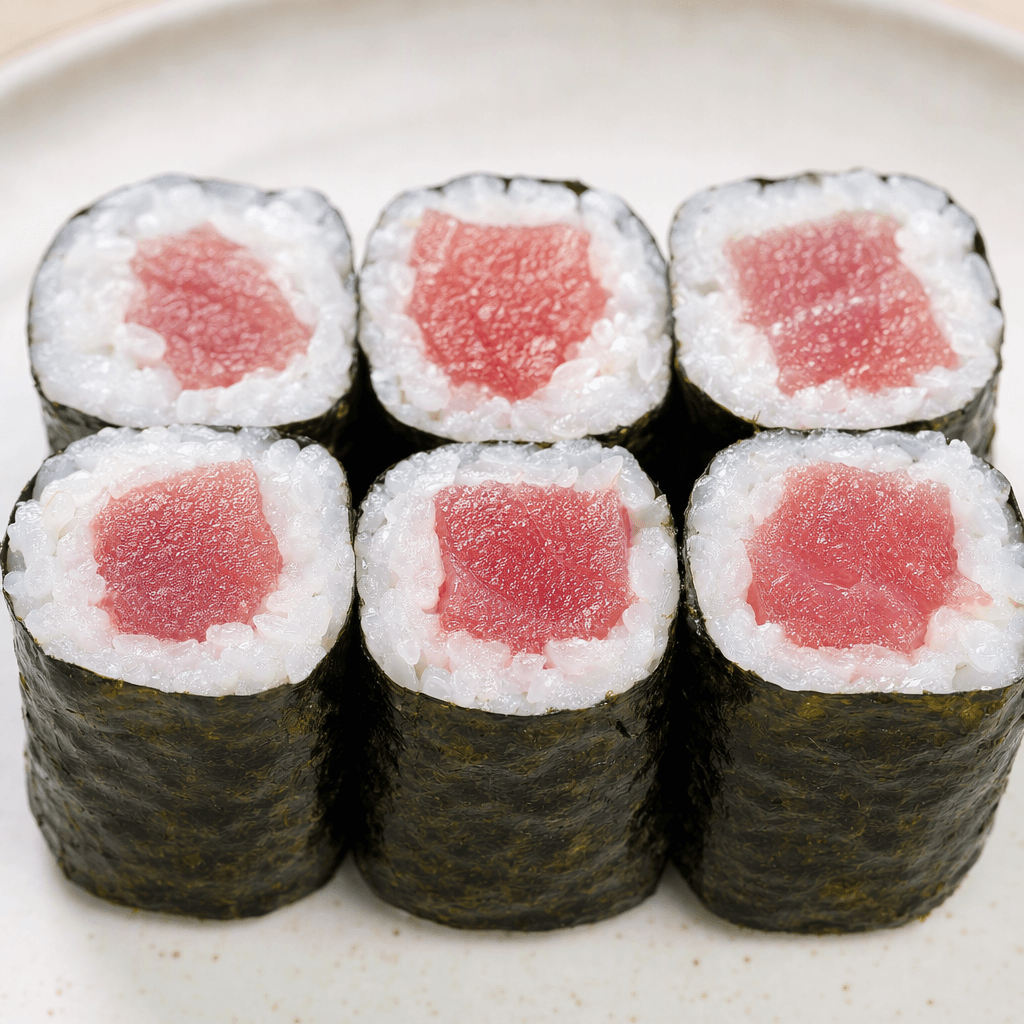
Tuna sushi roll Calories
Lean protein source
CALORIES · 100 G
GI
POTASSIUM · 100 G
FIBER · 100 G
Quick answer
1 piece (medium) of Tuna sushi roll (35 g) has 52 calories. That works out to 148 calories per 100 g. It contains 8.2 g of carbs, 2.8 g of protein, 0.8 g of fat and 0.4 g of fiber. Its 0.4 µg of B12 covers 18% of the Daily Value. Its glycemic index is 55 (medium), so it raises blood sugar at a moderate pace.
Tuna sushi roll Nutrition Facts
Selected: 1 piece (medium) · 35 g
52
KCAL / 35G
Carbs
8.2g
· 3% DV
Protein
2.8g
· 6% DV
Fat
0.8g
· 1% DV
Fiber
0.4g
· 1% DV
DV is the share of the daily value covered, on a 2,000 kcal reference diet.
Calories come from: Carbs 64% · Protein 22% · Fat 14%
Tuna sushi roll nutrition facts table · 1 piece (medium) (35 g)
| Nutrient | Amount | % DV |
|---|---|---|
| Calories | 52 kcal | |
| Total fat | 0.8 g | 1% |
| Saturated fat | 0.18 g | 1% |
| Trans fat | 0 g | |
| Sodium | 112 mg | 5% |
| Total carbohydrate | 8.2 g | 3% |
| Fiber | 0.4 g | 1% |
| Protein | 2.8 g | 6% |
Calories: Calories measure energy. Average daily need is 2,000 kcal. Excess calories are stored as fat, too few cause weight loss.
Carbs: Your body's primary energy source. The brain runs exclusively on carbs. Daily need: 275g.
Protein: Essential for muscle repair and cell growth. Daily need: 50g. Keeps you full and boosts metabolism.
Fat: Needed for hormone production and vitamin absorption. Daily need: 78g. Limit saturated fats, choose unsaturated.
Fiber: Critical for digestive health and satiety. Daily need: 28g. Stabilizes blood sugar, lowers cholesterol.

Log this food in EatBetter
100,000+ people use it
- Get your daily calorie target
- Snap your meal, log it in seconds
- See every vitamin and mineral

📸 Scan the code to get the app free.

How Many Calories in 1 Medium Tuna sushi roll?
| Serving | Amount | Calories |
|---|---|---|
| 1 piece (medium) | 35 g | 52 kcal |
| 1 piece (small) | 25 g | 37 kcal |
| 1 piece (large) | 45 g | 67 kcal |
| 100 g | 100 g | 148 kcal |
| 1 serving (small) | 150 g | 222 kcal |
| 1 pack (medium) | 200 g | 296 kcal |
| 6 piece (medium) | 210 g | 311 kcal |
| 1 serving (medium) | 210 g | 311 kcal |
| 8 piece (large) | 280 g | 414 kcal |
| 1 serving (large) | 280 g | 414 kcal |
Calculated from 148 calories per 100 g.
Frequently Asked Questions About Tuna sushi roll
What is in a tuna sushi roll?
A tuna sushi roll usually contains seasoned sushi rice, nori, and tuna. Cucumber, avocado, sesame, or mayonnaise may also be included, so check the menu description if you need to know which version a restaurant serves.
Is tuna sushi roll healthy?
A tuna sushi roll can be a nourishing meal, with tuna providing protein and rice supplying energy. Sauces and mayonnaise can change its overall balance, so choose a simple filling or add vegetables if you want a lighter roll.
Is tuna sushi roll made with raw tuna?
A tuna sushi roll may contain raw tuna, cooked tuna, or canned tuna. The name does not tell you which one, so ask the restaurant or check the menu before ordering, especially if you need to avoid raw fish.
How long does tuna sushi roll last in the fridge?
Tuna sushi roll is best eaten soon after it is made. Refrigerate leftovers promptly in a sealed container and aim to eat them the same day; discard rolls left out for a long time or with any change in smell or appearance.
Can pregnant people eat tuna sushi roll?
Pregnant people should avoid tuna sushi roll made with raw fish and choose a version with thoroughly cooked tuna instead. Tuna mercury levels vary by species, so ask a healthcare professional about suitable portions during pregnancy.
How do you make a tuna sushi roll at home?
To make a tuna sushi roll, spread a thin layer of seasoned sushi rice over nori, place tuna and chosen fillings along the center, then roll firmly with a bamboo mat. Slice with a sharp, damp knife.
Can you make tuna sushi roll with canned tuna?
Yes, canned tuna works well in a tuna sushi roll and is a convenient choice for home preparation. Drain it thoroughly before adding it to the rice; excess moisture can soften the nori and make the roll harder to slice.
What is the difference between a tuna sushi roll and a spicy tuna roll?
A spicy tuna roll is a seasoned variation of a tuna sushi roll, usually made with tuna mixed with chili sauce or another spicy ingredient. A regular tuna sushi roll may be mild and can use cooked, canned, or raw tuna.
Can you freeze tuna sushi roll?
Freezing tuna sushi roll is not recommended because the rice can become dry or mushy and the nori loses its texture after thawing. For the best quality and safer handling, refrigerate leftovers promptly and eat them soon.
What sauce goes with tuna sushi roll?
Soy sauce is the usual accompaniment for tuna sushi roll, while wasabi adds heat and pickled ginger refreshes the palate. Spicy mayo is common on richer variations, but a small amount lets the tuna's flavor come through.
Tuna sushi roll Vitamins & Minerals
Vitamins
B12
0.42µg · 18% DV
B3
0.74mg · 5% DV
B6
0.04mg · 2% DV
B5
0.11mg · 2% DV
Minerals
Selenium
6.3µg · 11% DV
Phosphorus
38mg · 5% DV
Sodium
112mg · 5% DV
Manganese
0.11mg · 5% DV
Potassium ⭐
46mg · 1% DV
Tuna sushi roll Glycemic Index
GLYCEMIC INDEX
GLYCEMIC LOAD
Accounts for portion size — a more realistic measure than GI alone.
How to Burn Off Tuna sushi roll
To burn the 52 calories in 1 piece (medium) (35 g):
🚶
Walking (5 km/h)
🏃
Running (8 km/h)
🚴
Cycling
🏊
Swimming
Times are calculated with the MET equation for a 70 kg adult. Actual burn varies with your weight, age and pace.
What is Tuna sushi roll?
A Tuna sushi roll is a Japanese-style sushi roll made by wrapping sushi rice and tuna in a sheet of nori. Cucumber or avocado may be added, and the tuna can be raw or cooked depending on the recipe and restaurant.
It is commonly served in sushi restaurants and as takeaway, with soy sauce, wasabi and pickled ginger; home cooks can also make it with cooked tuna. Rice supplies most of its carbohydrates, while tuna contributes lean protein. For a lighter meal, pair it with a simple salad and use soy sauce sparingly.
How Nutritious Is Tuna sushi roll?
Nutrient density
Medium
How many vitamins, minerals and how much fiber this food carries per calorie. A high score means a lot of nutrition for few calories.
Satiety score
Medium
An EatBetter score computed from fiber, protein and calorie density. A high score means staying full longer on the same calories.
Both scores are calculated per 100 g and do not change with the selected portion. The satiety score is EatBetter's own calculation, not a clinical measure.
Is Tuna sushi roll Processed?
NOVA 3
Processed
1. Unprocessed
2. Minimally Processed
3. Processed
4. Ultra-Processed
NOVA classifies foods into 4 groups by industrial processing. NOVA 1 (unprocessed) is the healthiest.
Does Tuna sushi roll Contain Allergens?
Contains these allergens:
Which Diets Is Tuna sushi roll Good For?
Vegan
— Not suitable
Vegetarian
— Not suitable
Gluten-Free
— Not suitable
Dairy-Free
— Not suitable
Mediterranean
✓ Suitable
Paleo
— Not suitable
Whole30
— Not suitable
DASH
— Not suitable
Keto
— Not suitable
Low FODMAP
— Not suitable
Tuna sushi roll Fat Profile
SATURATED
0.18g
MONOUNSATURATED
0.21g
POLYUNSATURATED
0.12g
Omega 6:3 ratio 1.5:1
Below the ideal 4:1 — a good omega balance.
Compare Tuna sushi roll
Foods Similar to Tuna sushi roll
Have another question about Tuna sushi roll?
Ask the AI nutrition coach — calories, portions, alternatives and more, answered in seconds in the app.

Scan calories with your camera
Instant AI nutrition analysis

Nutrition data compiled from USDA FoodData Central and scientific sources.