

Ready & Packaged Foods
All →Vegetables & Legumes
All →Desserts & Confectionery
All →Meat & Protein
All →Grains & Bakery
All →Beverages
All →Milk & Dairy
All →

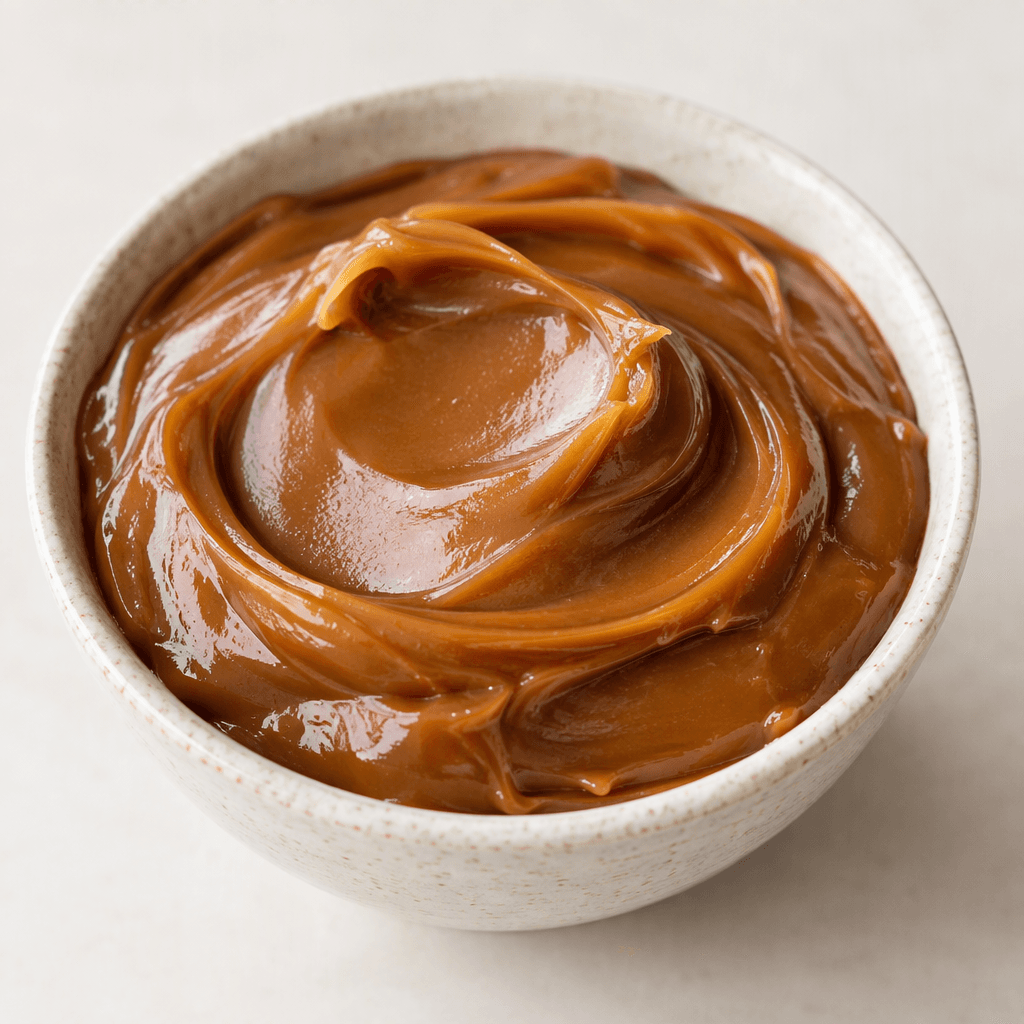
Sweet spread Calories
Various sweet spreads, used as breakfast or snack topping.
In season: Spring · Summer · Autumn · Winter
CALORIES
GI
POTASSIUM
FIBER
Quick answer
1 tablespoon (medium) of Sweet spread (20 g) has 70 calories. That works out to 350 calories per 100 g. It contains 13 g of carbs, 0.4 g of protein, 2 g of fat and 0.2 g of fiber. Its glycemic index is 65 (high), so it raises blood sugar quickly.
What is Sweet spread?
Sweet spread is a thick, sweet topping for bread and other foods; its ingredients vary by type and may include fruit, nuts, cocoa or other sweet components. It is commonly spread on toast, pancakes or crackers at breakfast, or enjoyed as a quick snack. In Turkey, sweet spreads are also served at the breakfast table, often with bread and tea. The texture can range from smooth to slightly coarse, but these spreads are generally carbohydrate-rich and provide little protein or fibre. For a less sugary-feeling snack, use a modest layer on wholegrain toast and pair it with plain yoghurt or fresh fruit.
Sweet spread Nutrition Facts
Selected: 100 g
350
KCAL / 100G
Carbs
65g
· 24% DV
Protein
2g
· 4% DV
Fat
10g
· 13% DV
Fiber
1g
· 4% DV
DV is the share of the daily value covered, on a 2,000 kcal reference diet.
Calories come from: Carbs 73% · Protein 2% · Fat 25%
Sweet spread Vitamins & Minerals
Vitamins
Vitamin E
1mg · 7% DV
B2
0.05mg · 4% DV
B5
0.2mg · 4% DV
B1
0.04mg · 3% DV
Minerals
Iron
1mg · 6% DV
Calcium
40mg · 4% DV
Magnesium
15mg · 4% DV
Phosphorus
30mg · 4% DV
How Nutritious Is Sweet spread?
Nutrient density
Low
How many vitamins, minerals and how much fiber this food carries per calorie. A high score means a lot of nutrition for few calories.
Satiety score
Low
An EatBetter score computed from fiber, protein and calorie density. A high score means staying full longer on the same calories.
Both scores are calculated per 100 g and do not change with the selected portion. The satiety score is EatBetter's own calculation, not a clinical measure.
Sweet spread Glycemic Index
GLYCEMIC INDEX
GLYCEMIC LOAD
Accounts for portion size — a more realistic measure than GI alone.
How to Burn Off Sweet spread
To burn the 350 calories in 100 g:
🚶
Walking (5 km/h)
🏃
Running (8 km/h)
🚴
Cycling
🏊
Swimming
Times are calculated with the MET equation for a 70 kg adult. Actual burn varies with your weight, age and pace.
Is Sweet spread Processed?
NOVA 3
Processed
1. Unprocessed
2. Minimally Processed
3. Processed
4. Ultra-Processed
NOVA classifies foods into 4 groups by industrial processing. NOVA 1 (unprocessed) is the healthiest.
Does Sweet spread Contain Allergens?
No known major allergens
Which Diets Is Sweet spread Good For?
Vegan
— Not suitable
Vegetarian
✓ Suitable
Gluten-Free
— Not suitable
Dairy-Free
— Not suitable
Mediterranean
— Not suitable
Paleo
— Not suitable
Whole30
— Not suitable
DASH
— Not suitable
Keto
— Not suitable
Low FODMAP
— Not suitable
Sweet spread Fat Profile
SATURATED
3g
MONOUNSATURATED
3.5g
POLYUNSATURATED
2.5g
Omega 6:3 ratio 30:1
Above the ideal 4:1 (30:1).
Compare Sweet spread
Foods Similar to Sweet spread
Frequently Asked Questions About Sweet spread
What is sweet spread?
Sweet spread is a sweet, spreadable food used on bread or as a topping. It is a broad category rather than one fixed recipe: versions may use fruit, nuts, cocoa, or other ingredients.
Is sweet spread the same as jam?
No, sweet spread is not necessarily jam. Jam is fruit-based, while sweet spread can also be made with ingredients such as nuts or cocoa, and its texture and preparation vary by product.
What is sweet spread made from?
Sweet spread can be made from different bases, including fruit, nuts, or cocoa, with sweeteners or other ingredients added. There is no single ingredient list for the whole category, so recipes and textures differ.
What can you put sweet spread on besides bread?
Sweet spread works as a topping for pancakes, waffles, oatmeal, or yogurt, and it can also be used as a filling in desserts. Add it after cooking when you want to keep its original texture.
How do you make sweet spread at home?
You can make sweet spread by blending a chosen base, such as fruit or nuts, and adjusting the sweetness and texture as you go. Homemade versions are not automatically shelf-stable, so keep and use them according to the ingredients.
Does sweet spread need to be refrigerated after opening?
Whether sweet spread needs refrigeration after opening depends on its ingredients and the product instructions. Follow the storage directions on the package, and always use a clean, dry utensil to avoid introducing moisture or food residue.
Can you bake with sweet spread?
Yes, sweet spread can be used as a filling or topping in baked goods. Heat may change its texture, and some varieties can become runny, so use it in a recipe that allows for a soft or melting filling.
Why does sweet spread sometimes separate?
Some sweet spreads separate when their oil or liquid rises to the surface, especially if they contain nuts or other ingredients that naturally separate. Stirring may bring the texture back together; discard it if you also notice mold or an off smell.
Can sweet spread be frozen?
Sweet spread can often be frozen, but thawing may affect its texture or cause ingredients to separate. Freeze a small amount in a suitable airtight container first, then stir it after thawing and check its appearance and smell.
How can you tell if sweet spread has gone bad?
Discard sweet spread if you see mold, notice an unusual sour or fermented smell, or find unexpected bubbling or major color changes. Do not remove mold from the surface and eat the rest; contamination may extend beyond what you can see.
Have another question about Sweet spread?
Ask the AI nutrition coach — calories, portions, alternatives and more, answered in seconds in the app.

Scan calories with your camera
Instant AI nutrition analysis

Nutrition data compiled from USDA FoodData Central and scientific sources.