

Ready & Packaged Foods
All →Vegetables & Legumes
All →Desserts & Confectionery
All →Meat & Protein
All →Grains & Bakery
All →Beverages
All →Milk & Dairy
All →

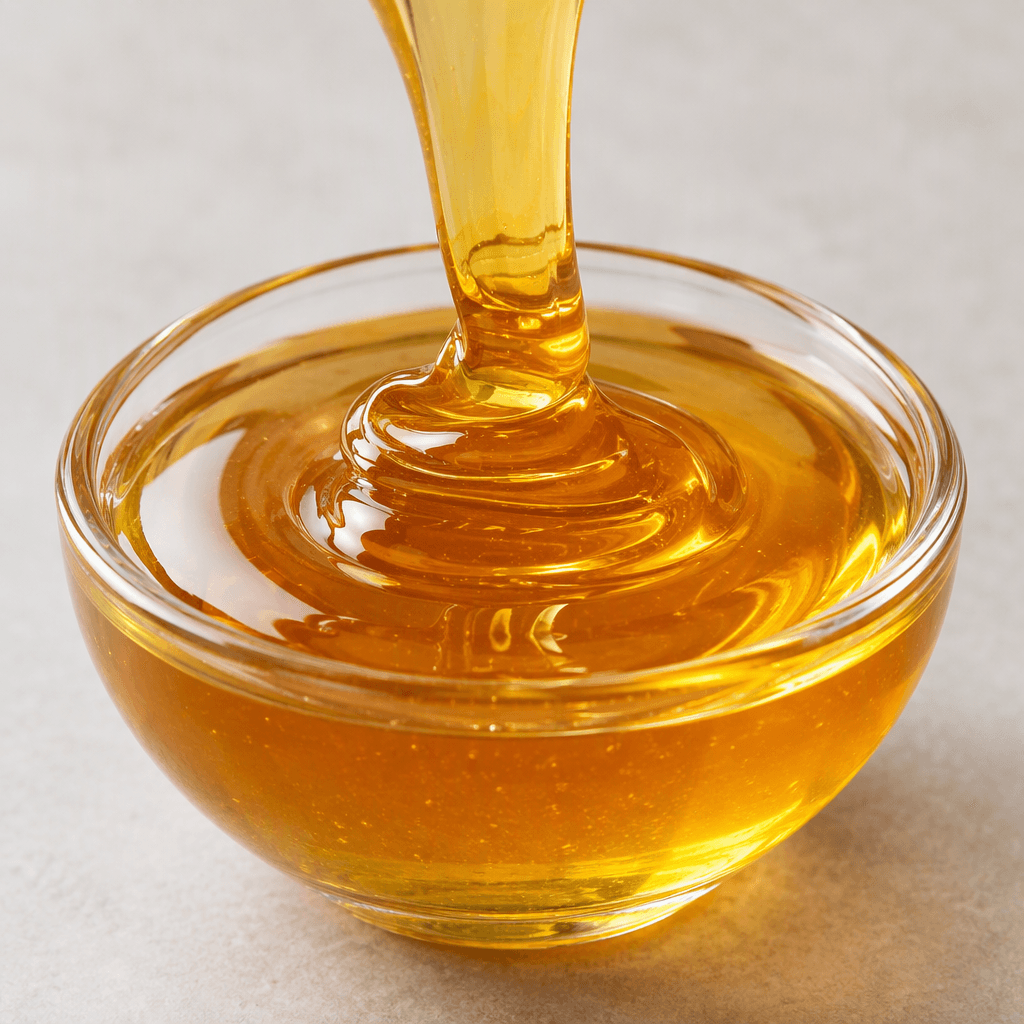
Syrup Calories
High in sugar
CALORIES
GI
POTASSIUM
FIBER
Quick answer
1 tablespoon (medium) of Syrup (20 g) has 52 calories. That works out to 261 calories per 100 g. It contains 13.4 g of carbs, 0 g of protein, 0 g of fat and 0 g of fiber. Its glycemic index is 65 (medium), so it raises blood sugar at a moderate pace.
What is Syrup?
Syrup is a thick, sweet liquid, commonly made by dissolving sugar in water and sometimes flavoured with fruit, herbs or spices. The word covers many kinds, from fruit syrups mixed into drinks to dessert syrups and table toppings. Its glossy texture makes it easy to drizzle over pancakes, waffles, yoghurt or ice cream, or stir into tea and other drinks. In many cuisines, sweet syrups are also used to moisten cakes and pastries. Syrup is mostly carbohydrate, with 67 g per 100 g in this entry, and contributes sweetness rather than protein or fibre. A small drizzle is often enough; dilute it in a drink or pair it with plain yoghurt for a less sugary-tasting balance.
Syrup Nutrition Facts
Selected: 100 g
261
KCAL / 100G
Carbs
67g
· 24% DV
Protein
0g
· 0% DV
Fat
0g
· 0% DV
Fiber
0g
· 0% DV
DV is the share of the daily value covered, on a 2,000 kcal reference diet.
Calories come from: Carbs 100% · Protein 0% · Fat 0%
Syrup Vitamins & Minerals
Vitamins
B2
0.01mg · 1% DV
B6
0.01mg · 1% DV
Vitamin A
0µg · 0% DV
B1
0mg · 0% DV
Minerals
Sodium
39mg · 2% DV
Calcium
12mg · 1% DV
Iron
0mg · 0% DV
Magnesium
1mg · 0% DV
How Nutritious Is Syrup?
Nutrient density
Low
How many vitamins, minerals and how much fiber this food carries per calorie. A high score means a lot of nutrition for few calories.
Satiety score
Low
An EatBetter score computed from fiber, protein and calorie density. A high score means staying full longer on the same calories.
Both scores are calculated per 100 g and do not change with the selected portion. The satiety score is EatBetter's own calculation, not a clinical measure.
Syrup Glycemic Index
GLYCEMIC INDEX
GLYCEMIC LOAD
Accounts for portion size — a more realistic measure than GI alone.
How to Burn Off Syrup
To burn the 261 calories in 100 g:
🚶
Walking (5 km/h)
🏃
Running (8 km/h)
🚴
Cycling
🏊
Swimming
Times are calculated with the MET equation for a 70 kg adult. Actual burn varies with your weight, age and pace.
Is Syrup Processed?
NOVA 3
Processed
1. Unprocessed
2. Minimally Processed
3. Processed
4. Ultra-Processed
NOVA classifies foods into 4 groups by industrial processing. NOVA 1 (unprocessed) is the healthiest.
Does Syrup Contain Allergens?
No known major allergens
Which Diets Is Syrup Good For?
Vegan
✓ Suitable
Vegetarian
✓ Suitable
Gluten-Free
✓ Suitable
Dairy-Free
— Not suitable
Mediterranean
✓ Suitable
Paleo
— Not suitable
Whole30
— Not suitable
DASH
— Not suitable
Keto
— Not suitable
Low FODMAP
— Not suitable
Syrup Fat Profile
SATURATED
0g
MONOUNSATURATED
0g
POLYUNSATURATED
0g
Compare Syrup
Foods Similar to Syrup
Frequently Asked Questions About Syrup
What is syrup made from?
Most culinary syrup is made by dissolving sugar in water and heating the mixture until it reaches the desired consistency. Some versions include fruit, spices, or other flavourings, so the ingredients depend on the type of syrup.
How do you use syrup in cooking?
Syrup can sweeten drinks, moisten cakes, glaze foods, or add sweetness to desserts. Its liquid form also makes it easy to stir into cold drinks, though a thick syrup may need gentle warming to pour smoothly.
How can you make syrup thicker?
Simmer syrup gently to evaporate some of its water and concentrate it. Let it cool before judging the final consistency, since syrup thickens as it cools; prolonged boiling can make it overly sticky or cause crystallization.
Why does syrup crystallize?
Syrup crystallizes when dissolved sugar comes out of the liquid and forms crystals, often starting on sugar grains stuck to the pan. Keeping the sides of the pan clean and following the recipe’s instructions for stirring can help prevent it.
Can you freeze syrup?
Yes, many syrups can be frozen in a freezer-safe, airtight container, with room left for expansion. Thaw it in the refrigerator and stir well before using; texture may change, especially in syrups containing fruit or other ingredients.
How long does syrup last after opening?
There is no single shelf life for every syrup: ingredients, preparation, and storage all matter. Follow the storage guidance on a packaged syrup, and refrigerate homemade syrup in a clean, sealed container to help it keep well.
Is syrup the same as honey?
No. Culinary syrup is usually made by dissolving sugar in water, while honey is produced by bees from flower nectar. They differ in flavour and consistency, so swapping one for the other can change a recipe.
Can you substitute syrup for sugar in baking?
Sometimes, but syrup adds liquid as well as sweetness, so replacing dry sugar cup-for-cup can alter a baked good’s texture. Use a recipe designed for syrup or adjust the other liquids and baking method carefully.
Does syrup go bad?
Yes, syrup can spoil, particularly if it is contaminated or stored improperly. Discard it if you see mould or notice an unusual smell, bubbling, or signs of fermentation; storage needs vary between homemade and commercial varieties.
Is syrup healthier than sugar?
Syrup is not automatically a healthier choice than granulated sugar: it is still a concentrated source of sugar. Some syrups have distinctive flavours or additional ingredients, but that does not make them a low-sugar substitute.
Have another question about Syrup?
Ask the AI nutrition coach — calories, portions, alternatives and more, answered in seconds in the app.

Scan calories with your camera
Instant AI nutrition analysis

Nutrition data compiled from USDA FoodData Central and scientific sources.