

Ready & Packaged Foods
All →Vegetables & Legumes
All →Desserts & Confectionery
All →Meat & Protein
All →Grains & Bakery
All →Beverages
All →Milk & Dairy
All →

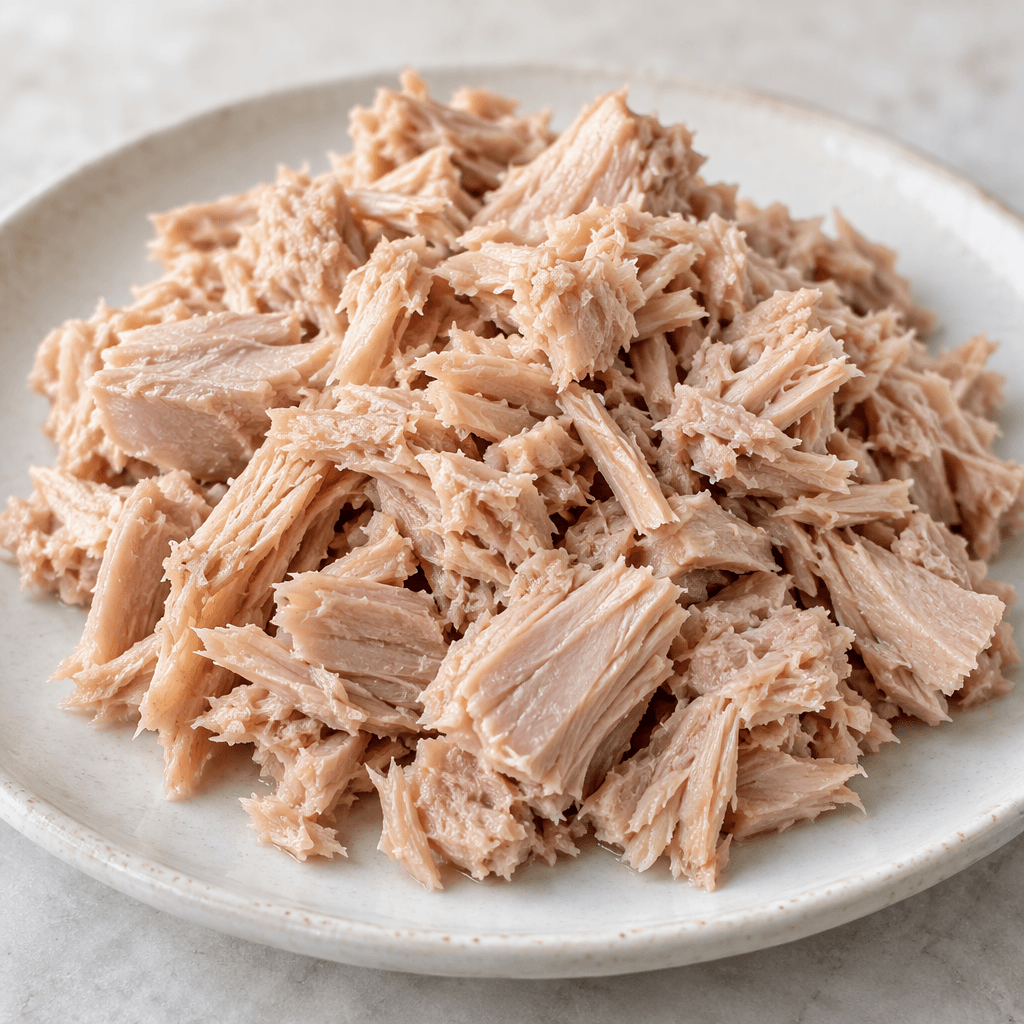
Superfresh Light Tuna Calories
Protein-rich light tuna
CALORIES · 100 G
GI
POTASSIUM · 100 G
FIBER · 100 G
Quick answer
1 can (medium) of Superfresh Light Tuna (112 g) has 217 calories. That works out to 194 calories per 100 g. It contains 0 g of carbs, 29.1 g of protein, 11.2 g of fat and 0 g of fiber. Its 2.8 µg of B12 covers 117% of the Daily Value. Its glycemic index is 0 (low), so it raises blood sugar slowly.
Superfresh Light Tuna Nutrition Facts
Selected: 1 can (medium) · 112 g
217
KCAL / 112G
Carbs
0g
· 0% DV
Protein
29.1g
· 58% DV
Fat
11.2g
· 14% DV
Fiber
0g
· 0% DV
DV is the share of the daily value covered, on a 2,000 kcal reference diet.
Calories come from: Carbs 0% · Protein 54% · Fat 46%
Superfresh Light Tuna nutrition facts table · 1 can (medium) (112 g)
| Nutrient | Amount | % DV |
|---|---|---|
| Calories | 217 kcal | |
| Total fat | 11.2 g | 14% |
| Saturated fat | 1.57 g | 8% |
| Trans fat | 0 g | |
| Sodium | 392 mg | 17% |
| Total carbohydrate | 0 g | 0% |
| Fiber | 0 g | 0% |
| Protein | 29.1 g | 58% |
Calories: Calories measure energy. Average daily need is 2,000 kcal. Excess calories are stored as fat, too few cause weight loss.
Carbs: Your body's primary energy source. The brain runs exclusively on carbs. Daily need: 275g.
Protein: Essential for muscle repair and cell growth. Daily need: 50g. Keeps you full and boosts metabolism.
Fat: Needed for hormone production and vitamin absorption. Daily need: 78g. Limit saturated fats, choose unsaturated.
Fiber: Critical for digestive health and satiety. Daily need: 28g. Stabilizes blood sugar, lowers cholesterol.

Log this food in EatBetter
100,000+ people use it
- Get your daily calorie target
- Snap your meal, log it in seconds
- See every vitamin and mineral

📸 Scan the code to get the app free.

How Many Calories in 1 Can of Superfresh Light Tuna?
| Serving | Amount | Calories |
|---|---|---|
| 1 can (medium) | 112 g | 217 kcal |
| 1 tablespoon (small) | 15 g | 29 kcal |
| 2 tablespoon (medium) | 30 g | 58 kcal |
| ½ can (half) | 56 g | 109 kcal |
| 1 can (small) | 75 g | 146 kcal |
| 100 g | 100 g | 194 kcal |
| 1 serving (medium) | 100 g | 194 kcal |
| 1 can (large) | 160 g | 310 kcal |
Calculated from 194 calories per 100 g.
Frequently Asked Questions About Superfresh Light Tuna
Can you eat Superfresh Light Tuna straight from the can?
Yes, Superfresh Light Tuna is ready to eat straight from the can because canned tuna is cooked and heat-sterilised during processing. Add it directly to salads, sandwiches or pasta; cook it further only if your recipe calls for it.
How should you store Superfresh Light Tuna after opening?
Transfer opened Superfresh Light Tuna to a covered, food-safe container and refrigerate it promptly. Avoid storing it in the opened can, and use it within a short time; discard it if it has been left at room temperature for too long.
Is Superfresh Light Tuna safe to eat during pregnancy?
Superfresh Light Tuna may fit into a pregnancy diet in limited amounts, but tuna’s mercury content varies by species and consumption frequency. Follow local guidance on tuna portions during pregnancy, and ask your healthcare professional if you need advice specific to your situation.
Can you eat Superfresh Light Tuna every day?
It is better not to rely on Superfresh Light Tuna every day; vary your seafood and other protein choices. Frequent tuna consumption can increase mercury exposure, so children and people who are pregnant should be particularly mindful of local portion guidance.
Should you drain Superfresh Light Tuna before using it?
Drain Superfresh Light Tuna when you want a less oily or less wet result, especially for sandwiches and salads. Whether to keep the liquid depends on the recipe and your preference; draining does not mean the tuna needs rinsing.
How long does Superfresh Light Tuna last once the can is open?
Refrigerate leftover Superfresh Light Tuna in a covered container and aim to use it within 1–2 days. Do not leave it at room temperature for an extended period, and discard it if its smell or appearance has changed.
What does “light” mean in Superfresh Light Tuna?
In Superfresh Light Tuna, “light” generally refers to the tuna type or meat colour, not necessarily to reduced fat or calories. Treat it as part of the product name rather than a claim that the tuna is low-fat.
Can you freeze Superfresh Light Tuna after opening the can?
Yes, you can freeze Superfresh Light Tuna in a sealed freezer-safe container, although thawing may make its texture softer and more crumbly. Thaw it in the refrigerator, use it soon afterwards, and do not refreeze it.
What can you make with Superfresh Light Tuna?
Superfresh Light Tuna works well in tuna salad, sandwiches, pasta and toast. Drain it first for a firmer filling, then combine it with ingredients such as lemon, greens or sweetcorn to suit the dish.
Do you need to rinse Superfresh Light Tuna?
No, Superfresh Light Tuna does not need rinsing; drain it if you want to remove the canning liquid. Rinsing can wash away flavour and make the fish wetter, so use it as it is or drain it according to your recipe.
Superfresh Light Tuna Vitamins & Minerals
Vitamins
B12
2.8µg · 117% DV
B3
14mg · 88% DV
B6
0.5mg · 29% DV
Vitamin E
2.46mg · 16% DV
Minerals
Selenium
62µg · 113% DV
Phosphorus
291mg · 42% DV
Sodium
392mg · 17% DV
Iodine
22µg · 15% DV
Potassium ⭐
291mg · 9% DV
Superfresh Light Tuna Glycemic Index
GLYCEMIC INDEX
GLYCEMIC LOAD
Accounts for portion size — a more realistic measure than GI alone.
How to Burn Off Superfresh Light Tuna
To burn the 217 calories in 1 can (medium) (112 g):
🚶
Walking (5 km/h)
🏃
Running (8 km/h)
🚴
Cycling
🏊
Swimming
Times are calculated with the MET equation for a 70 kg adult. Actual burn varies with your weight, age and pace.
What is Superfresh Light Tuna?
Superfresh Light Tuna is a ready-to-use canned tuna product, handy for meals that need little or no cooking. Its mild flavour and tender flakes work well in salads, sandwiches, pasta or a quick tuna melt. Around the world, it is often mixed with vegetables and a dressing for lunch, or stirred into pasta; in Turkey, you might also find tuna in a simple salad with greens, corn and lemon.
It is protein-rich and contains no carbohydrates, so it can make a substantial addition to a meal. Pair it with vegetables and a lighter dressing for a fresh, balanced plate, or add it to whole-grain bread for an easy sandwich.
How Nutritious Is Superfresh Light Tuna?
Nutrient density
High
How many vitamins, minerals and how much fiber this food carries per calorie. A high score means a lot of nutrition for few calories.
Satiety score
Medium
An EatBetter score computed from fiber, protein and calorie density. A high score means staying full longer on the same calories.
Both scores are calculated per 100 g and do not change with the selected portion. The satiety score is EatBetter's own calculation, not a clinical measure.
Is Superfresh Light Tuna Processed?
NOVA 3
Processed
1. Unprocessed
2. Minimally Processed
3. Processed
4. Ultra-Processed
NOVA classifies foods into 4 groups by industrial processing. NOVA 1 (unprocessed) is the healthiest.
Does Superfresh Light Tuna Contain Allergens?
Contains these allergens:
Which Diets Is Superfresh Light Tuna Good For?
Vegan
— Not suitable
Vegetarian
— Not suitable
Gluten-Free
✓ Suitable
Dairy-Free
— Not suitable
Mediterranean
✓ Suitable
Paleo
✓ Suitable
Whole30
— Not suitable
DASH
— Not suitable
Keto
✓ Suitable
Low FODMAP
— Not suitable
Superfresh Light Tuna Fat Profile
SATURATED
1.57g
MONOUNSATURATED
3.14g
POLYUNSATURATED
5.71g
Omega 6:3 ratio 19.2:1
Above the ideal 4:1 (19.2:1).
Compare Superfresh Light Tuna
Foods Similar to Superfresh Light Tuna
Have another question about Superfresh Light Tuna?
Ask the AI nutrition coach — calories, portions, alternatives and more, answered in seconds in the app.

Scan calories with your camera
Instant AI nutrition analysis

Nutrition data compiled from USDA FoodData Central and scientific sources.