

Ready & Packaged Foods
All →Vegetables & Legumes
All →Desserts & Confectionery
All →Meat & Protein
All →Grains & Bakery
All →Beverages
All →Milk & Dairy
All →

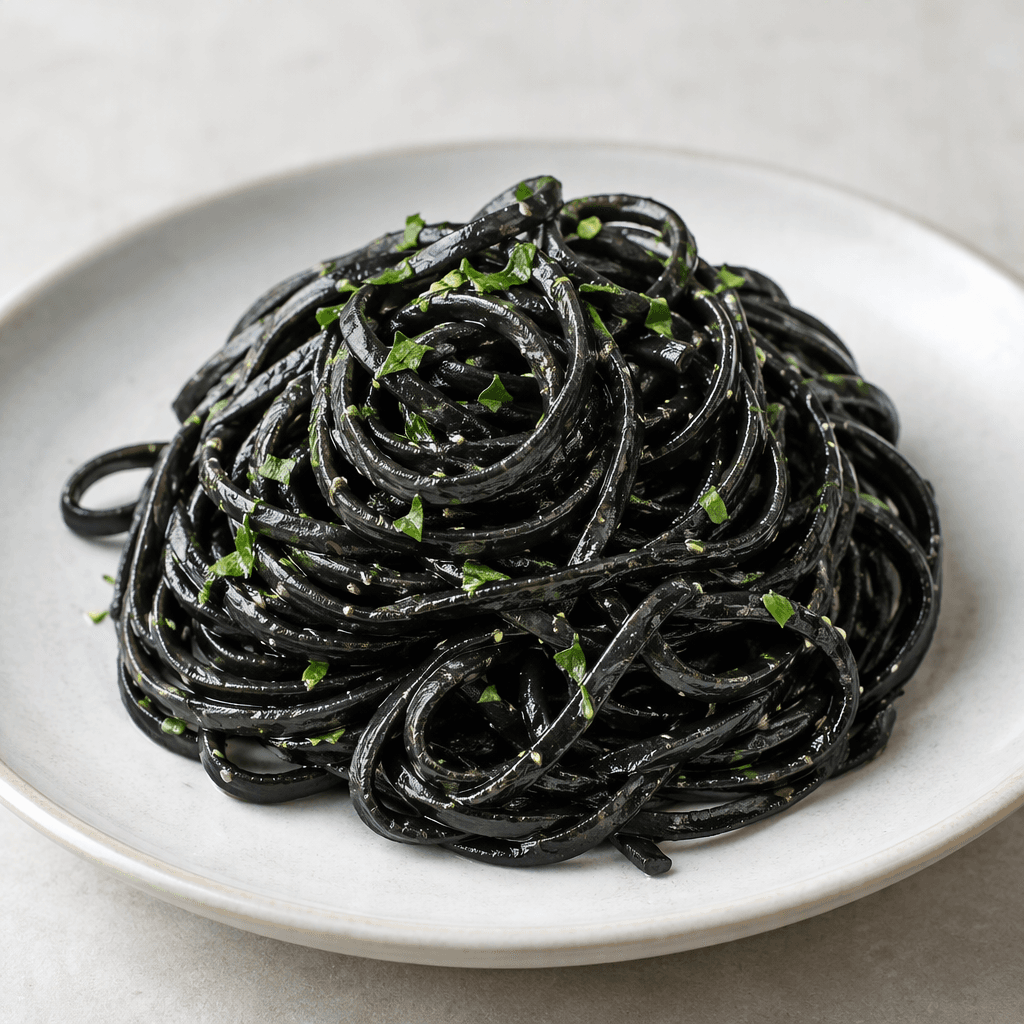
Squid ink pasta Calories
Black pasta colored with squid ink, typically wheat-based and seafood-flavored
CALORIES
GI
POTASSIUM
FIBER
Quick answer
1 cup (medium) of Squid ink pasta (140 g) has 500 calories. That works out to 357 calories per 100 g. It contains 99.7 g of carbs, 17.9 g of protein, 3.4 g of fat and 4.5 g of fiber. Its 44.8 µg of Selenium covers 81% of the Daily Value. Its glycemic index is 48 (medium), so it raises blood sugar at a moderate pace.
What is Squid ink pasta?
Squid ink pasta is wheat pasta coloured with ink from squid, a speciality associated with Italy’s coastal cooking. Depending on the recipe, it may be served with squid pieces, but the ink itself gives the strands their striking dark colour and a subtle savoury, briny note.
The glossy pasta is typically cooked until firm and paired with seafood, garlic, olive oil, or a little lemon. It makes a dramatic main course for a seafood dinner; a simple tomato or vegetable side can balance its richness. Nutritionally, it is mainly a carbohydrate source, with 12.8 g of protein per 100 g. For a lighter plate, use a moderate portion and add vegetables or seafood rather than a heavy cream sauce.
Squid ink pasta Nutrition Facts
Selected: 100 g
357
KCAL / 100G
Carbs
71.2g
· 26% DV
Protein
12.8g
· 26% DV
Fat
2.4g
· 3% DV
Fiber
3.2g
· 11% DV
DV is the share of the daily value covered, on a 2,000 kcal reference diet.
Calories come from: Carbs 80% · Protein 14% · Fat 6%
Squid ink pasta Vitamins & Minerals
Vitamins
B3
3.1mg · 19% DV
B1
0.18mg · 15% DV
Biotin
3µg · 10% DV
Folate
38µg · 10% DV
Minerals
Selenium
32µg · 58% DV
Manganese
1mg · 43% DV
Phosphorus
145mg · 21% DV
Iron
2mg · 11% DV
How Nutritious Is Squid ink pasta?
Nutrient density
Medium
How many vitamins, minerals and how much fiber this food carries per calorie. A high score means a lot of nutrition for few calories.
Satiety score
Medium
An EatBetter score computed from fiber, protein and calorie density. A high score means staying full longer on the same calories.
Both scores are calculated per 100 g and do not change with the selected portion. The satiety score is EatBetter's own calculation, not a clinical measure.
Squid ink pasta Glycemic Index
GLYCEMIC INDEX
GLYCEMIC LOAD
Accounts for portion size — a more realistic measure than GI alone.
How to Burn Off Squid ink pasta
To burn the 357 calories in 100 g:
🚶
Walking (5 km/h)
🏃
Running (8 km/h)
🚴
Cycling
🏊
Swimming
Times are calculated with the MET equation for a 70 kg adult. Actual burn varies with your weight, age and pace.
Is Squid ink pasta Processed?
NOVA 3
Processed
1. Unprocessed
2. Minimally Processed
3. Processed
4. Ultra-Processed
NOVA classifies foods into 4 groups by industrial processing. NOVA 1 (unprocessed) is the healthiest.
Does Squid ink pasta Contain Allergens?
Contains these allergens:
Which Diets Is Squid ink pasta Good For?
Vegan
— Not suitable
Vegetarian
— Not suitable
Gluten-Free
— Not suitable
Dairy-Free
— Not suitable
Mediterranean
✓ Suitable
Paleo
— Not suitable
Whole30
— Not suitable
DASH
— Not suitable
Keto
— Not suitable
Low FODMAP
— Not suitable
Squid ink pasta Fat Profile
SATURATED
0.45g
MONOUNSATURATED
0.32g
POLYUNSATURATED
0.46g
Omega 6:3 ratio 14:1
Above the ideal 4:1 (14:1).
Compare Squid ink pasta
Foods Similar to Squid ink pasta
Frequently Asked Questions About Squid ink pasta
What is squid ink pasta made of?
Squid ink pasta is pasta dough colored with ink from squid or, in some products, cuttlefish. It is usually wheat-based, and the ink gives it a deep black color and a subtle savory, sea-like flavor.
What does squid ink pasta taste like?
Squid ink pasta tastes mildly briny and savory, with a subtle flavor reminiscent of the sea. The ink is not usually strongly fishy; garlic, citrus, seafood, and the sauce you serve it with shape the overall taste.
How do you cook squid ink pasta?
Cook squid ink pasta in a pot of salted boiling water, following the package directions and checking it near the end for your preferred firmness. Drain it and toss it briefly with warm sauce so the pasta picks up the flavor.
What sauce goes well with squid ink pasta?
Garlic and olive oil, a light tomato sauce, or a lemony seafood sauce all work well with squid ink pasta. These flavors complement its savory character without overwhelming it with a heavy, strongly flavored sauce.
Why is squid ink pasta black?
Squid ink pasta is black because ink is mixed into the dough before the pasta is shaped. The dark color generally remains after cooking, so its appearance alone does not mean the pasta is burnt or spoiled.
What seafood goes with squid ink pasta?
Shrimp, squid, and mussels are classic partners for squid ink pasta. Cook the seafood gently with garlic and olive oil, then combine it with the pasta; a squeeze of lemon can brighten the finished dish.
Is squid ink pasta supposed to taste fishy?
No, squid ink pasta is not usually supposed to taste strongly fishy. Its ink contributes a mild briny, savory note; a sharp unpleasant odor or flavor is not the characteristic taste of freshly prepared pasta.
Can you make squid ink pasta at home?
Yes, you can make squid ink pasta at home by mixing squid ink into fresh pasta dough before kneading and shaping it. Wear gloves and protect your work surface, since the dark pigment can stain hands and countertops.
Does squid ink pasta stain your teeth or tongue?
Yes, squid ink pasta can temporarily leave dark pigment on the tongue or teeth. Drinking water and brushing after the meal usually help remove the residue; the color is a cosmetic effect rather than a lasting change.
How should you store leftover squid ink pasta?
Store leftover squid ink pasta in a covered container in the refrigerator soon after the meal. If it contains cooked seafood, do not leave it sitting out for a long time, and reheat it until thoroughly hot before eating.
Have another question about Squid ink pasta?
Ask the AI nutrition coach — calories, portions, alternatives and more, answered in seconds in the app.

Scan calories with your camera
Instant AI nutrition analysis

Nutrition data compiled from USDA FoodData Central and scientific sources.