

Ready & Packaged Foods
All →Vegetables & Legumes
All →Desserts & Confectionery
All →Meat & Protein
All →Grains & Bakery
All →Beverages
All →Milk & Dairy
All →

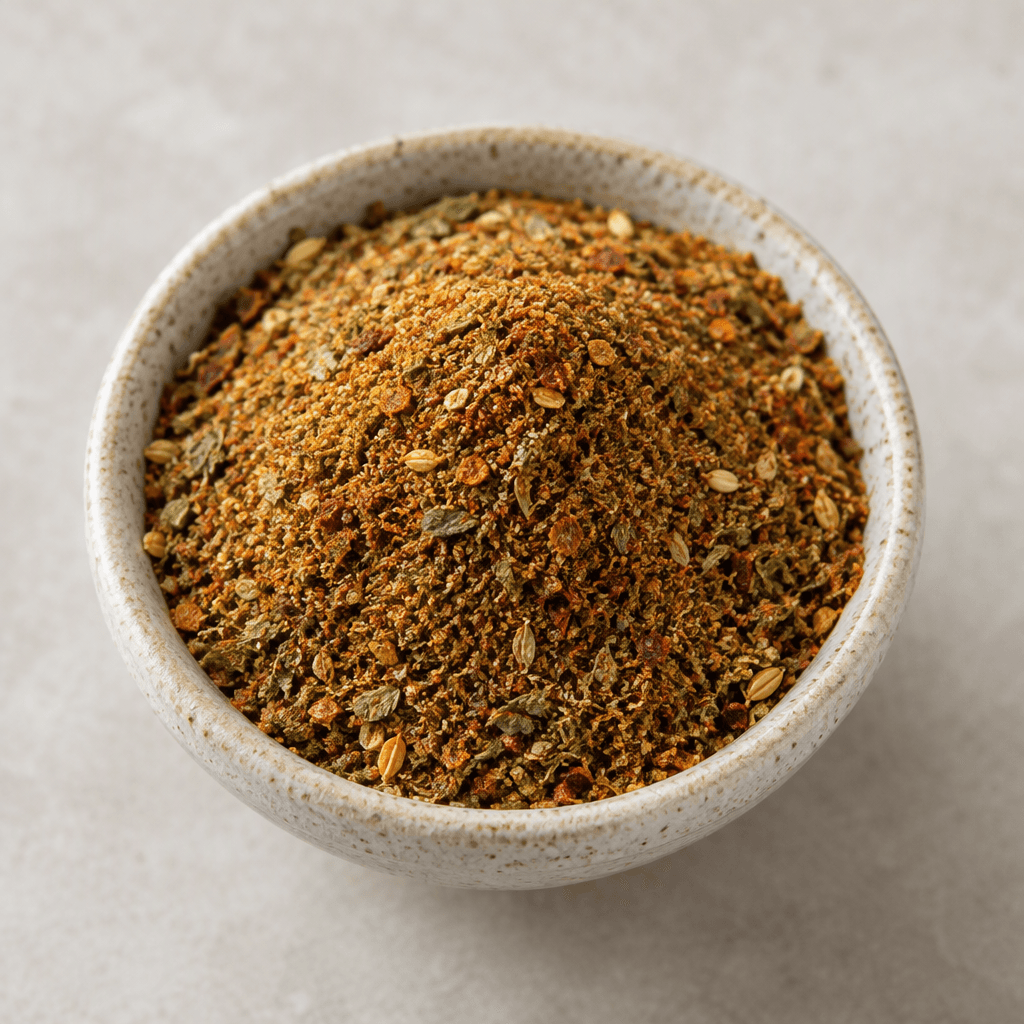
Spice Mix Calories
Blend of various spices, rich in flavor and aroma
In season: Spring · Summer · Autumn · Winter
CALORIES
GI
POTASSIUM
FIBER
Quick answer
1 tablespoon (medium) of Spice Mix (8 g) has 26 calories. That works out to 320 calories per 100 g. It contains 4.4 g of carbs, 0.8 g of protein, 1 g of fat and 2.2 g of fiber. Its 0.4 mg of Manganese covers 16% of the Daily Value. Its glycemic index is 5 (low), so it raises blood sugar slowly.
What is Spice Mix?
Spice mix is a blend of ground spices, sometimes with visible seeds or flakes. There is no single standard recipe: ingredients and proportions vary by region, household and intended use, so the colour and aroma can range from warm and earthy to bright, sweet or hot.
Across its many culinary traditions, spice mix is used to season meat, fish, vegetables, soups, rice and legumes, either during cooking or as a finishing touch. Its main contribution is flavour and aroma rather than substantial nourishment, since it is generally used in small quantities. Add it gradually and taste as you go; it pairs especially well with oil, yoghurt or citrus, depending on the dish.
Spice Mix Nutrition Facts
Selected: 100 g
320
KCAL / 100G
Carbs
55g
· 20% DV
Protein
10g
· 20% DV
Fat
12g
· 15% DV
Fiber
27g
· 96% DV
DV is the share of the daily value covered, on a 2,000 kcal reference diet.
Calories come from: Carbs 60% · Protein 11% · Fat 29%
Spice Mix Vitamins & Minerals
Vitamins
Vitamin A
1200µg · 133% DV
B6
1.2mg · 71% DV
Vitamin K
60µg · 50% DV
Vitamin E
6.2mg · 41% DV
Minerals
Manganese
5mg · 217% DV
Copper
1mg · 111% DV
Iron
15mg · 83% DV
Calcium
650mg · 65% DV
How Nutritious Is Spice Mix?
Nutrient density
High
How many vitamins, minerals and how much fiber this food carries per calorie. A high score means a lot of nutrition for few calories.
Satiety score
Medium
An EatBetter score computed from fiber, protein and calorie density. A high score means staying full longer on the same calories.
Both scores are calculated per 100 g and do not change with the selected portion. The satiety score is EatBetter's own calculation, not a clinical measure.
Spice Mix Glycemic Index
GLYCEMIC INDEX
GLYCEMIC LOAD
Accounts for portion size — a more realistic measure than GI alone.
How to Burn Off Spice Mix
To burn the 320 calories in 100 g:
🚶
Walking (5 km/h)
🏃
Running (8 km/h)
🚴
Cycling
🏊
Swimming
Times are calculated with the MET equation for a 70 kg adult. Actual burn varies with your weight, age and pace.
Is Spice Mix Processed?
NOVA 2
Minimally Processed
1. Unprocessed
2. Minimally Processed
3. Processed
4. Ultra-Processed
NOVA classifies foods into 4 groups by industrial processing. NOVA 1 (unprocessed) is the healthiest.
Does Spice Mix Contain Allergens?
No known major allergens
Which Diets Is Spice Mix Good For?
Vegan
✓ Suitable
Vegetarian
✓ Suitable
Gluten-Free
✓ Suitable
Dairy-Free
— Not suitable
Mediterranean
✓ Suitable
Paleo
✓ Suitable
Whole30
— Not suitable
DASH
— Not suitable
Keto
✓ Suitable
Low FODMAP
— Not suitable
Spice Mix Fat Profile
SATURATED
2.8g
MONOUNSATURATED
3.2g
POLYUNSATURATED
5.1g
Omega 6:3 ratio 3:1
Below the ideal 4:1 — a good omega balance.
Compare Spice Mix
Foods Similar to Spice Mix
Frequently Asked Questions About Spice Mix
What is Spice Mix?
Spice Mix is a blend of multiple spices ground or combined for seasoning food. There is no single standard recipe, so blends sold under this name can differ in ingredients, aroma, heat, and best uses.
What can I cook with Spice Mix?
Spice Mix can season roasted vegetables, soups, beans, meat, poultry, or rice, depending on its ingredients. Start with a small amount in a dish whose flavors suit the blend, then adjust after tasting rather than treating every mix as interchangeable.
What spices are usually in Spice Mix?
Spice Mix has no fixed ingredient list. Common components can include cumin, paprika, black pepper, coriander, turmeric, or dried herbs, but the exact blend varies by maker and recipe; check the specific ingredients if you need to know what yours contains.
How do you make Spice Mix at home?
You can make Spice Mix at home by combining dry spices you enjoy, such as cumin, paprika, and black pepper. Mix a small batch first, taste it in a familiar dish, and adjust the proportions before making more.
Is Spice Mix the same as curry powder?
No, Spice Mix is not necessarily the same as curry powder. Curry powder has its own commonly recognized style of seasoning, while Spice Mix is a broad name for blends with varied recipes; one product may taste quite different from another.
Can Spice Mix replace individual spices in a recipe?
Sometimes, but Spice Mix will change the overall flavor because it combines several seasonings. It can work when a recipe allows flexibility, but it is a poor one-for-one substitute when a particular spice is central to the dish.
Should you add Spice Mix before or after cooking?
Add Spice Mix during cooking when you want its aroma to spread through a dish. For food cooked over high heat, avoid leaving the spices in hot oil for too long, since they can burn and turn bitter; blends can also be used as a finishing seasoning.
How should you store Spice Mix?
Store Spice Mix in a tightly sealed container in a cool, dry, dark place. Keep it away from steam, heat, and direct sunlight, which can dull its aroma and encourage moisture to clump the powder.
Does Spice Mix expire?
Spice Mix can lose its aroma and flavor over time, even if it does not show obvious spoilage. If it smells faint or stale, it may no longer season food well; discard it if it has become damp or shows signs of mold.
Can Spice Mix be used as a dry rub?
Yes, Spice Mix can be used as a dry rub for meat, poultry, or firm vegetables if its flavor suits them. Coat the food lightly and check whether the blend already contains salt before adding more.
Have another question about Spice Mix?
Ask the AI nutrition coach — calories, portions, alternatives and more, answered in seconds in the app.

Scan calories with your camera
Instant AI nutrition analysis

Nutrition data compiled from USDA FoodData Central and scientific sources.