

Ready & Packaged Foods
All →Vegetables & Legumes
All →Desserts & Confectionery
All →Meat & Protein
All →Grains & Bakery
All →Beverages
All →Milk & Dairy
All →

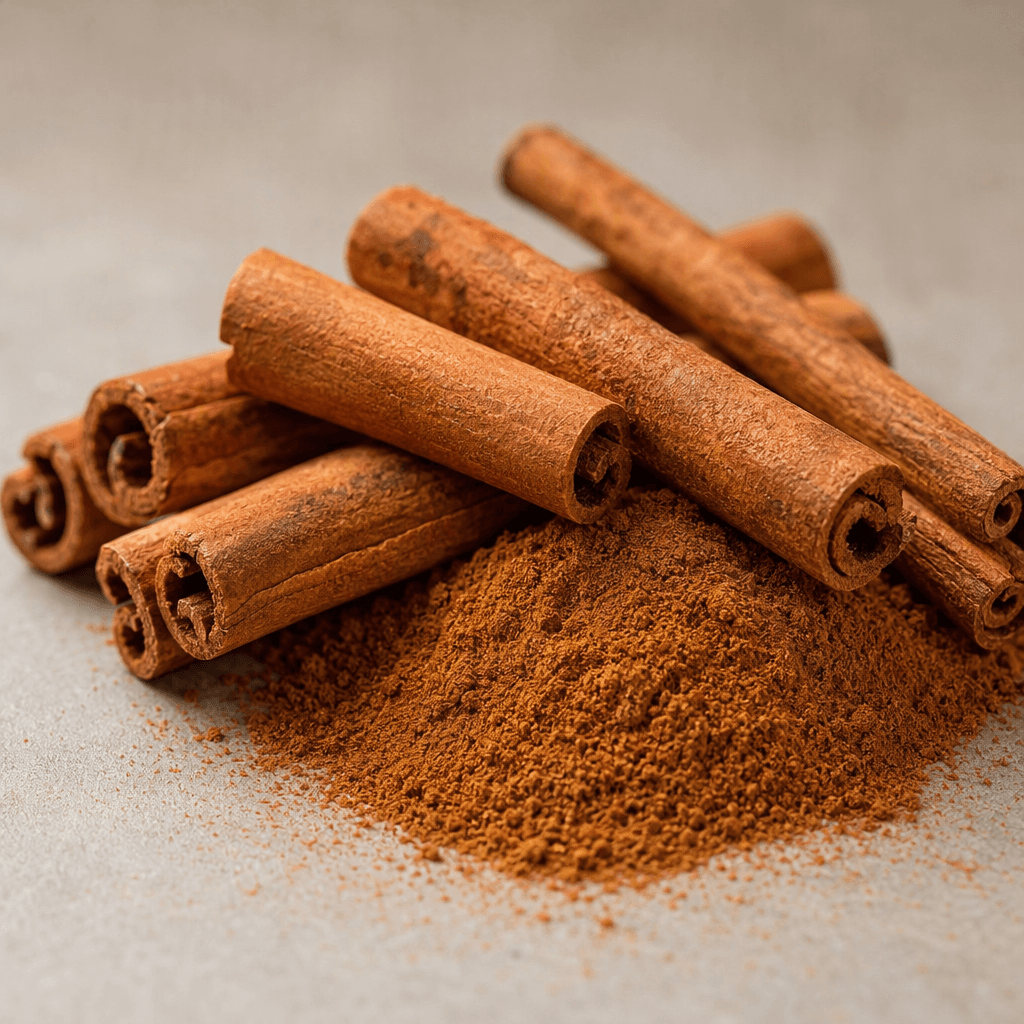
Cinnamon Calories
Antioxidant, blood sugar regulator, aromatic spice
In season: Autumn · Winter
CALORIES
GI
POTASSIUM
FIBER
Quick answer
1 teaspoon (medium) of Cinnamon (3 g) has 6 calories. That works out to 247 calories per 100 g. It contains 2.1 g of carbs, 0.1 g of protein, 0 g of fat and 1.4 g of fiber. Its 0.5 mg of Manganese covers 20% of the Daily Value. Its glycemic index is 5 (low), so it raises blood sugar slowly.
What is Cinnamon?
Cinnamon is the dried inner bark of trees in the Cinnamomum group, sold as rolled sticks or ground into powder. Its warm, sweet, woody aroma is distinctive, so a little can lend depth to both sweet and savoury dishes. Different varieties vary in flavour, from delicate and fragrant to more pungent.
Across much of the English-speaking world, cinnamon is familiar in baked goods, porridge, spiced drinks and desserts; sticks also infuse stews and mulled drinks. It is a fibre-rich spice, though recipes generally use only a small amount. Add a stick while something simmers and remove it before serving, or dust ground cinnamon over fruit, oats or yoghurt for an easy fragrant finish.
Cinnamon Nutrition Facts
Selected: 100 g
247
KCAL / 100G
Carbs
81g
· 29% DV
Protein
4g
· 8% DV
Fat
1.2g
· 2% DV
Fiber
53.1g
· 190% DV
DV is the share of the daily value covered, on a 2,000 kcal reference diet.
Calories come from: Carbs 92% · Protein 5% · Fat 3%
Cinnamon Vitamins & Minerals
Vitamins
Vitamin K
31.2µg · 26% DV
Vitamin E
2.3mg · 15% DV
B6
0.16mg · 9% DV
B3
1.3mg · 8% DV
Minerals
Manganese
18mg · 783% DV
Calcium
1002mg · 100% DV
Iron
8mg · 44% DV
Zinc
2mg · 18% DV
How Nutritious Is Cinnamon?
Nutrient density
High
How many vitamins, minerals and how much fiber this food carries per calorie. A high score means a lot of nutrition for few calories.
Satiety score
Medium
An EatBetter score computed from fiber, protein and calorie density. A high score means staying full longer on the same calories.
Both scores are calculated per 100 g and do not change with the selected portion. The satiety score is EatBetter's own calculation, not a clinical measure.
Cinnamon Glycemic Index
GLYCEMIC INDEX
GLYCEMIC LOAD
Accounts for portion size — a more realistic measure than GI alone.
How to Burn Off Cinnamon
To burn the 247 calories in 100 g:
🚶
Walking (5 km/h)
🏃
Running (8 km/h)
🚴
Cycling
🏊
Swimming
Times are calculated with the MET equation for a 70 kg adult. Actual burn varies with your weight, age and pace.
Is Cinnamon Processed?
NOVA 2
Minimally Processed
1. Unprocessed
2. Minimally Processed
3. Processed
4. Ultra-Processed
NOVA classifies foods into 4 groups by industrial processing. NOVA 1 (unprocessed) is the healthiest.
Does Cinnamon Contain Allergens?
No known major allergens
Which Diets Is Cinnamon Good For?
Vegan
✓ Suitable
Vegetarian
✓ Suitable
Gluten-Free
✓ Suitable
Dairy-Free
— Not suitable
Mediterranean
✓ Suitable
Paleo
✓ Suitable
Whole30
— Not suitable
DASH
— Not suitable
Keto
✓ Suitable
Low FODMAP
— Not suitable
Cinnamon Fat Profile
SATURATED
0.32g
MONOUNSATURATED
0.08g
POLYUNSATURATED
0.09g
Omega 6:3 ratio 3.5:1
Below the ideal 4:1 — a good omega balance.
Compare Cinnamon
Foods Similar to Cinnamon
Frequently Asked Questions About Cinnamon
What is the difference between Ceylon cinnamon and cassia cinnamon?
Ceylon cinnamon has a milder, more delicate flavor, while cassia tastes stronger and is the type commonly sold in many shops. Cassia contains more coumarin, so Ceylon is a sensible choice if you use cinnamon often.
Can cinnamon help with diabetes?
Cinnamon is not a proven way to manage diabetes or replace medication. Studies have not established a dependable blood-sugar benefit, and cinnamon supplements may complicate treatment. If you have diabetes, ask your clinician before using them regularly.
How do you make cinnamon water?
Add a cinnamon stick to water and let it steep, or gently simmer it for a stronger flavor. Cinnamon water is simply flavored water; it does not detox the body or cause weight loss.
Can you eat cinnamon sticks?
Cinnamon sticks are meant to infuse food and drinks, not usually to be chewed and swallowed. They are hard and fibrous, so remove the stick before serving; use ground cinnamon when you want the spice mixed into a dish.
Does cinnamon go bad?
Cinnamon is unlikely to spoil quickly when kept dry, but it gradually loses its aroma and flavor. Store sticks or ground cinnamon in a tightly sealed container away from heat, moisture, and direct sunlight, and replace it when it smells faint.
How do you use cinnamon sticks in cooking?
Add a cinnamon stick to simmering drinks, soups, sauces, or rice dishes so it can release its flavor, then take it out before serving. For baking or recipes where the spice must blend in, ground cinnamon works better.
Can you put cinnamon in coffee?
Yes, cinnamon works well in coffee. Stir a small pinch of ground cinnamon into the grounds before brewing, or steep a cinnamon stick in the finished cup; adding too much powder can leave a gritty texture.
Does cinnamon help you lose weight?
No, cinnamon has not been shown to cause weight loss on its own. It can add flavor to foods without relying on extra sugar, but cinnamon drinks and supplements do not burn fat.
Is cinnamon safe for dogs?
A small accidental taste of plain cinnamon is not usually considered toxic to dogs, but cinnamon powder can irritate their mouth and airways. Keep essential oils and large amounts away from pets, and contact a veterinarian if your dog eats a lot.
Can cinnamon damage your liver?
Large, frequent amounts of cassia cinnamon may expose you to too much coumarin, which can harm the liver in susceptible people. Ordinary culinary use is different from concentrated supplements; choose Ceylon cinnamon if you use it regularly.
Have another question about Cinnamon?
Ask the AI nutrition coach — calories, portions, alternatives and more, answered in seconds in the app.

Scan calories with your camera
Instant AI nutrition analysis

Nutrition data compiled from USDA FoodData Central and scientific sources.