

Ready & Packaged Foods
All →Vegetables & Legumes
All →Desserts & Confectionery
All →Meat & Protein
All →Grains & Bakery
All →Beverages
All →Milk & Dairy
All →

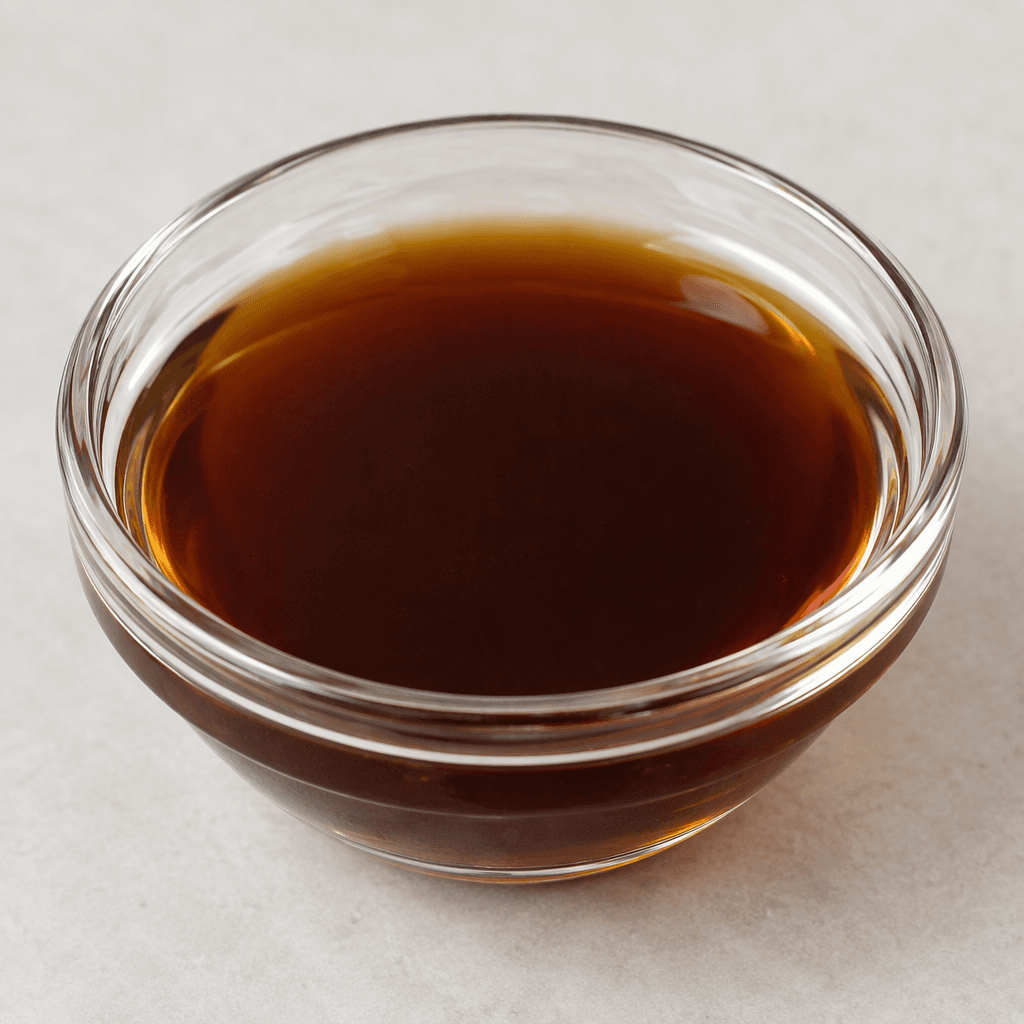
Vanilla Extract Calories
Flavoring, sweetener, very low nutritional value
In season: Spring · Summer · Autumn · Winter
CALORIES
GI
POTASSIUM
FIBER
Quick answer
1 teaspoon (medium) of Vanilla Extract (4 g) has 12 calories. That works out to 288 calories per 100 g. It contains 0.5 g of carbs, 0 g of protein, 0 g of fat and 0 g of fiber. Its glycemic index is 35 (low), so it raises blood sugar slowly.
What is Vanilla Extract?
Vanilla extract is a fragrant liquid made by drawing aroma compounds from vanilla beans, commonly by steeping them in alcohol. It is added in small amounts to baking and desserts rather than eaten on its own; unlike vanilla sugar, it brings aroma without being a granulated sweetener.
Its warm, sweet, floral scent and slightly woody flavour suit cakes, cookies, custards, ice cream and pancakes. A few drops can also round out coffee or hot chocolate. It is a familiar baking-cupboard staple in many English-speaking kitchens. Nutritionally, vanilla extract contributes little in a usual serving and is chiefly a flavouring. Stir a little into plain yoghurt or oats when you want vanilla aroma without making the dish much sweeter.
Vanilla Extract Nutrition Facts
Selected: 100 g
288
KCAL / 100G
Carbs
12.7g
· 5% DV
Protein
0.1g
· 0% DV
Fat
0.1g
· 0% DV
Fiber
0g
· 0% DV
DV is the share of the daily value covered, on a 2,000 kcal reference diet.
Calories come from: Carbs 98% · Protein 1% · Fat 1%
Vanilla Extract Vitamins & Minerals
Vitamins
B1
0.01mg · 1% DV
B2
0.01mg · 1% DV
B6
0.01mg · 1% DV
Vitamin A
0µg · 0% DV
Minerals
Potassium ⭐
148mg · 4% DV
Magnesium
12mg · 3% DV
Calcium
11mg · 1% DV
Phosphorus
6mg · 1% DV
How Nutritious Is Vanilla Extract?
Nutrient density
Low
How many vitamins, minerals and how much fiber this food carries per calorie. A high score means a lot of nutrition for few calories.
Satiety score
Low
An EatBetter score computed from fiber, protein and calorie density. A high score means staying full longer on the same calories.
Both scores are calculated per 100 g and do not change with the selected portion. The satiety score is EatBetter's own calculation, not a clinical measure.
Vanilla Extract Glycemic Index
GLYCEMIC INDEX
GLYCEMIC LOAD
Accounts for portion size — a more realistic measure than GI alone.
How to Burn Off Vanilla Extract
To burn the 288 calories in 100 g:
🚶
Walking (5 km/h)
🏃
Running (8 km/h)
🚴
Cycling
🏊
Swimming
Times are calculated with the MET equation for a 70 kg adult. Actual burn varies with your weight, age and pace.
Is Vanilla Extract Processed?
NOVA 3
Processed
1. Unprocessed
2. Minimally Processed
3. Processed
4. Ultra-Processed
NOVA classifies foods into 4 groups by industrial processing. NOVA 1 (unprocessed) is the healthiest.
Does Vanilla Extract Contain Allergens?
No known major allergens
Which Diets Is Vanilla Extract Good For?
Vegan
✓ Suitable
Vegetarian
✓ Suitable
Gluten-Free
✓ Suitable
Dairy-Free
— Not suitable
Mediterranean
✓ Suitable
Paleo
✓ Suitable
Whole30
— Not suitable
DASH
— Not suitable
Keto
✓ Suitable
Low FODMAP
— Not suitable
Vanilla Extract Fat Profile
SATURATED
0.01g
MONOUNSATURATED
0.01g
POLYUNSATURATED
0.01g
Compare Vanilla Extract
Foods Similar to Vanilla Extract
Frequently Asked Questions About Vanilla Extract
What is vanilla extract made from?
Vanilla extract is made by steeping vanilla beans in a liquid, commonly alcohol and water. The liquid draws out the beans’ aromatic compounds, creating the concentrated vanilla flavor used in baking and other recipes.
Is vanilla extract the same as vanilla essence?
No. Vanilla extract is typically made by extracting flavor from vanilla beans, while vanilla essence may be imitation flavoring made with vanillin. Products vary, so the terms do not always mean the same thing on a label.
Does vanilla extract contain alcohol?
Most pure vanilla extracts contain alcohol, which helps extract and preserve the beans’ flavor. Some alcohol may evaporate during cooking, but not necessarily all of it; choose a product specifically labeled alcohol-free if that matters to you.
How do you make vanilla extract at home?
Split vanilla beans lengthwise, place them in a clean jar, and cover them completely with a neutral spirit such as vodka. Seal the jar and leave it in a cool, dark place, shaking it occasionally as the flavor infuses.
Can vanilla extract replace vanilla beans?
Yes, vanilla extract can add vanilla flavor when you do not have whole beans. It will not provide the small black seeds or the same visual effect, so use vanilla bean paste if those details matter in your recipe.
How much vanilla extract should you use in baking?
Follow the quantity in your recipe, since the right amount depends on the recipe and the strength of the extract. If adjusting a recipe, add a little at a time; too much can make the vanilla flavor overpowering.
Does vanilla extract lose its flavor when baked?
Some vanilla aroma can fade during prolonged or high-heat baking. For a more noticeable flavor, use the recipe’s amount and consider adding a small amount to a topping or filling that is mixed in after baking.
Does vanilla extract expire?
Vanilla extract usually keeps for a long time, but its aroma can weaken as it ages. If its smell, appearance, or consistency has changed noticeably, discard it and follow the date and storage guidance on the bottle.
How should vanilla extract be stored after opening?
Keep vanilla extract tightly closed in a cool, dark cupboard, away from direct sunlight and heat. Refrigeration is generally unnecessary, and storing it somewhere warm or bright can gradually diminish its aroma.
Why is vanilla extract so expensive?
Vanilla extract can be costly because vanilla beans are labor-intensive to grow and harvest, and their supply is vulnerable to weather and crop disease. Extracting flavor from real beans also takes time and substantial quantities of beans.
Have another question about Vanilla Extract?
Ask the AI nutrition coach — calories, portions, alternatives and more, answered in seconds in the app.

Scan calories with your camera
Instant AI nutrition analysis

Nutrition data compiled from USDA FoodData Central and scientific sources.